What should you check before ordering?
Start with the resident’s documented requirements, then check the exact recipe and pack format. Decide how opened tins will be handled before choosing a size for regular service.
| Priority | What to check | Your needs |
|---|
| Individual nutrition |
Compare the current per-100g nutrition panel, ingredients and planned serving with the resident’s documented requirements. Check any proposed substitute in the same way. |
I need a storecupboard option that can be assessed for each resident, rather than assuming a familiar recipe fits every menu. |
| Recipe choice |
Confirm whether the tin is standard, reduced sugar and salt, or no added sugar. Check the complete ingredient and nutrition panels; Heinz says its No Added Sugar Beanz has 25% less salt than standard Heinz Beanz, but that comparison applies to those Heinz recipes. |
If a resident’s plan calls for a particular recipe, I need to identify the right variant and check the current can rather than rely on its name alone. |
| Allergens |
Check the delivered can’s ingredients and allergen information, then apply the home’s controls for substitutions and cross-contamination. The Food Standards Agency’s HACCP guidance calls for careful control of ingredients containing regulated allergens. |
A resident’s allergy requirements mean I need the exact product information before it reaches the kitchen. |
| Swallowing requirements |
Check the resident’s documented texture level and the approved preparation, testing and serving process. The Health and Safety Executive says food served to people with swallowing difficulties must meet their requirements at every meal. |
For a resident needing texture-modified food, I cannot treat ordinary whole beans as suitable just because they appear soft. |
| Tin size and storage |
Match the tin or multipack to planned servings. Read the unopened-storage and after-opening instructions for the chosen product. |
When only a few servings are needed, I want a format that fits the meal plan and an opened-tin procedure staff can follow. |
Brand and range references
These ranges illustrate different recipes and pack formats; a brand name alone does not establish suitability for a resident.
Heinz
Heinz offers standard Beanz and a No Added Sugar variant. Heinz says the latter has 25% less salt than its standard Beanz; check the current label for the exact recipe being ordered.
- A clearly named alternative to the standard recipe.
- The recipe name does not establish suitability for an individual nutrition plan or a texture-modified diet.
Tesco
Tesco lists standard and Reduced Sugar and Salt own-label baked beans in 420g tins, as well as Stockwell & Co baked beans.
- The listed variants provide distinct recipes to consider for routine menus.
- Check the delivered tin’s full nutrition and allergen information before approving a variant.
M&S
M&S lists a 400g baked-bean tin in tomato sauce with ingredients and per-100g nutrition information on its product page.
- The product information includes ingredients, nutrition and storage guidance for checking against a menu specification.
- M&S says this product is not suitable for people with milk or egg allergy and warns that product information may change; check the current can.
Waitrose Essential
Waitrose Essential baked beans in tomato sauce come in a 420g tin. Waitrose lists 0.49g salt per 100g for this product.
- The product page gives ingredients, nutrition and after-opening instructions to check when planning service.
- This is not identified as a reduced-salt recipe; compare its current label with any individual salt requirement.
Joybuy baked-bean options
These baked beans in tomato sauce include one reduced-sugar-and-salt multipack, standard multipacks and a smaller tin. For care-home use, check the delivered label and each resident’s requirements before choosing between them.
 No image available
Branston Reduced Sugar & Salt Baked Beans 4 × 410g
Consider this four-tin pack where a reduced-sugar-and-salt recipe is called for. Check the current ingredients, nutrition and allergen label against the resident’s plan; the tin does not establish suitability for a texture-modified diet.
Joybuy
 No image available
Branston Beans in Tomato Sauce 6 × 410g
This six-tin pack is a standard baked-bean option for menus that call for beans in tomato sauce. Check the delivered label and plan how opened tins will be handled; follow documented swallowing requirements where applicable.
Joybuy
 No image available
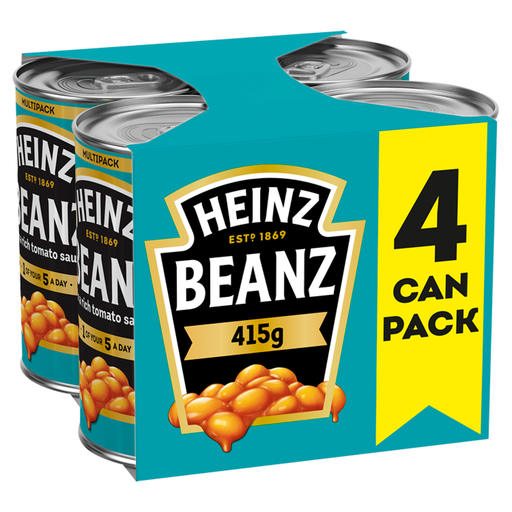
HEINZ Baked Beans in Tomato Sauce 4 × 415g
This four-tin standard-recipe pack is an option for routine baked-bean menus. Compare the current can’s ingredients, nutrition and allergen information with the resident’s plan, and do not assume whole beans meet a modified-texture requirement.
Joybuy
 No image available
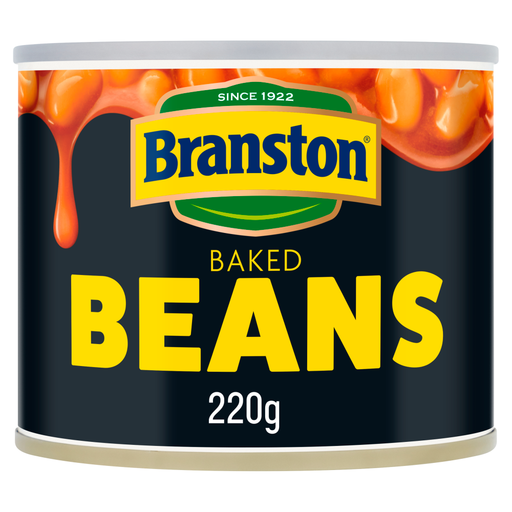
Branston Baked Beans in Tomato Sauce 220g
The 220g tin is worth considering when a smaller pack fits the planned service. Check the delivered label against individual dietary and allergy requirements; pack size alone says nothing about suitability for a texture-modified diet.
Joybuy
Questions about serving baked beans
Can a care home use one baked-bean product for every resident?
No single tin should be assumed suitable for everyone. Check each resident’s documented nutrition, allergy and other dietary requirements against the current product label, including when a substitute arrives.
Are ordinary baked beans suitable for a resident with dysphagia?
Not automatically. Follow the resident’s documented texture level and the home’s approved preparation, testing and serving process; the Health and Safety Executive says food must meet the person’s swallowing requirements at every meal.
When should a reduced-salt or no-added-sugar variant be considered?
Consider a variant when it matches an individual’s documented nutrition plan or dietetic instruction, then check its complete label and planned portion. Heinz says its No Added Sugar Beanz has 25% less salt than standard Heinz Beanz, but that brand comparison does not establish suitability for a particular resident.
What should staff do with beans left after opening a tin?
Follow the instructions on that product’s label. Waitrose says unused contents of its Essential baked beans should be refrigerated and used within two days of opening; check another product’s own instructions rather than applying that period to every tin.
Is a vegan or vegetarian description enough for allergy checks?
No. Check the exact product’s ingredients and allergen declaration and follow the home’s cross-contamination controls. M&S describes its baked beans as suitable for vegan and vegetarian diets but says the product is not suitable for people with milk or egg allergy.


