Christmas hosts planning a flexible side
If beans are an optional part of the menu, decide how many people will have them before choosing a single tin or several cans. That also helps you plan what to do with any opened tin.


For an optional Christmas side or meals around the holiday, choose a standard-sized tin or multipack if you expect to use several cans; a smaller tin makes more sense when you want to avoid opened-can leftovers. If the recipe matters to your household, compare the exact labels: reduced sugar and salt and no added sugar describe different choices, not interchangeable ones.
The useful tin size depends on whether baked beans are a small addition to Christmas dinner or cupboard food for several meals.
If beans are an optional part of the menu, decide how many people will have them before choosing a single tin or several cans. That also helps you plan what to do with any opened tin.
Standard, reduced-sugar-and-salt and no-added-sugar beans need separate label checks. Compare the nutrition panel and ingredients for the particular tin you intend to serve.
A multipack is more useful when you have plans for several cans. If you want beans for just one small accompaniment, a single smaller tin may leave less opened food to store.
Start with the number of cans you will use, then check the recipe and the current pack label. An organic label or a short ingredient list answers a different question from whether a recipe has reduced sugar and salt.
| Priority | What to check | Your needs |
|---|---|---|
| Portion and pack size | Compare the weight of each tin and the number of cans. Retailer listings include smaller 200–220g tins and standard-sized 400–420g options. | Will I open one tin for a small side, or use several cans across Christmas meals? A smaller tin may mean fewer opened-can leftovers. |
| Sugar and salt recipe | Read the values per 100g for the exact product. Tesco and Waitrose each describe a named reduced variant as containing 30% less sugar and 30% less salt than their respective regular own-label beans; those are within-range comparisons. | If I want a reduced recipe, I need to compare the tins I might actually buy rather than assume every product labelled reduced has the same nutrition values. |
| No added sugar and ingredients | Check the ingredients and nutrition table separately from any no-added-sugar wording. For an ingredient-led choice, Marks & Spencer lists the seven ingredients in its Only 7 Ingredients beans. | Perhaps avoiding added sugar or choosing a particular ingredient list matters more to me than choosing a reduced-sugar-and-salt recipe. |
| Allergens | Read the physical pack's current ingredients and allergen information. GOV.UK says the ingredients list on prepacked food must emphasise the 14 allergens required to be declared. | When an allergy or intolerance affects our meal, I need to check the particular can being served, even if I have bought the product before. |
| Opened-can storage | Follow the instructions on the chosen tin. Tesco's no-added-sugar 420g beans say to transfer unused contents to a non-metallic container, cover, refrigerate and consume within two days. | If we will use only part of a tin at dinner, I need a plan for storing the remainder and using it within that product's stated period. |
Tesco and Waitrose compare their named reduced recipes with their own regular beans. A no-added-sugar product makes a different claim, so the wording alone cannot tell you that the recipes have the same ingredients or nutrition values.
Decide which distinction matters to your household, then compare the ingredient lists and nutrition panels on the exact tins.
Four- and six-can packs provide several full-sized tins, which may be more than an optional Christmas side needs.
Count the meals for which you expect to use beans before deciding between a multipack and a single tin.
Cans you do not plan to use will still take up cupboard space.
For someone with an allergy or intolerance, familiarity with a brand does not replace checking the particular pack. GOV.UK guidance identifies the ingredients list and emphasised allergens as key information on prepacked food.
Read the current physical pack, including any precautionary allergen statement, before serving it.
These ranges illustrate different formats and recipes; the useful comparison is between specific tins, not an assumption about every product from a brand.
Tesco and Sainsbury's listings show Heinz baked beans in standard and no-added-sugar formats, including smaller 200g and 415g cans.
Tesco lists distinct no-added-sugar and Healthy Living reduced-sugar-and-salt baked-bean products.
Sainsbury's listings include standard 400g beans, a 4 x 400g pack and an organic 400g option.
The M&S range lists Only 7 Ingredients beans in 220g and 400g formats and a separate 390g no-added-sugar product.
Waitrose lists Essential regular beans in 220g and 420g tins and a separate reduced-salt-and-sugar 420g product.
These Joybuy options cover standard-sized Branston and Heinz multipacks, a reduced-sugar-and-salt Branston multipack and a smaller Branston tin. Choose by recipe and the number of cans you expect to use, rather than treating the selection as a comparison of every Christmas side.
 No image available
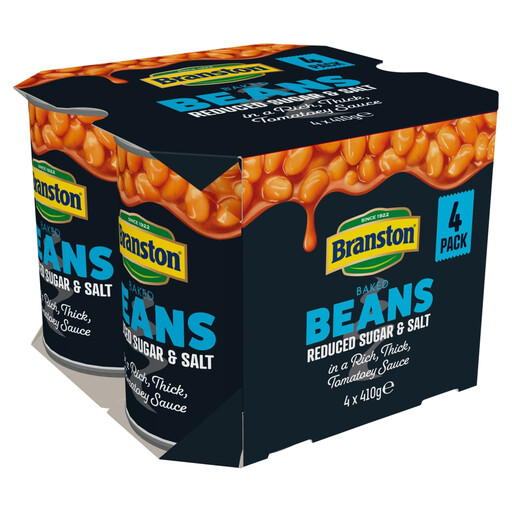
Consider this four-can pack if you expect to use several tins and want the named reduced recipe. Joybuy's product description says it contains 30% less sugar and 30% less salt than standard Branston baked beans; compare the current pack label if that distinction matters. Four cans may be more than you need for one small side.
 No image available
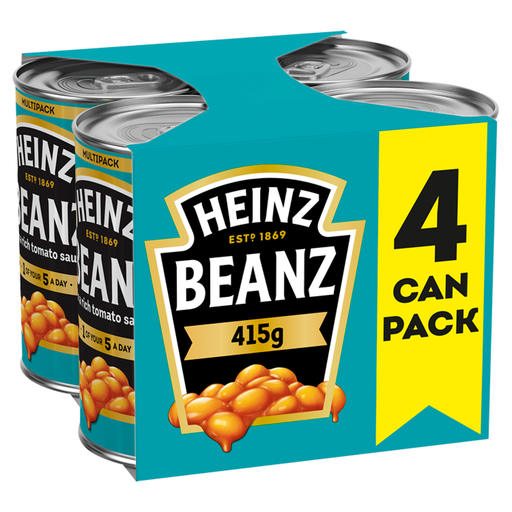
Four 415g cans suit a cupboard plan that includes beans at more than one meal. This is the standard tomato-sauce option in the selection; if you only want one small accompaniment, consider whether you will use the remaining tins.
 No image available
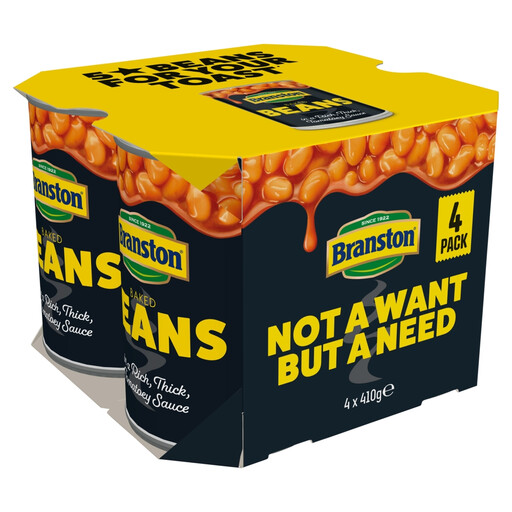
Choose the four 410g tins when several cupboard meals are planned and you want Branston's standard baked beans rather than the separately listed reduced-sugar-and-salt variant. Check the current pack for its ingredients and nutrition values.
 No image available
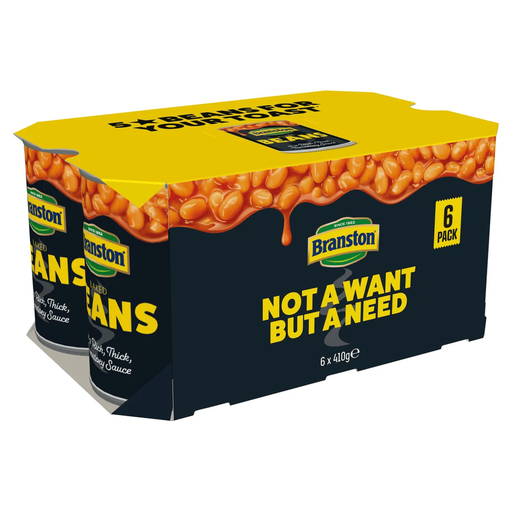
Six 410g cans fit a plan to use beans across several meals, rather than for one optional Christmas side. Check that the larger pack matches the space in your cupboard and the number of cans you expect to use.
 No image available
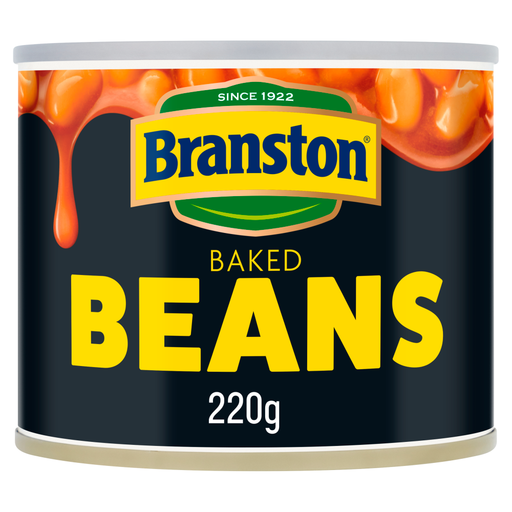
The 220g tin is an option when only a small amount of beans is wanted and opening a larger can would leave more to store. It provides less food than any of the multipacks shown here, so check the quantity against your menu.
No. Treat them as an optional side if they fit your menu, or buy them for meals around Christmas instead. Base the number of tins on when and for whom you plan to serve them.
Compare the nutrition panels and ingredients of the exact tins. Tesco and Waitrose each say their named reduced variants have 30% less sugar and 30% less salt than their respective regular own-label beans; neither statement compares every brand or recipe.
Follow the instructions on your particular can. Tesco says that, once opened, unused contents of its no-added-sugar 420g beans should be transferred to a non-metallic container, covered, refrigerated and consumed within two days. Do not assume the same instructions apply to every product.
Check the current physical pack before serving the beans. GOV.UK guidance says prepacked-food ingredients lists must emphasise the 14 allergens required to be declared; the pack identifies the information for the product you have bought.