Groups planning several simple meals
If beans are on the plan for more than one breakfast or quick meal, count the tins needed across the stay. A multipack makes more sense when those tins will be used or taken home unopened.


For shared breakfasts or several cottage meals, choose standard tins or a multipack if the group likes the recipe and is likely to use the quantity. A smaller tin may suit a short stay with fewer people; consider a reduced-sugar-and-salt recipe when its label meets the group’s needs, or a named brand when someone specifically wants that recipe.
If beans are on the plan for more than one breakfast or quick meal, count the tins needed across the stay. A multipack makes more sense when those tins will be used or taken home unopened.
A smaller tin is worth considering when opening a standard tin would leave more beans than the group plans to use. Check the quantity against the meal, rather than assuming a single-serve description matches everyone’s portion.
Standard and reduced-sugar-and-salt recipes are not interchangeable for every guest. Compare the nutrition and ingredient information on the exact tins, and check the physical labels before serving food to anyone with an allergy requirement.
Start with the meals and number of guests, then check the recipe and what will happen to any opened tin.
| Priority | What to check | Your needs |
|---|---|---|
| Pack quantity | Count the tins and their individual weights. Match them to planned meals; Sainsbury’s describes its 400g standard tin as two servings. | I’m feeding several people more than once, so a multipack could cover separate meals. For a brief stay, I’d rather choose a quantity we expect to use. |
| Recipe | Read sugar and salt values for the stated serving size, as well as ingredients and allergens. Waitrose says its Essential Reduced Salt & Sugar recipe has 30% less of each than its regular Essential beans; that claim applies to those two recipes. | Someone in our group wants a reduced-sugar-and-salt recipe, or we need to check whether the exact tin suits a guest’s dietary requirements. |
| Opened tins | Check the storage instruction and how long the specific product may be kept after opening. Sainsbury’s and Waitrose give two days for the cited tins; M&S gives three days for its standard 400g tin. | We might not finish a tin at one meal, so I need a plan for transferring and refrigerating the leftovers and using them within the label’s stated period. |
| Stocking ahead | Check the tin’s date and storage directions. GOV.UK explains that best-before dates on tinned foods concern quality: food is usually safe after that date, but its quality may change. | I’m buying before the trip and want tins that fit our meal plan, with dates and storage instructions I can check when packing. |
An opened tin needs different handling from an unopened one. The cited Sainsbury’s and Waitrose products instruct shoppers to transfer leftovers to a non-metallic container, refrigerate them and use them within two days; the cited M&S standard tin gives three days.
Plan which meals will use each tin, and follow the instructions on the product you actually buy.
Standard and reduced-sugar-and-salt beans can have different listed nutrition values. A familiar brand name also does not establish whether an individual tin meets a guest’s allergen requirements.
Read the nutrition, ingredient and allergen information on each physical pack before serving it.
Tesco lists standard baked beans in individual tins and multipacks, alongside Stockwell & Co beans.
Sainsbury’s standard 400g baked-bean tin is described by the retailer as containing two servings.
The Waitrose Essential range includes standard and Reduced Salt & Sugar baked beans in 420g tins.
Heinz baked beans appear in single-tin and multipack formats in the cited retailer listings.
M&S lists a standard 400g tin and a smaller 220g Only 7 Ingredients tin.
These options include multipacks for planned repeat meals and a smaller tin for a short stay. Check each pack’s quantity and recipe against the people eating at the cottage.
 No image available
Consider this four-tin pack when the group plans several meals and wants to compare a reduced-sugar-and-salt recipe. Check the label of the exact pack for its nutrition, ingredients and opened-tin instructions.
 No image available
Six separate tins may suit a larger group or beans planned for several meals. Count how many tins the cottage group expects to open, and follow each tin’s storage directions.
 No image available
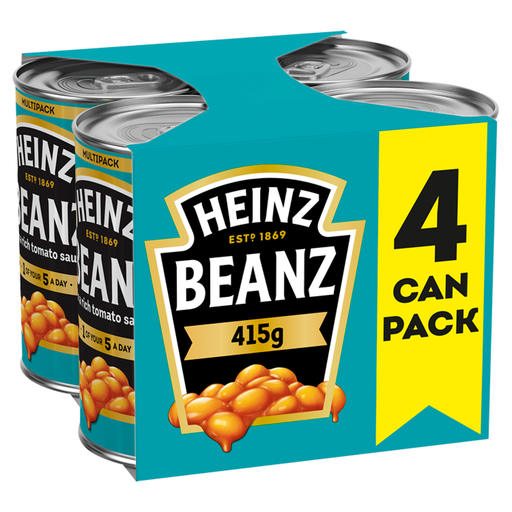
This four-tin format is an option when guests specifically want the Heinz recipe across more than one meal. Check the pack label and plan for any beans left after a tin is opened.
 No image available
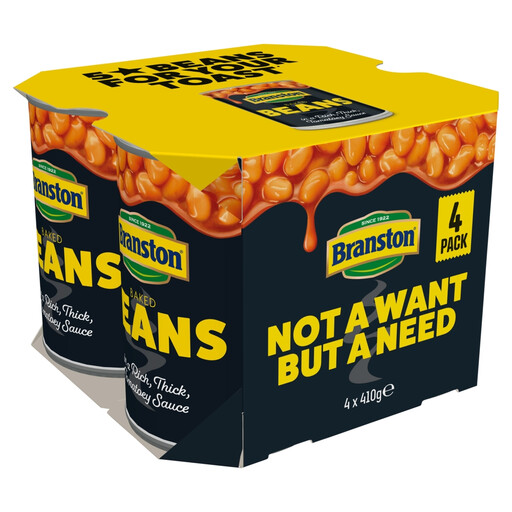
Four separate tins give a group the option to open beans for meals on different days. Match the quantity to the menu and check the pack’s recipe and storage instructions.
 No image available
This smaller tin may suit a short stay when a larger tin would leave leftovers. Check whether 220g covers the intended meal; do not assume it provides the same servings as a 400g tin.
Start with the number of meals and people, then check the tin size and any stated servings. Sainsbury’s describes its standard 400g tin as two servings, but the amount your group uses at a meal may differ; choose a multipack only if its tins fit the plan or can be taken home unopened.
Consider one when its nutrition and ingredient label meets the needs of the people eating it. Waitrose states that its Essential Reduced Salt & Sugar beans have 30% less sugar and salt than its regular Essential beans; the comparison does not describe other brands’ recipes.
Check the date against your travel and meal plans and store the tins as directed. GOV.UK says best-before dates on tinned foods such as baked beans concern quality: after the date, the food is usually safe to eat, but its quality may not be the same.
Follow the particular tin’s instructions for transferring, refrigerating and using leftovers. The cited Sainsbury’s and Waitrose tins specify a non-metallic container and use within two days; M&S specifies use within three days for its standard 400g tin.
Check the physical pack before serving, particularly when a guest has an allergy requirement. Product recipes and labels can change, so the details on a listing should not replace the information on the tin being used.