A 200g to 220g tin can be a convenient component of a meal before a ride, with time to digest, or after a ride; it is less practical as food to carry and eat while cycling. If lower salt and sugar matter, compare equivalent whole tins: Sainsbury’s lists 0.72g salt and 25.4g carbohydrate for its reduced-sugar-and-salt 215g tin, against 1.22g salt and 29.5g carbohydrate for its standard 215g tin. Neither recipe determines the rest of your meal, so check the portion, label and timing that suit your plans.
Who might want a single tin?
Cyclists planning a meal around a ride
A tin can contribute carbohydrate and protein to a meal before a ride, when there is time to digest, or afterwards. For food eaten during exercise, consider portability and personal tolerance instead: a 2023 review in Nutrients notes that some carbohydrate-rich foods are difficult to carry or consume during exercise.
Riders eating alone
A 200g to 220g tin is worth comparing if you intend to use the whole can in one meal rather than open a larger tin and store leftovers. Check the serving statement: pack weight alone does not establish that a product is labelled as one serving.
Shoppers comparing salt and sugar
Compare the figures for the amount you plan to eat, particularly when choosing between standard and reduced recipes. A lower-salt recipe may also have a different carbohydrate figure, so one label claim does not settle the whole-meal choice.
What should you compare?
| Priority |
What to check |
Your needs |
| Portion |
Check the tin weight and stated servings. Sainsbury’s lists its 215g standard tin as one serving; Waitrose & Partners lists its Essential 420g tin as two. |
I’m eating alone and would rather use a whole tin in one meal than plan for leftovers. |
| Meal contribution |
Compare carbohydrate and protein for the whole amount you will eat. Sainsbury’s lists 29.5g carbohydrate and 9.3g protein per standard 215g tin; Waitrose & Partners lists 31.3g and 9.7g respectively for its Heinz single-serve tin. |
I want to know what the beans contribute before choosing the other foods in my meal. |
| Timing and fibre |
Consider when you will eat the meal and how you tolerate it. Waitrose & Partners lists 7.8g fibre per Heinz single-serve tin. A 2023 Nutrients review identifies portability and possible gastrointestinal discomfort as barriers for some foods eaten during exercise. |
If I’m eating before a ride, I want time to digest; for on-bike food, I need something practical to carry and eat. |
| Salt and sugar |
Compare equivalent whole-can labels. Sainsbury’s lists 0.72g salt for its reduced-sugar-and-salt 215g tin and 1.22g for its standard 215g tin; it states the reduced recipe has 30% less sugar and salt than its standard beans. |
Lower salt and sugar matter to me, but I also want to see how the carbohydrate figure changes between recipes. |
| Dietary suitability |
Read the current tin’s ingredients and allergen statement, not just a vegan or vegetarian description. M&S states that its vegan-labelled Eat Well Baked Beans 400g are not suitable for people with milk or egg allergy. |
I need the exact product’s label to address my dietary or allergy requirements. |
Common buying mistakes
-
Treating a tin as on-bike food
A tin is awkward to carry and eat during a ride. A 2023 review in Nutrients also notes that transport, the amount needed and gastrointestinal discomfort can make some carbohydrate-rich foods impractical during exercise.
Plan beans as part of a meal when you have time to eat and digest, and try unfamiliar pre-ride foods during training rather than at an important ride.
-
Comparing per 100g when you will eat the whole can
A per-100g figure does not show how much you will consume from tins of different sizes. Waitrose & Partners labels its Essential 420g tin as two servings, while Sainsbury’s labels its standard 215g tin as one.
Use whole-can figures for a tin you intend to finish, or work from the labelled serving when planning to split a larger can.
-
Assuming a reduced recipe provides the same carbohydrate
Sainsbury’s reduced-sugar-and-salt 215g tin lists 25.4g carbohydrate per can, compared with 29.5g for its standard 215g tin. Their salt figures are 0.72g and 1.22g respectively.
Compare both figures against what you want from the meal rather than choosing on the reduced-sugar-and-salt description alone.
-
Using a dietary claim as an allergen check
Claims describe different things. M&S labels its Eat Well Baked Beans vegan and vegetarian but says the product is not suitable for people with milk or egg allergy.
Check the allergen statement on the exact tin you buy, particularly if you need to avoid a specific ingredient.
Brand and range references
Heinz
The Heinz single-serve tin is a smaller-format reference for comparing a whole can with a cycling meal.
- Waitrose & Partners lists 31.3g carbohydrate, 9.7g protein and 7.8g fibre per can.
- The same listing gives 1.2g salt per can; compare that figure if salt is a deciding factor.
Sainsbury’s
Its standard and reduced-sugar-and-salt 215g tins allow a like-for-like pack-size comparison.
- Sainsbury’s lists 25.4g carbohydrate and 0.72g salt per reduced-recipe tin, against 29.5g carbohydrate and 1.22g salt for its standard tin.
- The reduced recipe has less carbohydrate as well as less salt; check the current ingredients if sweeteners matter to you.
Waitrose Essential
Waitrose & Partners lists both 220g and 420g Essential baked-bean formats.
- The 420g tin is labelled as two servings, making its stated half-can nutrition useful when planning to share it.
- Waitrose & Partners lists 28.2g carbohydrate and 1.03g salt per half of the 420g tin; do not mistake those figures for the full can.
M&S Eat Well
M&S lists Eat Well Baked Beans in a 400g tin, rather than the smaller single-tin sizes discussed here.
- M&S labels this product vegan and vegetarian.
- M&S also states that this specific product is not suitable for people with milk or egg allergy.
Tesco
Tesco Groceries lists Tesco Organic Baked Beans in Tomato Sauce in a 420g tin.
- The stated pack size lets you distinguish it from a 200g to 220g tin while shopping.
- Check its current serving statement and nutrition panel before comparing it as a one-person portion.
A Joybuy single-tin option
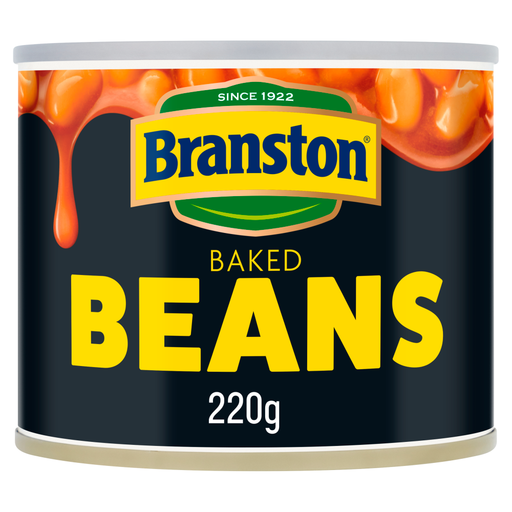
This 220g standard baked-bean tin is an option to assess as part of a meal before or after a ride; check its serving statement if a labelled one-serving pack matters to you.
 No image available
Branston Baked Beans in Tomato Sauce 220g
Consider this tin as a component of a meal before or after a ride, rather than as food to eat on the bike. Joybuy lists 27.5g carbohydrate, 10.0g protein, 13.0g fibre and 1.33g salt per can. Consider the fibre and your own tolerance when deciding when to eat it, and check the tin’s serving statement before treating the whole can as a labelled serving.
View on Joybuy
Questions about beans and cycling meals
Are baked beans practical to eat during a bike ride?
A tin is generally more practical as part of a meal than as food to carry and eat while riding. A 2023 review in Nutrients notes that transport, the amount required and possible gastrointestinal discomfort can limit the usefulness of some carbohydrate-rich foods during exercise. Try your meal timing during training if you plan to eat beans before a ride.
Does a reduced-sugar-and-salt tin provide the same carbohydrate as a standard tin?
Not in Sainsbury’s comparable 215g tins: its reduced recipe lists 25.4g carbohydrate and 0.72g salt per can, while the standard recipe lists 29.5g carbohydrate and 1.22g salt. Choose by the whole meal you intend to make and the label figures that matter to you.
Is a 420g tin a single serving?
Not necessarily. Waitrose & Partners labels its Essential 420g baked beans as two servings and gives nutrition figures per half-can. Check the serving statement on any larger tin, then compare the amount you actually intend to eat.
Can a vegan label settle an allergy question?
No. Check the exact product’s current allergen statement. M&S labels its Eat Well Baked Beans vegan and vegetarian but states that they are not suitable for people with milk or egg allergy.
What should I do with beans left after opening a larger tin?
Follow the storage instructions on that tin, including how to transfer and refrigerate unused beans and when to use them. If you would rather avoid planning for leftovers, compare a smaller format and check whether it is labelled as one serving.


