One-person desk-lunch buyers
A 200–220g tin may be easier to use in one sitting. If you choose a larger tin, plan where you will refrigerate the remainder and follow that product’s opened-pack instructions.


Choose a 400–420g tin if you can use the whole tin or refrigerate the remainder according to its label. A 200–220g tin makes more sense when you want one lunch without leftovers; if sugar and salt matter to your choice, compare the exact recipe’s per-100g label and any stated reduction against its named standard recipe.
A 200–220g tin may be easier to use in one sitting. If you choose a larger tin, plan where you will refrigerate the remainder and follow that product’s opened-pack instructions.
A larger tin or multipack is worth considering when you will use its contents across meals. Check the size of each individual tin, not just the total pack weight.
Look for the reduction’s stated comparison product, then compare sugars, salt and ingredients per 100g on the exact tins you are considering.
Start with how much you will use at lunch, then check the recipe and what you can do with an opened tin.
| Priority | What to check | Your needs |
|---|---|---|
| Tin size | Compare the weight of each tin, including tins within a multipack. Check the labelled number of servings if you intend to use only part of one. | A smaller tin suits me if I want one lunch without an opened tin to take home. I can consider a larger one if I will use the remainder. |
| Recipe | For reduced sugar or salt claims, read the named comparison recipe, ingredients and per-100g sugars and salt. Sainsbury's says its 400g reduced recipe has 30% less of each than its own standard baked beans; that is not a comparison with other brands. | I want to know what the stated reduction means for the particular tin I am buying, rather than relying on its front-of-pack wording alone. |
| Leftovers | Read the exact pack’s instructions for transferring, refrigerating and using opened contents. The checked Heinz and M&S product instructions give different use-within periods. | If I cannot refrigerate an unfinished tin, I would rather choose an amount I can use at lunch. |
| Heating | Check the product’s heating directions and whether you have a suitable dish and the required facilities at work. The checked Sainsbury's and Heinz instructions call for a microwaveable dish or container. | I need a way to prepare the beans with the equipment available at my desk-lunch location. |
A small tin avoids an opened remainder, while a larger one can cover more than one meal if you can store it as directed.
Decide how much you will eat at lunch and whether you can use the rest before choosing a size.
Sainsbury's states a reduction against its own standard beans; the checked Heinz No Added Sugar recipe uses different wording and lists a sweetener. The claims do not describe the same comparison.
Read the named comparator, ingredients and per-100g sugars and salt on each tin.
The checked product instructions call for unused contents to be transferred to a suitable container and refrigerated, with a use-within period that varies by product.
Follow the instructions on your tin. If you cannot store leftovers as directed, choose a smaller format or share a larger one.
The NHS says beans and pulses count as no more than one 5 A Day portion per day, regardless of the amount eaten.
If you are counting portions at lunch, do not count extra beans as an additional portion.
Tesco lists standard and reduced sugar and salt own-label baked beans in 420g tins.
The Essential range includes listed 420g standard and reduced salt and sugar baked-bean tins.
Its 400g reduced sugar and salt baked beans state 30% less sugar and 30% less salt than Sainsbury's standard baked beans.
Heinz has standard and No Added Sugar baked-bean recipes among the checked listings.
The checked range includes a 400g standard tin and a 220g Only 7 Ingredients tin.
These tins include larger multipacks for lunches across several meals and a 220g option for a smaller serving. Check how much of an individual tin you will use.
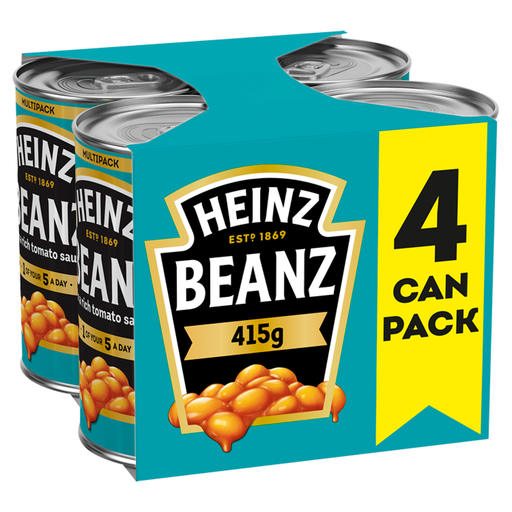 Image unavailable
Four tins can cover lunches across several meals. Each tin contains 415g; check its heating and opened-pack storage directions if you plan to use only part of one.
 Image unavailable
This four-tin pack is an option when you expect to use baked beans over several meals. Each tin contains 410g; plan how you will store any unused contents after opening one.
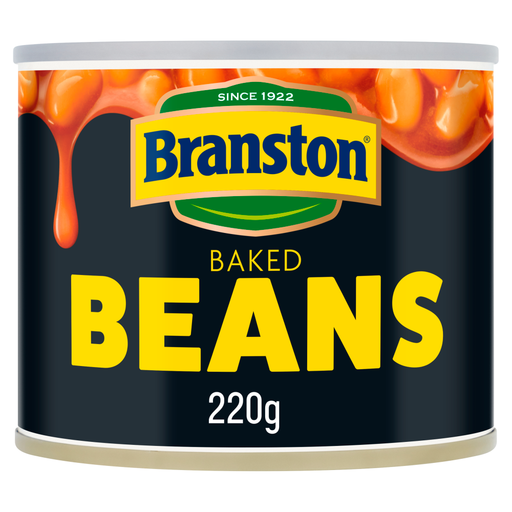 Image unavailable
A 220g tin is worth considering when you want a smaller amount for one desk lunch. Check the pack’s heating directions against the facilities available at work.
 Image unavailable
This four-tin pack is an option if you want to compare a reduced sugar and salt recipe for lunches across several meals. Each tin contains 410g; check the exact nutrition label, the reduction’s comparison basis and the pack’s preparation instructions.
Not necessarily. Sainsbury's describes its checked 400g reduced-recipe tin as two servings. If you expect to eat only part of a larger tin, check how you will store the remainder; a 200–220g format may avoid that step.
No. Sainsbury's states that its checked reduced recipe has 30% less sugar and salt than its own standard baked beans, while the checked Heinz product is labelled No Added Sugar and has its own ingredients and nutrition values. Compare each tin’s per-100g label and the stated basis for any reduction.
Yes. NHS guidance includes baked beans in tomato sauce, but says beans and pulses count as no more than one 5 A Day portion per day, regardless of how much you eat.
Follow the instructions for that product, including transferring unused beans to a suitable container and refrigerating them. The checked Heinz instructions say to use leftovers within two days; the checked M&S standard product gives three days, so do not apply one tin’s period to another.
No. Transfer them to a suitable microwaveable dish or container and follow the pack’s heating directions. The checked Sainsbury's and Heinz instructions specify a microwaveable dish or container rather than the tin.