One-person lunches
A 200–220g tin is worth considering when beans are a small side for one and you would rather not plan around leftovers. Heinz and M&S describe examples in this size range as single-serve.


For a small side for one person, consider a 200–220g tin; for two, a 400–420g tin may be easier to share, with Sainsbury’s 400g and Waitrose Essential 420g both labelled as two servings. Choose the recipe separately: compare salt and sugars per 100g, and check ingredients and allergen information if serving guests.
Start with the amount you expect to serve alongside the rest of Easter lunch, rather than treating every single tin as one portion.
A 200–220g tin is worth considering when beans are a small side for one and you would rather not plan around leftovers. Heinz and M&S describe examples in this size range as single-serve.
If beans are a shared side, look at the serving guidance on a larger tin. Sainsbury’s labels its 400g tin as two servings, as does Waitrose for its Essential 420g tin.
Compare the exact recipe and pack information before serving. Salt, sugars, sweeteners and allergen statements can differ even between tins that appear to suit the same portion.
Choose the amount for your table first, then compare recipes using the same label basis.
| Priority | What to check | Your needs |
|---|---|---|
| Portion size | Check the tin weight and labelled servings. Heinz’s 200g No Added Sugar and M&S’s 220g Only 7 Ingredients tins are described as single-serve; Sainsbury’s 400g and Waitrose Essential 420g tins are labelled as two servings. | Beans are only a small side for me, so I would rather open one smaller tin. If two of us want beans, I need to check whether a shared tin fits our portions. |
| Salt and sugars | Compare both figures per 100g, then consider how much each person will eat. Waitrose says its Essential Reduced Salt & Sugar 220g recipe has 30% less of each than its regular Essential recipe; that comparison does not describe other brands. | Salt or sugars matter to my choice, so I want to compare the recipes themselves—not assume the smaller tin has different nutrition. |
| Ingredients and allergens | Read the current ingredients and allergen statement on the exact pack. M&S describes its 220g tin as having seven ingredients but says it is not suitable for people with milk or egg allergy; Heinz’s 200g No Added Sugar product contains sweetener. | I’m serving someone with a food allergy, or I want to know whether the recipe contains sweetener before putting it on the table. |
| Leftovers | Read the opened-tin storage instruction before choosing a larger size. Transfer unused beans to a suitable covered container, refrigerate them and follow the period stated on that product. | If I open more than we will eat at lunch, I need a plan to store and use the remainder. |
A small tin does not, by itself, tell you how much salt or sugar the beans contain. Reduced-recipe claims also compare specific products, not every tin on the shelf.
Compare salt and sugars per 100g on the tins you are considering, then check the amount you intend to serve.
A 400–420g tin may provide more than one person wants as a small side, even when the product is labelled as two servings.
Choose a smaller tin if it fits your portion, or transfer any remainder to a suitable covered container, refrigerate it and follow the tin’s use-within instruction.
Beans left unused beyond the stated storage period may have to be discarded.
M&S describes its Only 7 Ingredients baked beans as vegan, but also states that they are not suitable for people with milk or egg allergy.
Check the current pack’s allergen information for the guest concerned; do not rely on the ingredient count or vegan wording alone.
GOV.UK explains that best-before dates concern quality, while use-by dates concern safety. It gives tinned foods such as baked beans as examples of products that carry best-before dates.
Read the date type and storage instructions on your tin. A best-before date is not a use-by date, but the tin’s condition and how it has been stored still matter.
These brand examples help identify tin sizes and recipe differences; the current label on the product you buy should guide the final choice.
Heinz has a 200g No Added Sugar Single Serve tin and a standard 415g tin in the cited retailer listings.
Tesco’s own-label search listings include 220g and 420g standard tins, as well as a 220g Reduced Sugar & Salt tin.
Sainsbury’s 400g baked beans in tomato sauce are labelled as two servings.
M&S describes its Only 7 Ingredients 220g baked beans as a small single-serve tin; it also lists a 400g baked-beans tin.
Waitrose lists a 220g Essential Reduced Salt & Sugar tin and a standard Essential 420g tin labelled as two servings.
This Joybuy option is a smaller tin to consider when baked beans will be a side for one person at Easter lunch.
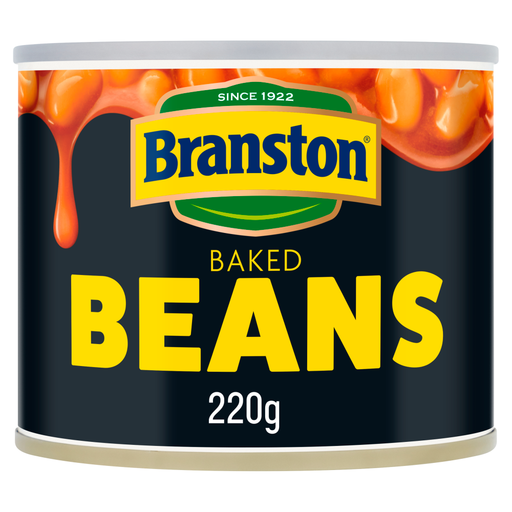 Image unavailable
The 220g tin is worth considering for a small side for one; check the portion you intend to serve if more than one person wants beans.
If any beans remain, the product information says to transfer them to a covered container, refrigerate and use within two days.
It may fit when beans are a small side for one person: Heinz calls its 200g No Added Sugar tin Single Serve, and M&S describes its 220g tin as small and single-serve. For two people, check the portions you want against the label; Sainsbury’s 400g and Waitrose Essential 420g tins are each labelled as two servings.
Transfer unused beans from the opened tin to a suitable covered container and refrigerate them, following the use-within instruction on the product you bought. Instructions differ: M&S says to eat unused contents of its cited 400g tin within three days.
No. M&S identifies its cited baked beans as vegan but says they are not suitable for people with milk or egg allergy. Check the current allergen statement on the exact pack before serving a guest.
No. GOV.UK says best-before dates concern quality, while use-by dates concern safety, and gives tinned foods such as baked beans as a best-before example. Check the date type, storage instructions and condition of the tin rather than treating the two labels as interchangeable.