Tent campers using a stove
If you have a saucepan but no microwave or fridge, look for hob directions and choose a tin you expect to finish at one meal. A format described as microwaveable is not, by itself, a hob option.


For a festival trip with a camping stove, choose a tin whose pack gives hob directions and a portion you can finish or share. A reduced-sugar-and-salt recipe is worth comparing if you want a change from that retailer’s regular beans, but the reduction does not establish how it compares with every other tin. Portion pots can limit opened leftovers when you have the right heating equipment; do not rely on a microwaveable pot for hob cooking without suitable pack instructions.
If you have a saucepan but no microwave or fridge, look for hob directions and choose a tin you expect to finish at one meal. A format described as microwaveable is not, by itself, a hob option.
A larger tin may be practical when several people will eat together. Agree how much you will use before opening it: the storage instructions for unused beans generally call for refrigeration, which may not be available at a tent.
If sugar, salt, sweeteners or allergens affect your choice, compare the current packs rather than relying on a range name. Sainsbury’s and Waitrose Essential each describe a reduced recipe relative to their own regular beans; that is not a comparison across all brands.
Start with the equipment and storage you will actually have, then compare portion sizes and the recipes on the packs that meet those conditions.
| Priority | What to check | Your needs |
|---|---|---|
| Heating method | Read the pack directions for hob or microwave heating. For hob preparation, check that you can empty the beans into a saucepan. | I have a camping stove and pan, but cannot count on finding a microwave at the campsite. |
| Opened storage | Check the product’s refrigeration and use-by instructions after opening. The Food Standards Agency notes that storage conditions in tents and vehicles differ from those at home. | Without a way to keep leftovers chilled, I would rather finish a tin at one meal. |
| Portion size | Compare the amount in each tin or pot with the number of people eating. A multipack contains separately sealed portions, but opening one still means following its own storage directions. | A smaller portion appeals to me if I am eating alone; a larger tin makes more sense if we will share it. |
| Recipe and allergens | Compare nutrition values on the same per-100g basis and read the full ingredient and allergen list. A reduced-sugar-and-salt claim must be read against the regular recipe named on that pack. | I want to know what is in the exact product I am packing, especially if a sweetener or wheat matters to me. |
The opened-storage instructions differ by product, but the listed tins require unused contents to be refrigerated. A tent without chilled storage may leave you unable to keep a part-used tin as directed.
Choose an amount you can finish, share the tin at that meal or arrange suitable chilled storage. Follow the period on the tin you bought rather than applying another brand’s instructions.
Waitrose describes Heinz Snap Pots as microwaveable. That description does not provide a hob-heating method for a stove-only trip.
Check for usable heating directions before packing pots. If you will use a stove, select a product with hob directions and bring a saucepan.
Sainsbury’s states that its reduced-sugar-and-salt beans have 30% less of each than its standard recipe; this does not describe every ingredient or compare the product with all other beans. Heinz’s vegan beans-and-sausages product lists wheat.
Read the current nutrition panel and full ingredient and allergen list for the exact product, particularly when choosing between plain beans and a beans-and-sausages meal.
The tin you take camping carries the instructions and ingredient information for the product in your hand. Those details are important when deciding how to heat it and handle leftovers.
Before leaving, check its ingredients, allergens, storage instructions, date mark and heating directions.
These ranges illustrate differences in tin size, preparation and recipe; a brand reference does not mean every product in its range has the same instructions.
The referenced range includes standard baked beans, Snap Pots and vegan beans with sausages. The format matters as much as the brand when choosing for a campsite.
Tesco’s referenced own-label beans come in a 220g tin, a size to consider when a larger tin could leave an unused portion.
The referenced own-label range includes standard and reduced-sugar-and-salt 400g tins.
ASDA’s referenced standard baked beans come in a 410g tin with hob directions.
M&S’s referenced baked beans come in a 400g tin. Check the current label when comparing its ingredients with other recipes.
The referenced reduced-salt-and-sugar beans come in a 420g tin.
These standard, reduced-recipe and smaller-tin baked beans offer different portion plans for festival camping. Check the heating directions on the exact pack before depending on any of them for a stove-only trip.
 No image available
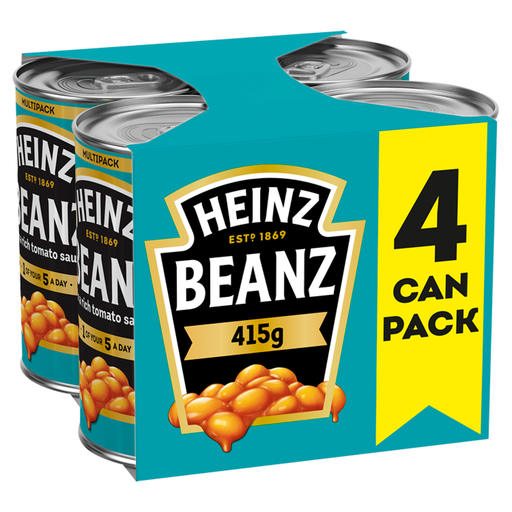
Four separate 415g tins let you open one at a time. For a trip without chilled storage, plan to finish or share each tin you open; check its pack directions before using a camping stove.
 No image available
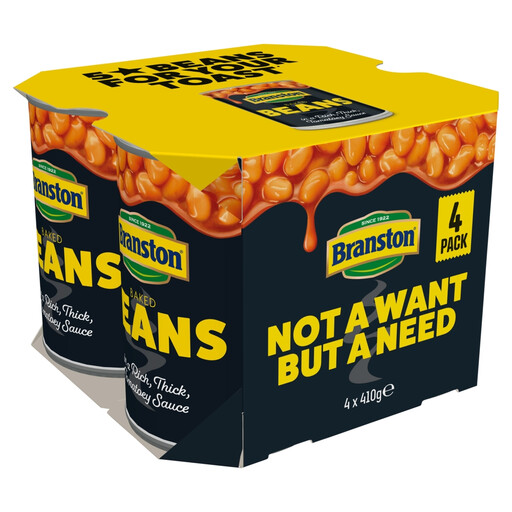
The four 410g tins may suit meals shared by a group. Check the current heating directions and arrange to finish an opened tin if you cannot refrigerate unused beans.
 No image available
This four-tin pack is an option when you want to compare a reduced recipe with standard beans. Read the current nutrition and ingredient labels for the comparison that matters to you, and check hob directions before packing it for a stove-only trip.
 No image available
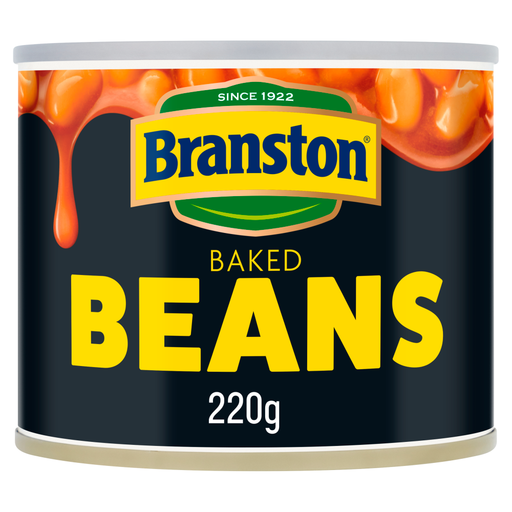
The 220g tin is smaller than the other Branston tins shown here, which may make it easier to plan a meal without leftovers. Check the pack’s heating directions if you will have only a camping stove.
 No image available
Six separate 410g tins provide portions for several meals or people without opening the whole pack at once. Plan how each opened tin will be used, and check its heating directions before relying on a stove.
Follow the storage directions on your tin. The referenced unopened ASDA and Sainsbury’s tins call for cool, dry storage rather than refrigeration. Keep food sealed and protected at the campsite; the Food Standards Agency warns that temperatures and humidity in tents and vehicles differ from those at home.
Transfer unused beans to a suitable non-metallic container and refrigerate them for the period specified by that product. Sainsbury’s standard beans specify use within two days, M&S within three days and ASDA within four days. If you cannot refrigerate leftovers, plan a portion you can finish when you open it.
Use a saucepan where the product’s hob instructions tell you to empty the tin into one. Tesco gives that direction for its 220g beans, while Waitrose says to heat its listed standard Heinz beans gently in a pan. Check the directions on the tin you take and pack the equipment they require.
Not necessarily. Heinz lists wheat in its vegan beans-and-sausages product, so its vegan description does not establish wheat suitability. Read the ingredient and allergen information on the current pack before choosing it.