First-home shoppers stocking a small cupboard
A single tin may be easier to fit into an initial shop than a multipack. If you expect to use beans regularly, compare the number and size of tins with your cupboard space and meal plans.


For a first food shop, a standard tin is a straightforward starting point if its size fits the meals you plan to make. Compare salt and sugars per 100g when choosing between standard, reduced-salt-and-sugar and no-added-sugar recipes; check the exact pack for dietary suitability and what to do with leftovers.
A single tin may be easier to fit into an initial shop than a multipack. If you expect to use beans regularly, compare the number and size of tins with your cupboard space and meal plans.
Standard and modified recipes list different values per 100g. Read both salt and sugars on the nutrition panel rather than treating a no-added-sugar label as an answer to both questions.
Check dietary claims and ingredients on the exact tin. If you have a food allergy, read its allergen information too; a claim about one recipe does not establish the suitability of a whole range.
Choose a quantity you can use, then compare recipes on the same per-100g basis and read the instructions for the tin you take home.
| Priority | What to check | Your needs |
|---|---|---|
| Tin and pack size | Check the weight of each tin and how many tins are in a pack. Consider whether you will use an opened tin promptly. | I am shopping for one person and would rather start with a smaller tin, or I have room and plans for several standard tins. |
| Salt and sugars | Compare both figures per 100g, then look at the portion you expect to eat. Check the exact recipe, not just a reduced-salt or no-added-sugar phrase. | If either figure matters to me, I want to compare standard and alternative recipes on the same basis. |
| Ingredients and suitability | Read the current ingredients, allergen information and any dietary claim on the exact pack. GOV.UK says that any of the 14 regulated allergens present as ingredients in prepacked food must be clearly labelled in the ingredients list. | I need to know whether this particular tin meets my dietary requirements, rather than relying on the brand name. |
| Storage after opening | Check where to keep unopened tins and follow the pack’s instructions for transferring, refrigerating and using leftovers. The stated time can differ between products. | Will I use the rest of a standard tin soon, or would a smaller format make more sense for my meals? |
Salt and sugars are separate nutrition values, and modified recipes can differ on both.
Compare each figure per 100g on the tins you are choosing between, then check the portion you intend to eat.
Ingredients and suitability statements relate to particular recipes. A vegan claim does not replace an allergen check.
Read the ingredients and allergen statement on the current physical pack, especially when an allergy or strict dietary requirement affects your choice.
Storage instructions differ between the cited products: Sainsbury’s and Waitrose listings specify using refrigerated leftovers within two days, while the cited standard M&S tin specifies three days.
Follow your tin’s instructions for transferring and refrigerating leftovers, and choose a size that fits how you will use them.
These examples show why the exact recipe and tin size matter more than the name on its own; check the current pack when deciding.
A branded standard tomato-sauce option for shoppers who already know they prefer this recipe.
Tesco’s baked-beans category includes own-label options alongside branded products.
The cited own-label 4 x 400g pack is an option for shoppers planning to keep several standard tins.
Asda own-label beans offer another standard-tin recipe to consider if taste is guiding your choice.
M&S has standard and no-added-sugar baked-bean recipes that can be compared by their nutrition panels.
The essential Waitrose range includes standard and reduced-salt-and-sugar beans in 420g tins.
These Branston and Heinz tins offer a choice of smaller and multipack formats, including one reduced-sugar-and-salt recipe. Compare the pack sizes with your cupboard space and check each current label for nutrition and storage details.
 No image available
The reduced-sugar-and-salt recipe is an option to compare with standard beans if those label values matter to you. The pack contains four 410g tins; check the current nutrition panel and instructions for leftovers.
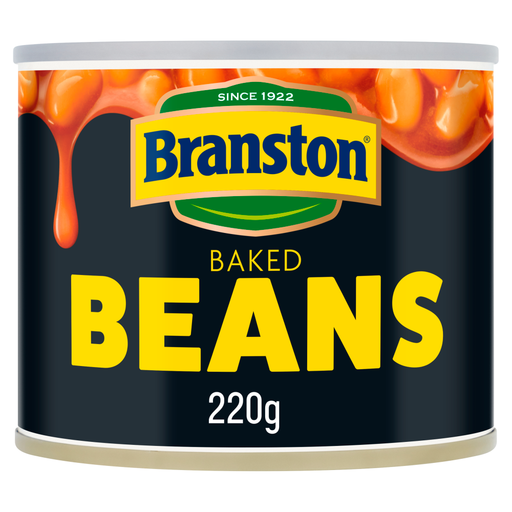 No image available
This 220g tin is a smaller-format choice if you do not expect to use a standard-sized tin promptly. Check the label for nutrition and any instructions for storing leftovers.
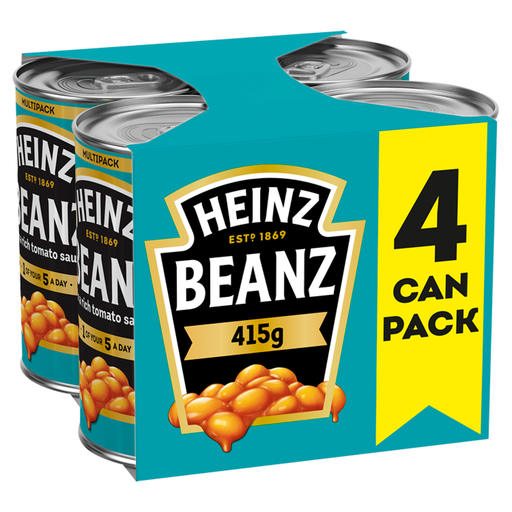 No image available
For shoppers who prefer the Heinz tomato-sauce recipe, this pack contains four 415g tins. Check that the quantity suits your cupboard and read the current label for nutrition and leftover storage.
 No image available
Six 410g tins suit a cupboard plan that has room for several cans and meals in which to use them. Check the current pack for nutrition and storage instructions.
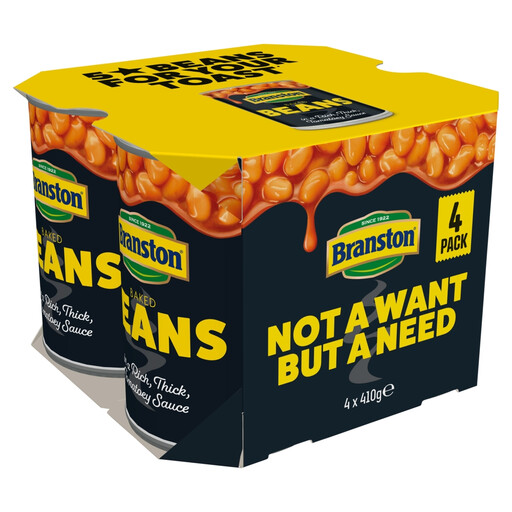 No image available
This four-tin pack offers a different cupboard quantity from the six-tin Branston pack above. Each tin is 410g; check the current label for nutrition and instructions after opening.
An unopened tin can be kept in the cupboard according to its storage instructions, making it practical to plan into simple meals. Choose a tin size you expect to use, and check what the pack says about any leftovers.
Compare salt and sugars per 100g on the exact tins, then consider your usual portion. Waitrose lists 0.30g salt and 2.0g sugars per 100g for its essential reduced-salt-and-sugar beans; M&S lists 0.43g salt and 1.2g sugars per 100g for its no-added-sugar beans. Neither product name tells you both figures on its own.
No: check the exact current pack’s ingredients, allergen information and dietary claim. GOV.UK says that any of the 14 regulated allergens present as ingredients in prepacked food must be clearly labelled in the ingredients list; a vegan statement for one recipe does not cover every product from the brand.
Follow that tin’s instructions for transferring and refrigerating leftovers. The cited Sainsbury’s and Waitrose listings say to use them within two days, whereas the cited standard M&S product says within three days, so do not assume one period applies to every tin.
Not necessarily: taste is personal, so trying a single own-label tin is a way to decide whether its recipe suits you. A 2024 Which? blind taste test of 66 tasters, reported by STV News and PA Media, scored some own-label tins above Heinz, but that historical result does not predict your preference or a current recipe.