Households comparing salt
If fish, chips, seasoning and sauces are all part of the meal, compare the beans’ salt figure for the portion you expect to serve, not just the figure on the front of the tin.


Choose a reduced-salt-and-sugar tin if you want the beans to contribute less salt alongside fish, chips and sauces; compare the figures per 100g and for the portion you will serve. A standard tin may suit a household that prefers that recipe, while a no-added-sugar or shorter-ingredient option calls for a closer look at sweeteners and allergy statements on the exact pack.
If fish, chips, seasoning and sauces are all part of the meal, compare the beans’ salt figure for the portion you expect to serve, not just the figure on the front of the tin.
Match the can size or multipack to how many people will eat the beans. If a tin will be left partly used, check its instructions for storing the remainder.
A no-added-sugar recipe and a short ingredient list answer different preferences. Check sweeteners and the allergy statement on the exact product before choosing.
Start with the amount of beans you will serve, then compare nutrition figures on the same per-100g basis and check the recipe’s ingredients.
| Priority | What to check | Your needs |
|---|---|---|
| Salt | Compare salt per 100g, then calculate or read the figure for your portion. GOV.UK says traffic-light labels can help with an initial comparison; use the nutrition panel for the detailed figure. | I want to account for the beans as well as any seasoning or sauces served with the fish and chips. |
| Sugars and sweeteners | Compare sugars per 100g and read the ingredients. ASDA’s listing for Heinz No Added Sugar beans states 1.9g sugars per 100g and names steviol glycosides; no added sugar does not mean sugar-free. | A no-added-sugar recipe interests me, but I also want to know which sweetener it contains. |
| Ingredients and allergies | Check the ingredient and allergy statements on the exact pack. Marks & Spencer labels its Only 7 Ingredients beans vegan but also states that they are not suitable for people with a milk allergy. | I prefer a shorter ingredient list, or I need to check suitability for someone with an allergy. |
| Can size and leftovers | Check the can weight, stated servings and instructions for opened beans. A four-can pack and a smaller single tin serve different cupboard-planning needs. | For this meal, I would rather open an amount we can use and handle any leftovers as the pack directs. |
Salt in the beans still counts when fish, chips, seasoning or sauces are served alongside them. The NHS advises checking labels when choosing foods with less salt.
Compare the salt figure for the portion you will actually serve, then decide whether a reduced-salt recipe fits this meal.
ASDA’s listing for Heinz No Added Sugar beans states that the recipe contains naturally occurring sugars and lists 1.9g sugars per 100g.
Read both the sugars figure and ingredients; this recipe also lists steviol glycosides.
Marks & Spencer labels its Only 7 Ingredients beans vegan, while its product page says they are not suitable for people with a milk allergy.
Check the allergy statement on the exact pack when buying for someone with an allergy.
An unused portion needs storing according to the product’s instructions and may go to waste if it is not used in time.
Choose a can size that fits the number eating, and follow the pack’s directions for any remainder.
These examples show how particular recipes differ; check the current pack when making a final choice.
Its standard beans and No Added Sugar recipe offer different ingredient and nutrition profiles.
The cited standard 410g tin provides a reference for comparing a tomato-bean recipe.
The cited own-label four-pack is a standard baked-bean option labelled suitable for vegans.
The cited 410g own-label tin is presented as providing two servings.
The cited Reduced Salt & Sugar recipe is an alternative to a standard tomato-bean tin.
Only 7 Ingredients Baked Beans is a recipe for shoppers who want to inspect a short stated ingredient list.
These tins offer reduced-sugar-and-salt and standard baked-bean options for a fish-and-chips side, in multipacks or a smaller single can. Compare the current label and serving size for the meal you have planned.
 No image available
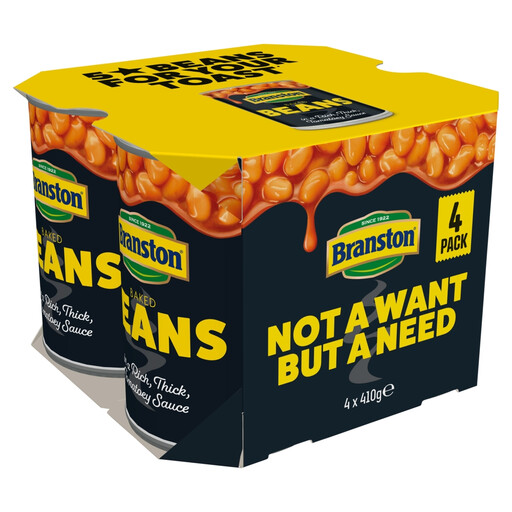
A reduced-sugar-and-salt recipe to consider when comparing what the beans contribute alongside fish and chips. The pack contains four 410g cans; check the current label for the portion and ingredients.
 No image available
A standard baked-bean multipack for keeping tins available for meals such as fish and chips. It contains four 410g cans; compare the nutrition information for the amount you will serve.
 No image available
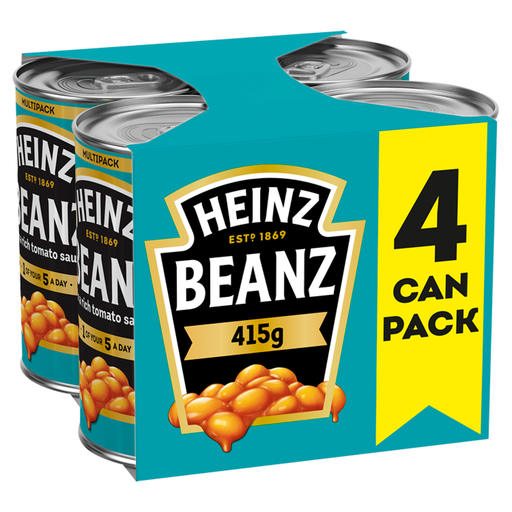
A standard Heinz tomato-sauce recipe in four 415g cans. If salt or sugars matter to your choice for fish and chips night, compare the current label with other recipes on a per-100g basis.
 No image available
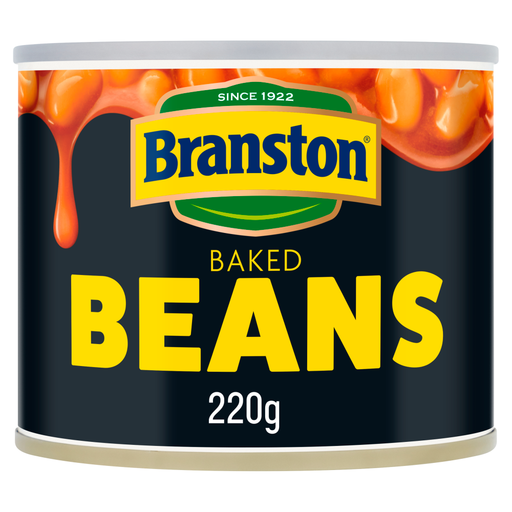
This 220g single can offers a smaller format than the listed multipacks. Check whether that amount fits the portions planned for your fish-and-chips meal.
A reduced-salt recipe is worth comparing if you want the beans to contribute less salt to a meal that may also include seasoning and sauces. Waitrose & Partners lists 0.30g salt per 100g for its Essential Reduced Salt & Sugar beans; compare that figure and your intended portion with the standard tin you are considering.
No. ASDA’s listing for Heinz No Added Sugar beans says they contain naturally occurring sugars and lists 1.9g sugars per 100g. The ingredients also include steviol glycosides, so check both the nutrition panel and ingredient list.
Compare salt and sugars per 100g first, then check the amount you intend to serve and the ingredients. GOV.UK says traffic-light labels help with an initial nutrition comparison; the nutrition panel provides the detailed figures.
No. Check the exact product’s allergy statement: Marks & Spencer labels its Only 7 Ingredients Baked Beans vegan but says they are not suitable for people with a milk allergy.
Follow the storage instructions on that product’s pack. Transfer any remainder to a suitable container, refrigerate it and use it within the period stated for the particular beans.