Baked beans are more practical as part of a meal before cycling, with time to digest, or after a ride than as food to carry and eat while riding. Choose a recipe by checking its carbohydrate and salt values per 100 g, then choose a can size that suits the portion you will use; do not assume a no-added-sugar recipe contributes the same carbohydrate as standard beans.
Who is this choice for?
The useful distinction for cyclists is whether the beans are going into a planned meal, becoming a regular cupboard staple or providing one convenient portion.
Cyclists planning meals around a ride
A can of beans can contribute carbohydrate, protein and fibre to a meal. If eating before a ride, leave time to digest it; the British Dietetic Association describes a light, carbohydrate-rich meal or snack two to three hours before exercise as one approach.
Regular riders comparing recipes
If baked beans appear frequently in your cupboard, compare sugar, salt and carbohydrate on the same per-100 g basis. Waitrose & Partners labels Heinz No Added Sugar as having 25% less salt than standard Heinz Beanz, but that claim alone does not tell you how much carbohydrate a serving provides.
Solo riders choosing a portion
A smaller can may be easier to use for a meal at work or after a ride away from home. A multipack of larger cans makes more sense when you regularly use a full can or can follow the pack’s directions for storing leftovers.
What should you check?
Start with when you plan to eat the beans, then compare nutrition per 100 g and the amount you would actually serve. The British Dietetic Association notes that carbohydrate needs depend on the demands of exercise; a bean meal is one part of that decision, not a complete riding plan.
| Priority |
What to check |
Your needs |
| Meal timing and carbohydrate |
Compare carbohydrate per 100 g and the portion you intend to eat. Waitrose & Partners lists 15.5 g per 100 g for standard Heinz Baked Beans; check a different recipe’s own label rather than applying that figure to it. |
I want beans as part of a meal before a ride, with time to digest, or afterwards—not as the food I rely on while cycling. |
| Protein and fibre |
Read both figures per 100 g, then consider what else is in the meal. Waitrose & Partners lists 4.6 g protein and 5.9 g fibre per 100 g for the cited Branston Baked Beans. |
For a meal after riding, I may serve beans with toast, potatoes or another food rather than expect the beans alone to make the whole meal. |
| Sugar and salt |
Compare the current recipe labels on the same basis. Waitrose & Partners lists 0.6 g salt per 100 g for standard Heinz Baked Beans and describes Heinz No Added Sugar as having 25% less salt than standard Heinz Beanz. |
Because I keep beans as a regular staple, the sugar and salt figures matter to me as well as their carbohydrate contribution. |
| Can size and leftovers |
Check the weight of each can, the number of cans in a pack and the storage directions after opening. The Joybuy options below include a 220 g can and multipacks of 410 g or 415 g cans. |
On days when I eat alone or take a meal to work, a smaller can may leave less to store. For shared meals, I may use a larger can. |
Common buying mistakes
-
Treating beans as the whole on-bike fuelling plan
Baked beans are a saucy, fibre-containing meal ingredient, which makes them awkward to carry and eat during a ride. A portion eaten close to hard exercise may not suit every rider.
Plan them for a meal with digestion time before riding or for afterwards. Try the timing and portion during ordinary training rather than for the first time on an event day.
-
Assuming no added sugar means the same carbohydrate
A claim about added sugar does not establish the total carbohydrate in the portion you will eat. Recipe names cannot substitute for a like-for-like nutrition-label check.
Compare carbohydrate, sugars and salt per 100 g on the current cans, then account for your serving size.
-
Applying one bean product’s dietary claims to another
Plain beans and beans with added ingredients can have different allergen information. Waitrose & Partners states that the cited Heinz Beans & Richmond Sausages product contains gluten, soya and sulphites.
Read the ingredients and allergen information on the exact pack you are buying, particularly when switching recipes or choosing a flavoured variant.
Brand and product-line references
These label examples help compare recipes; they do not imply that every product from a brand has the same nutrition or dietary information.
Heinz
Standard and No Added Sugar baked beans offer different label considerations for a cupboard meal.
- Waitrose & Partners lists 15.5 g carbohydrate, 4.8 g protein and 3.9 g fibre per 100 g for the cited standard Heinz Baked Beans.
- Its Heinz No Added Sugar listing states 25% less salt than standard Heinz Beanz and identifies sweetener in the recipe. Check that variant’s full nutrition and ingredients label for your intended portion.
Branston
A standard tomato-sauce bean option for comparing the contribution of a full-size can to a meal.
- Waitrose & Partners lists 12.5 g carbohydrate, 4.6 g protein and 5.9 g fibre per 100 g for the cited Branston Baked Beans.
- The same product listing gives 0.60 g salt per 100 g; use the portion you expect to eat when comparing cans.
Sainsbury's
An own-label 4 x 400 g pack that provides another per-100 g label for comparison.
- Sainsbury's lists 12.5 g carbohydrate, 3.8 g protein and 4.2 g fibre per 100 g for the cited pack.
- Its listed salt value is 0.58 g per 100 g; check the can’s current label when choosing a serving.
Waitrose Essential
A 420 g own-label can for comparing a standard recipe with branded alternatives.
- Waitrose & Partners lists 13.4 g carbohydrate, 4.4 g protein and 4.4 g fibre per 100 g for the cited Essential Baked Beans in Tomato Sauce.
- The cited salt value is 0.49 g per 100 g. Check the current can before applying these figures to a meal.
Baked beans on Joybuy
These standard and reduced-sugar-and-salt baked beans offer different can sizes for storecupboard meals before or after cycling. Check each pack’s current nutrition and ingredients label when the recipe, serving size or allergens matter to you.
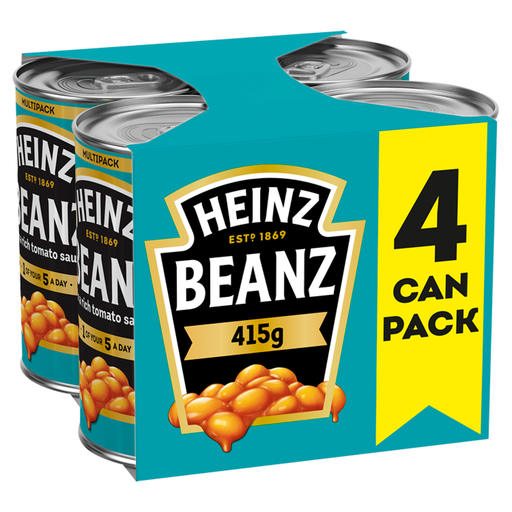 Image unavailable
HEINZ Baked Beans in Tomato Sauce, 4 x 415 g
Four full-size cans offer portions for planned meals or a shared cupboard supply. Waitrose & Partners lists 15.5 g carbohydrate per 100 g for its cited standard Heinz Baked Beans; check the nutrition label on this pack for the figures you will use.
View on Joybuy
 Image unavailable
Branston Beans in Tomato Sauce, 6 x 410 g
Six 410 g cans suit a cupboard where standard beans are used regularly. If fibre or salt influences the choice, compare the current per-100 g figures with the portion you normally serve.
View on Joybuy
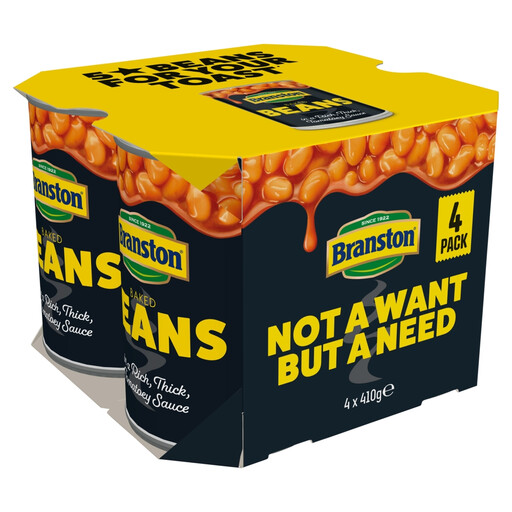 Image unavailable
Branston Baked Beans, 4 x 410 g
This four-can pack provides the full-size Branston format for meals before riding with digestion time or afterwards. Compare its current nutrition label with other standard recipes if carbohydrate, fibre or salt is a deciding factor.
View on Joybuy
 Image unavailable
Branston Baked Beans in Tomato Sauce, 220 g
The 220 g can offers a smaller portion for a meal eaten alone or away from home. Check its own label rather than assuming nutrition figures for a different can apply to this one.
View on Joybuy
 Image unavailable
Branston Reduced Sugar & Salt Baked Beans, 4 x 410 g
This four-can pack is a recipe option when sugar and salt labels are part of the decision. Compare its carbohydrate, sugars and salt per 100 g with the standard beans you are considering, and read the ingredients if sweeteners matter to you.
View on Joybuy
Frequently asked questions
Should I eat baked beans during a bike ride?
Baked beans are generally more practical in a meal before a ride, with time to digest, or afterwards than as food to carry while cycling. They are saucy and contain fibre, so try your intended portion and timing during training rather than for the first time on an event day.
Are standard or no-added-sugar beans a better choice for a cycling meal?
Choose between them by comparing the current labels against what you want from that meal, rather than treating the recipe name as a verdict. Waitrose & Partners lists 15.5 g carbohydrate per 100 g for its cited standard Heinz Baked Beans and describes Heinz No Added Sugar as having 25% less salt than standard Heinz Beanz; check the no-added-sugar can’s carbohydrate figure before planning the portion.
Would a smaller can be useful for a meal for one?
A smaller can can leave less to store if you usually eat beans alone. The Branston 220 g can shown here is smaller than the 410 g cans in the multipacks; whichever you choose, follow that pack’s directions for leftovers after opening.
Can I assume flavoured beans have the same allergen information as plain beans?
No. Read the ingredients and allergen information for the exact product: Waitrose & Partners states that its cited Heinz Beans & Richmond Sausages product contains gluten, soya and sulphites. Do not carry a dietary claim from a plain-bean recipe over to a sausage-containing or flavoured variant.


