Families cooking several portions
If a baked dish or another family recipe calls for more than one tin, check the number and size of cans in a pack against the recipe. A multipack is most practical when you have a plan for the remaining tins.


For a family recipe that uses several tins, a multipack makes sense if you can use the full pack; for a smaller recipe, start with the quantity it calls for. Choose a reduced-salt-and-sugar variant when its declared nutrition matters to your household, and check the can you will use for ingredients, allergens and leftover-storage instructions.
If a baked dish or another family recipe calls for more than one tin, check the number and size of cans in a pack against the recipe. A multipack is most practical when you have a plan for the remaining tins.
A reduced-salt-and-sugar tin offers a different declared recipe from its named standard counterpart. Compare the nutrition panels per 100g and check whether the tin contains enough for the dish you are making.
When an allergy or intolerance is relevant, read the ingredients on the can you will serve rather than relying on a previous purchase. Check its opened-can instructions before deciding what to do with any leftovers.
Start with the quantity your recipe needs, then check the nutrition and ingredients labels and plan for any opened tin.
| Priority | What to check | Your needs |
|---|---|---|
| Pack size | Check the weight per tin and the number of tins. Match the total quantity to the recipe and your plans for unopened cans. | For a dish using several tins, I can use a multipack. If I need only a small amount, a single tin may leave less unused. |
| Salt and sugars | Compare declared salt and sugars per 100g on the same basis. Check which standard product a reduced-salt-and-sugar claim names as its comparison. | I want to choose the recipe variant deliberately, without assuming that different brands or tin sizes have the same nutrition values. |
| Ingredients and allergens | Read the ingredients and allergen information on the physical can before use. Check again when buying a different variant or a newer pack. | If I am cooking for someone with an allergy or intolerance, the can I am opening is the one I need to check. |
| Leftovers | Check whether the can requires unused beans to be moved to a covered, non-metallic container, refrigerated and used within a stated period. | When a recipe uses only part of a tin, I need a way to store the rest and a plan to use it within the period on the label. |
A small tin may not contain enough for a family-sized dish, while opening a larger tin than needed creates leftovers to store.
Check the recipe’s required quantity against the weight of each tin before choosing a single tin or multipack.
The ingredients on a previous can or a retailer page may not describe the can you are about to serve.
Read the physical can’s current ingredients and allergen information, particularly when cooking for a child or guest with an allergy or intolerance.
Opened-can instructions vary by product. Tesco and Essential Waitrose standard tins specify transfer to a covered, non-metallic container, refrigeration and use within two days; the M&S standard tin specifies three days.
Follow the instructions on your particular can and decide how you will use the remainder before opening it.
Tesco lists its standard baked beans in tomato sauce as a 4 x 420g multipack, a format to consider when a recipe uses several tins.
The Essential range includes a standard 420g tin and a smaller 220g Reduced Salt & Sugar variant.
The standard Heinz Baked Beans 415g tin is an option for households that specifically want its tomato-bean recipe.
M&S lists a standard 400g tin alongside other baked-bean variants in its Foodhall range.
These Joybuy options include standard multipacks for recipes using several tins, a smaller single tin and a reduced-sugar-and-salt multipack. Match the pack quantity and variant to the dish before choosing.
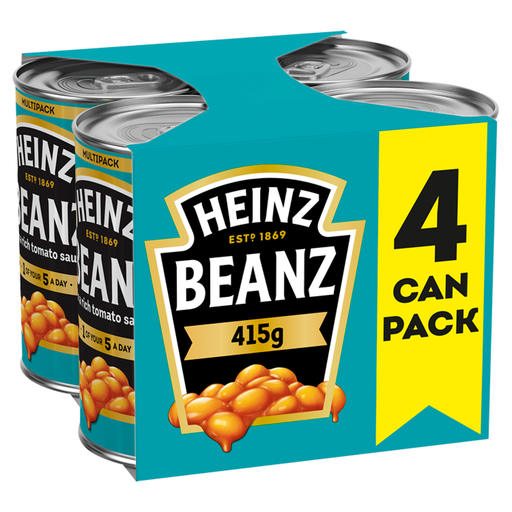 Image unavailable
Four 415g tins offer a pack format for recipes using several cans. For any opened tin, the listing says to transfer unused beans to a non-metallic airtight container, refrigerate and use within two days; check the can’s current instructions.
 Image unavailable
Six 410g tins provide a larger pack for recipes that use multiple cans or for several planned meals. Check the can’s ingredients and its instructions for covering, refrigerating and using any opened beans.
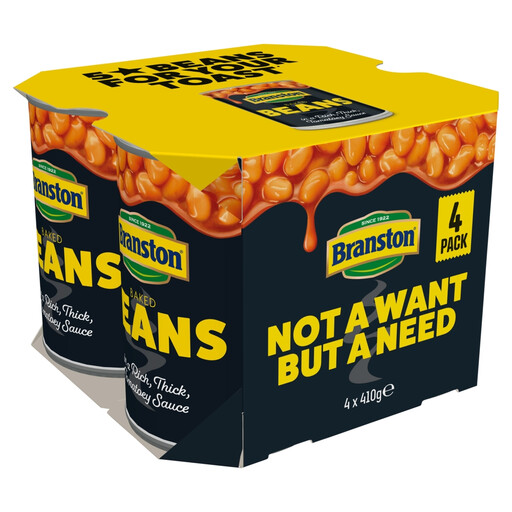 Image unavailable
Four 410g tins are a pack option when the recipe calls for more than one can. The listing gives nutrition values per 100g and says to refrigerate transferred leftovers and use them within two days; follow the physical can’s instructions.
 Image unavailable
Four 410g tins combine a multipack format with a reduced-sugar-and-salt recipe. According to the Branston product listing, this variant has 30% less sugar and 30% less salt than standard Branston baked beans; check the current can’s nutrition panel and ingredients before use.
 Image unavailable
This single 220g tin is a smaller-format choice when a recipe needs less than the listed multipacks contain. For a dish needing several tins, check the total quantity required; follow the can’s directions for any leftovers.
No single variant suits every recipe: check both the declared nutrition and the quantity needed. According to Waitrose & Partners, its 220g Essential Reduced Salt & Sugar tin has 30% less of each than regular Essential baked beans; that comparison is specific to those two products.
Yes. The NHS Eatwell Guide includes beans and other pulses among protein foods. When planning a meal with children, consider the other ingredients in the dish as well as the beans’ portion size and label.
Follow the instructions on that tin. Tesco and Essential Waitrose standard tins specify transferring unused beans to a covered, non-metallic container, refrigerating them and using them within two days; the M&S standard tin specifies use within three days after refrigeration in a non-metallic container.
Read the ingredients and allergen information on the physical can you intend to use, even if you have bought the product before. GOV.UK guidance for UK prepacked foods explains that allergens required to be declared are emphasised in the ingredients list when present.