Shoppers comparing standard tins
If baked beans are one part of a full English, check the tin weight and recipe as well as the name on the label. The standard tins described by Tesco, Sainsbury’s and Asda are not all the same size.


For a full English, a standard tomato-sauce tin is a straightforward choice if you have no specific recipe requirement; choose a reduced-sugar-and-salt variant when that distinction matters to you. Whether considering own-label beans or Heinz, compare the exact tin’s size, per-100g nutrition panel, allergen information and storage instructions rather than relying on the brand name.
If baked beans are one part of a full English, check the tin weight and recipe as well as the name on the label. The standard tins described by Tesco, Sainsbury’s and Asda are not all the same size.
A reduced-sugar-and-salt label describes a particular variant, not every tin from that brand. Compare its nutrition panel with the named standard recipe and check the current pack.
When ingredients or allergens affect the choice, read the physical tin before serving rather than relying on an earlier purchase or a product image. Marks & Spencer marks its standard baked beans as unsuitable for people with milk or egg allergy.
Start with the recipe you want, then choose a tin size that fits the breakfast and check the exact pack before serving.
| Priority | What to check | Your needs |
|---|---|---|
| Standard recipe | Check that the tin is the standard tomato-sauce recipe. Compare tin weights and distinguish single tins from multipacks. | I want familiar baked beans alongside the rest of a full English, without assuming every brand uses the same recipe or pack size. |
| Salt and sugar | Read the per-100g panel on the exact variant. Waitrose & Partners says its Essential Reduced Salt & Sugar beans contain 30% less of each than its regular Essential beans; that claim does not compare them with every other recipe. | A reduced-sugar-and-salt variant matters to me, so I want to know which standard recipe the reduction refers to. |
| Tin size and leftovers | Check the stated servings and opened-tin storage instructions. Match the pack to how many people will eat the beans. | For a shared breakfast, I want enough beans without assuming that a whole tin is one serving. |
| Ingredients and allergens | Read the ingredients and allergen declaration on the physical tin. Check the exact variant rather than a similarly named product. | If someone eating breakfast has an allergy or a strict ingredient requirement, I need to check the pack I will serve. |
Waitrose & Partners describes its Essential Reduced Salt & Sugar beans as having 30% less salt and sugar than its regular Essential recipe. That is a comparison between those two products, not all baked beans.
Compare the per-100g panels on the exact variants you are considering; do not infer their contents from the brand or pack colour.
An earlier purchase or online image may not describe the tin in hand. Marks & Spencer marks its standard baked beans as unsuitable for people with milk or egg allergy.
For an allergy-sensitive breakfast, read the ingredients and allergen declaration on the physical pack before serving.
Opened-tin instructions differ between products. Marks & Spencer, for example, says to refrigerate its baked beans and eat them within three days.
Plan the tin size around the people eating, then follow the storage and use instructions on that exact pack.
These brand examples describe particular baked-bean products and variants, not every tin bearing the same name.
Tesco lists a standard 420g tin of baked beans in tomato sauce.
Sainsbury’s lists its standard baked beans in tomato sauce in a 400g tin.
Asda lists a 410g tin of standard baked beans in a rich tomato sauce.
Waitrose Essential has regular and Reduced Salt & Sugar baked-bean variants.
A Waitrose & Partners listing describes Heinz Baked Beans as a 415g standard tin.
M&S offers a standard own-label baked-bean tin.
These options for a full English include standard multipacks, a reduced-sugar-and-salt Branston multipack and a smaller standard tin. Compare the exact recipe and pack format that suits your breakfast.
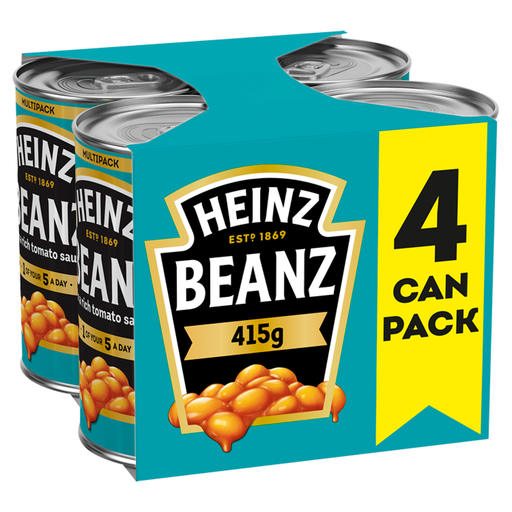 No image available
A standard tomato-sauce bean option if you want several tins for cooked breakfasts. The pack contains four 415g tins; follow the current can’s instructions for any leftovers after opening.
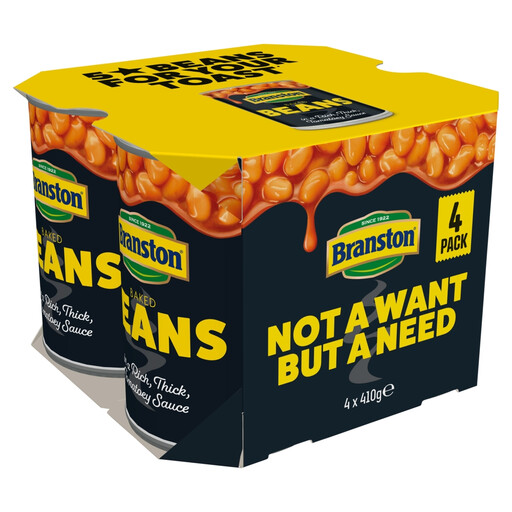 No image available
For breakfasts using standard baked beans, this pack contains four 410g tins. Check the can’s instructions for heating and for storing any opened leftovers.
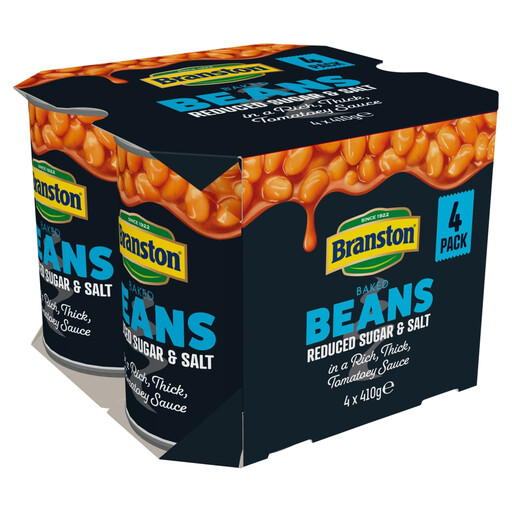 No image available
This four-tin pack suits a breakfast where you want Branston’s reduced-sugar-and-salt variant rather than its standard recipe. Each tin is 410g; check the current nutrition panel and the label’s comparison with standard Branston beans.
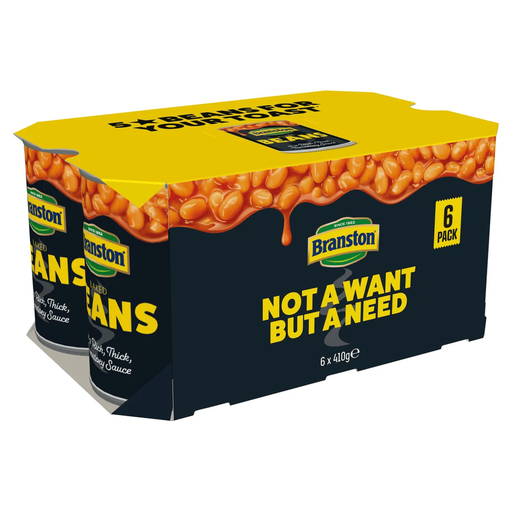 No image available
This standard tomato-sauce option contains six 410g tins for breakfasts on more than one occasion. Follow the current can’s instructions when heating the beans and storing leftovers.
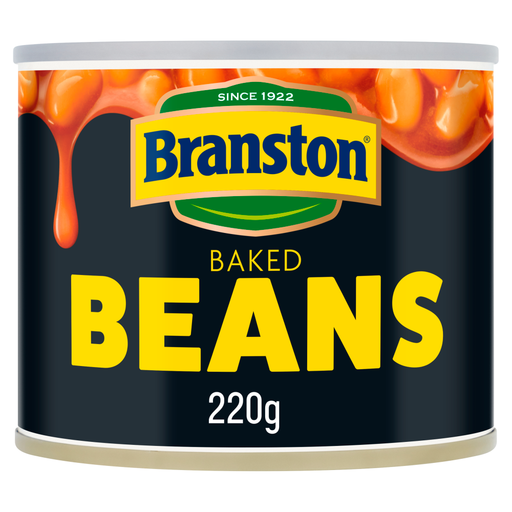 No image available
This 220g standard tomato-sauce tin is a smaller-format option for a cooked-breakfast side. Check the can for its stated servings, preparation and opened-tin storage instructions.
No single recipe suits every preference. Choose a reduced variant if that is the distinction you want, and compare its per-100g panel with the standard tin you would otherwise use. Waitrose & Partners says its Essential Reduced Salt & Sugar beans contain 30% less salt and sugar than its regular Essential beans; the claim has that specific comparator.
Check the stated servings on the exact tin and consider how many people will share it. Adjust for the rest of the breakfast rather than assuming a whole tin always equals one portion.
Follow the storage and use instructions on the exact pack. Marks & Spencer, for example, instructs shoppers to refrigerate its baked beans after opening and eat them within three days; do not apply that period to another product without checking its label.
Read the ingredients and allergen declaration on the physical tin before serving it to someone with an allergy. GOV.UK says that any of the 14 regulated allergens present in prepacked food must be clearly labelled within the ingredients list. Marks & Spencer marks its standard baked beans as unsuitable for people with milk or egg allergy.