Households comparing pack sizes
If beans are part of toast or a cooked breakfast, consider how many servings you will use. A multipack and a single tin answer different storage needs, even when the beans are for the same meal.


For a weekend breakfast, choose a tin size your household can use, then decide whether a regular or reduced-sugar-and-salt recipe suits your preferences. Compare sugars and salt per 100g, check the ingredients, and plan for any leftovers; a smaller tin or a reduced recipe is not automatically the right choice for every breakfast.
If beans are part of toast or a cooked breakfast, consider how many servings you will use. A multipack and a single tin answer different storage needs, even when the beans are for the same meal.
A reduced recipe may be worth considering if those label figures matter to you. Compare sugars and salt per 100g across the exact tins, and read the ingredients if you have a preference about sweeteners.
A 220g tin may be easier to use at one breakfast than a tin of 400g or more. If you choose a larger format, check its own instructions for storing and using the remainder.
Start with the amount you expect to serve, then compare the recipe and what will happen to any opened tin.
| Priority | What to check | Your needs |
|---|---|---|
| Tin and pack size | Check the net weight, number of tins and stated servings. Compare a single smaller tin with a larger tin or multipack according to how often you will use them. | I may only serve beans once this weekend, or I may want several unopened tins for later breakfasts. |
| Sugars and salt | Read both figures per 100g rather than comparing different stated portions. Check what each reduced recipe is compared with: ASDA describes reductions against a standard equivalent, while Waitrose compares its reduced beans with regular Essential beans. | If I prefer a reduced recipe, I want to know how its label differs from the regular version I would otherwise choose. |
| Ingredients | Read the ingredient list on the exact variant, particularly for a no-added-sugar recipe. ASDA's reduced-salt, no-added-sugar beans list steviol glycosides. | I want to choose a recipe whose ingredients suit my preferences, rather than deciding from the front of the tin alone. |
| Breakfast portion | Use the per-100g panel to compare tins, then consider the amount you will actually serve alongside toast, eggs or other breakfast food. Stated portions need not match your own serving. | Beans are one part of my breakfast, so I need a portion size that makes sense for the meal I am preparing. |
| Leftovers | Check the opened-storage directions for the particular tin. Waitrose & Partners instructs shoppers to transfer leftover Essential beans to a covered, non-metallic container, refrigerate them and use them within two days. | If I will not finish the tin at breakfast, I need to know when I expect to use the rest. |
A larger tin leaves more to store if only one person wants beans. A smaller tin can be convenient for that breakfast but may not suit a household serving several people.
Estimate how much you will serve, then check whether any remainder fits the tin's opened-storage instructions.
Reduced-sugar-and-salt labels use a stated comparison product, and ingredients can differ. ASDA's reduced-salt, no-added-sugar beans, for example, list steviol glycosides.
Compare sugars and salt per 100g on the exact tins and read their ingredient lists before choosing a reduced variant.
A figure for part of a large tin cannot be compared directly with a figure for a whole small tin. The NHS explains that nutrition information is given per 100g and may also be shown per portion.
Use the per-100g figures for a like-for-like label comparison, then consider your actual breakfast serving.
Opened-storage instructions apply to the particular product, so a period stated for one tin should not be assumed for another.
Read the label before opening. Transfer leftovers to a suitable covered container, refrigerate them and follow that product's use-within instruction.
These brands offer different pack formats or recipes to compare; the details below apply to the named products, not every tin made by each brand.
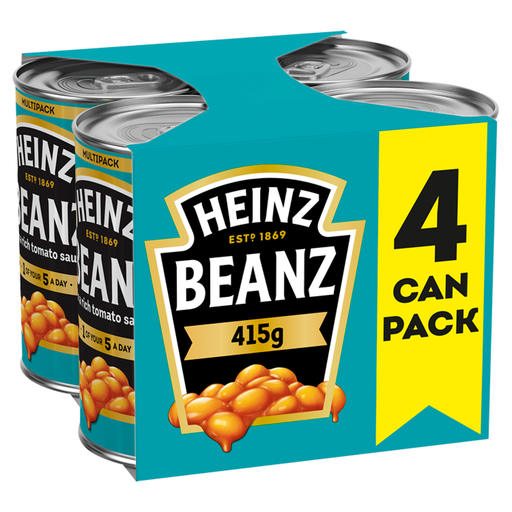
Heinz Beanz in a Rich Tomato Sauce is listed by ASDA as a 4 x 415g pack.
Tesco own-label baked beans were among the products discussed in Grocery Gazette's report of a 2023 Which? blind taste test.
Sainsbury's own-label beans also appeared in the 2023 blind-test context reported by Grocery Gazette.
ASDA lists both regular baked beans in tomato sauce and a reduced-salt, no-added-sugar variant in 410g tins.
M&S lists a 400g baked-beans tin with a per-100g nutrition panel.
The Essential range includes regular baked beans in a 420g tin and a reduced-salt-and-sugar variant in a smaller 220g format.
These options cover regular baked beans in single tins and multipacks, plus a reduced-sugar-and-salt multipack. Use the pack sizes and recipe labels to decide which fits your weekend breakfast.
 No image available
A four-tin standard-recipe pack to consider if beans feature in several breakfasts. Each tin is 415g; plan to refrigerate leftovers from an opened tin in a suitable container and use them within two days.
 No image available
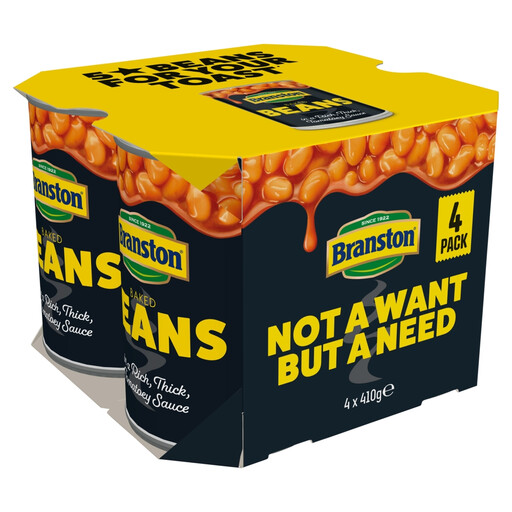
A regular baked-bean multipack for households planning more than one breakfast. It contains four 410g tins; refrigerate leftovers from an opened tin in a suitable covered container and use them within two days.
 No image available
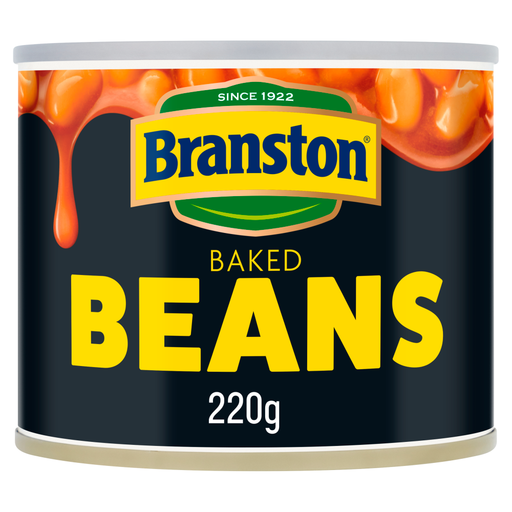
The 220g tin is a smaller-format option when a larger tin would leave more beans after breakfast. If you do have leftovers, transfer them to a separate container, refrigerate them and use them within two days.
 No image available
This 500g tin offers a larger single format for a cooked breakfast. Check how much you will serve; once opened, keep any remainder refrigerated and use it within two to three days.
 No image available
A four-tin option if you prefer a reduced-sugar-and-salt Branston recipe. The pack contains four 410g tins, and its ingredient list includes steviol glycosides. Refrigerate leftovers from an opened tin in a suitable covered container and use them within two days.
Check the net weight and number of tins, then think about how much your household will serve at one breakfast. A smaller tin may leave less to store, while a multipack gives you separate unopened tins for later meals.
Compare sugars and salt per 100g on the exact products, then read their ingredients. The NHS explains that nutrition information is given per 100g, which provides a consistent basis when stated portions differ; check what the reduced variant is compared with before interpreting a reduction claim.
No. ASDA's Reduced Salt & No Added Sugar Baked Beans list steviol glycosides. Read the ingredient list of the particular tin you are considering, because recipes differ.
Follow the opened-storage instructions on that tin. For its regular Essential beans, Waitrose & Partners instructs shoppers to transfer the contents to a covered, non-metallic container, refrigerate them and use them within two days; do not apply that period to a different product without checking its label.