Managers planning a conventional breakfast buffet
A standard tomato-sauce bean may fit a familiar cooked-breakfast offer. Match can and multipack sizes to expected covers, while keeping current recipe and allergen information for the product served.


For a conventional hotel breakfast buffet, start with a standard baked bean in a can or multipack sized to your expected covers. Choose a reduced sugar-and-salt recipe when that specific menu description matters, or a short-ingredient recipe when its ingredients and smaller format suit the service; neither choice replaces a product-specific allergen check. Compare labels on the same per-100 g basis and check the delivered pack before serving, as recipes can change.
A standard tomato-sauce bean may fit a familiar cooked-breakfast offer. Match can and multipack sizes to expected covers, while keeping current recipe and allergen information for the product served.
If the breakfast offer calls for reduced sugar and salt, compare the actual sugars and salt per 100 g. Keep any percentage-reduction claim tied to the regular product named on its label.
Check the delivered product’s allergen and suitability statements, make the required information available to guests and manage cross-contact during preparation and buffet service. A vegan or gluten-free description does not settle every allergy question.
Set the recipe and service format first, then check the exact supplied product against your guest information and handling plan.
| Priority | What to check | Your needs |
|---|---|---|
| Recipe | Check whether the beans are a standard, reduced sugar-and-salt or no-added-sugar recipe. Read sugars and salt per 100 g; keep a reduction claim with its named comparator. | I want the menu description to match what is served. Waitrose & Partners lists its Essential reduced recipe as 30% lower in sugar and salt than regular Waitrose Essential beans, while its Heinz No Added Sugar listing names standard Heinz as the salt comparator and declares a sweetener. |
| Allergens | Check the delivered pack’s ingredients, allergen warnings and suitability statements. Keep buffet information current and manage cross-contact separately. | Guests need accurate information before choosing from the buffet. GOV.UK guidance for England, Northern Ireland and Wales, and Food Standards Scotland guidance for Scotland, require food businesses to provide allergen information for prepacked and non-prepacked food. |
| Can format | Compare the weight per can and the number of cans per pack with expected covers and replenishment frequency. Check the chosen product’s instructions for unused contents. | A smaller can may suit a quieter service; for a higher-cover breakfast, I need a format that the kitchen can open and replenish at a workable pace. |
| Ingredients | Read the full ingredient list, including any sweetener declaration, rather than judging suitability by the length of the list. Check product-specific allergy warnings. | If a short ingredient list is part of the offer, I still need to assess allergies. Marks & Spencer says its Only 7 Ingredients Baked Beans are not suitable for people with milk or egg allergy. |
| Supply | Confirm the required pack format, order quantity and delivery terms for the hotel. Compare quotations for the same quantity and supply conditions. | I need enough beans for the forecast breakfast service without assuming that a retail multipack listing reflects the hotel’s ordering terms. |
Marks & Spencer states that its Only 7 Ingredients Baked Beans are not suitable for people with milk or egg allergy. The ingredient count alone does not answer that question.
Check the delivered pack, provide the applicable buffet allergen information and manage cross-contact during service.
Waitrose Essential’s stated sugar and salt reductions refer to regular Waitrose Essential beans; the salt reduction on Heinz No Added Sugar refers to standard Heinz. Those claims are not a direct comparison between the two reduced recipes.
Record sugars and salt per 100 g for each candidate and retain the named comparator whenever quoting a reduction.
Retailers warn that recipes and product information can change, so an earlier listing may not describe the cans delivered for service.
Check the exact supplied pack at goods-in and update the buffet allergen record when the recipe or supplier changes.
A 220 g can and a multipack of larger cans create different opening and replenishment patterns. Unused contents still need to be handled according to the selected product’s instructions.
Use expected covers to plan how many cans to open, and follow the pack’s storage and use-after-opening directions.
Opening more cans than service needs also means more packaging to handle and partly used contents to manage.
These examples illustrate recipe and format differences; each statement applies to the listed product or range, not every bean sold under the brand.
Standard baked beans and a No Added Sugar line offer different recipes in the UK listings cited by Waitrose & Partners.
Tesco Groceries lists standard and reduced sugar-and-salt own-label beans in 420 g cans, including multipack formats.
The 420 g Reduced Salt & Sugar Baked Beans are an own-label option with a named regular-product comparator.
Only 7 Ingredients Baked Beans are listed in a 220 g format with seven named ingredients.
Waitrose & Partners lists standard Branston Baked Beans in a 410 g can.
These standard and reduced-recipe baked beans cover multipacks for planned buffet replenishment and a smaller 220 g can. Choose the format against expected covers, then check the delivered product before service.
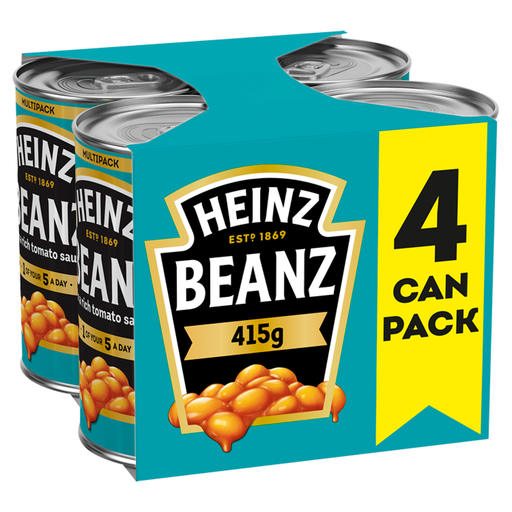 No image available
Four 415 g cans provide a standard tomato-sauce option for planned buffet replenishment. Follow the product’s instructions for opened contents, and check the delivered pack’s allergen declaration before service.
 No image available
The six 410 g cans offer a standard tomato-sauce bean in a larger multipack. The product information instructs users to refrigerate unused contents in a covered container and use them within two days; check the delivered pack’s allergen declaration.
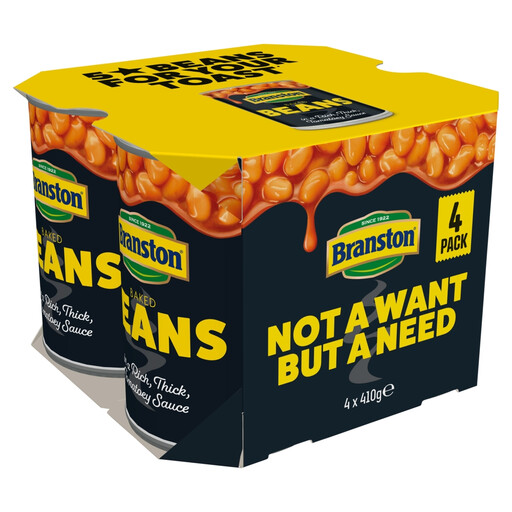 No image available
This four-can, 410 g multipack is another standard-bean format to match against the breakfast forecast. Refrigerate opened contents and use them within the period stated on the product; check the delivered pack’s ingredients and allergen information.
 No image available
For a buffet specifying a reduced recipe, this pack contains four 410 g cans. Its product description states 30% less sugar and 30% less salt than standard Branston beans and lists steviol glycosides; retain that comparator when describing the recipe and check the delivered label.
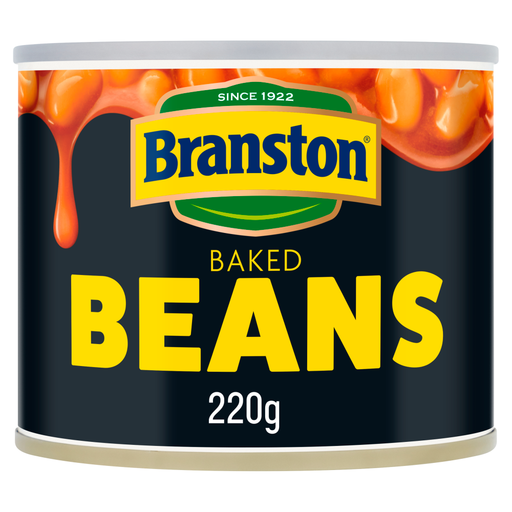 No image available
This single 220 g can may suit a service plan that can use a smaller quantity at a time. Compare its size with expected covers and replenishment needs, and check the delivered pack’s allergen and opened-product instructions.
Yes. GOV.UK guidance for England, Northern Ireland and Wales and Food Standards Scotland guidance for Scotland say food businesses must provide allergen information for non-prepacked as well as prepacked food. Use the information and service method applicable to how the beans are presented, and manage cross-contact during preparation and service.
No. Check the exact product’s current ingredients, warnings and suitability statements, as well as buffet cross-contact controls. Marks & Spencer describes its Only 7 Ingredients Baked Beans as vegan but says the product is not suitable for people with milk or egg allergy.
Choose that recipe when it fits the breakfast offer, rather than treating it as an automatic replacement for standard beans. Waitrose & Partners states that its Essential reduced beans have 30% less sugar and salt than regular Waitrose Essential beans; its Heinz No Added Sugar listing uses standard Heinz for the salt comparison and declares a sweetener.
Follow the selected product’s pack instructions and the hotel’s food-safety procedures. The cited Waitrose Essential and Marks & Spencer products instruct users to transfer unused contents to a non-metallic container, refrigerate them and use them within two days; check the instructions on the beans actually supplied.