What should you check before ordering?
Choose the recipe first, then match tin quantities to the kitchen’s replenishment plan and check how the beans will be served.
| Priority |
What to check |
Your needs |
| Pack quantity |
Compare the stated weight per tin and the number of tins in a pack. Plan portions and replenishment against the hotel’s own service pattern. |
I need a quantity the kitchen can open and replenish without leaving more beans on display than the sitting calls for. |
| Recipe variant |
Read the current per-100g salt and sugars figures on comparable labels. For any reduced claim, identify the named standard product used as its comparator. |
If the menu calls for a reduced-sugar-and-salt option, I want to know exactly which recipe it is being compared with. |
| Brand presentation |
Decide whether the breakfast offer calls for a named brand or permits an own-label tin. Trial the exact recipe under the hotel’s service conditions rather than assuming guests will respond to either in the same way. |
A familiar brand may matter to our presentation; otherwise, the recipe itself needs to work for the buffet. |
| Hot holding |
Use suitable hot-holding equipment and check that hot food remains at 63°C or above, in line with Food Standards Agency guidance. Plan how staff will replenish the display without mixing new food into an older batch. |
When guest numbers fluctuate, I need a replenishment routine staff can follow throughout breakfast. |
| Allergen information |
Check the delivered product’s current ingredients and allergen information. Keep the buffet record accessible and ensure staff know how to respond to guest queries. |
Guests need accurate information about the beans being served today, not an older recipe shown elsewhere. |
Which brand ranges are relevant?
These ranges illustrate different recipe and presentation choices; a brand name alone does not establish how a particular tin will perform in your buffet.
Heinz
A named-brand option for hotels that specify a recognisable breakfast staple. The Waitrose & Partners listing identifies a standard 415g tin.
- The named product and tin weight give the kitchen a specific recipe to assess.
- Check the delivered label and trial the beans under the hotel’s holding and serving conditions rather than assuming brand familiarity settles the recipe choice.
Tesco
An own-label route for a hotel able to obtain and serve Tesco baked beans. Tesco’s listing identifies a standard 420g tin.
- The stated tin size can be used when planning portions and opening frequency.
- Confirm the exact delivered recipe, allergen information and suitability for the hotel’s service pattern.
Waitrose Essential
An own-label range with a standard baked-bean tin and a reduced-salt-and-sugar variant.
- Waitrose & Partners states that the reduced variant has 30% less sugar and 30% less salt than regular Waitrose Essential baked beans.
- That comparison is specific to the Essential recipes. Check the current label before using either variant in menu or allergen information.
M&S
An own-label Foodhall option for a hotel assessing an M&S breakfast product. Marks & Spencer identifies a 400g baked-bean tin.
- The stated tin weight provides a starting point for portion and replenishment planning.
- Check the exact product label and assess its recipe in the hotel’s own service trial.
Joybuy baked-bean options
These tins include standard branded beans in different pack quantities and a Branston reduced-sugar-and-salt variant. Match the quantity and recipe to your breakfast service, then check the delivered pack before use.
 No image available
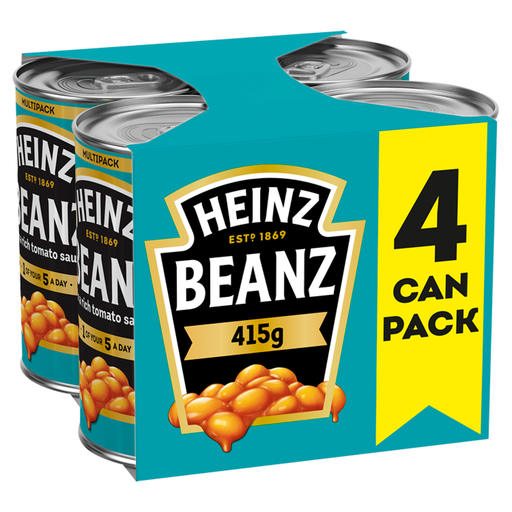
HEINZ Baked Beans in Tomato Sauce 4 x 415g
The four-tin pack offers a stated quantity for planning repeated breakfast service. Check the delivered ingredients and allergen information, and use the pack’s preparation directions before hot holding.
View on Joybuy
 No image available
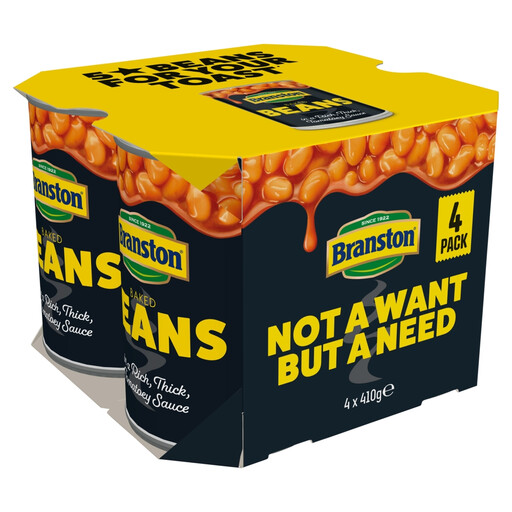
Branston Baked Beans 4 x 410g
Four 410g tins let the kitchen plan how many to open for a sitting. Follow the delivered pack’s heating and storage directions, and check its current allergen information.
View on Joybuy
 No image available
Branston Beans in Tomato Sauce 6 x 410g
The six-tin pack may fit a kitchen that expects to open several tins across breakfast service. Check the delivered pack for heating, opened-tin storage and allergen instructions.
View on Joybuy
 No image available
Branston Reduced Sugar & Salt Baked Beans 4 x 410g
This four-tin variant is an option when the breakfast menu specifies a reduced-sugar-and-salt recipe. Compare the delivered label’s per-100g figures and stated comparator with the menu requirement; do not assume the designation compares it with every other brand.
View on Joybuy
 No image available
Branston Baked Beans in Tomato Sauce 220g
The 220g tin is worth assessing when the kitchen wants to open a smaller quantity at a time. Check whether that quantity fits guest turnout, and follow the delivered pack’s preparation, storage and allergen information.
View on Joybuy
Breakfast buffet questions
How should a hotel choose between different tin sizes?
Start with the stated weight per tin, expected guest numbers and how often staff can replenish the buffet. Trial the exact recipe and quantity during service rather than assuming the largest pack will suit every sitting.
Is a reduced-sugar-and-salt tin lower in both than every standard tin?
No. Waitrose & Partners states that its reduced Waitrose Essential beans have 30% less sugar and 30% less salt than regular Waitrose Essential baked beans. For another product, check its own named comparator and the current per-100g label figures.
How should baked beans be held during breakfast service?
Use suitable hot-holding equipment and keep hot buffet food at 63°C or above, as the Food Standards Agency advises. Monitor the food temperature and replenish in separate batches rather than mixing freshly prepared beans into beans already on display.
What allergen information should breakfast staff use?
Use current information for the exact beans being served, checked against the delivered pack or supplier specification. Food Standards Agency guidance requires food businesses to provide allergen information and train staff, so the breakfast team should know where to find the hotel’s current record.
What should happen to beans left in an opened tin?
Follow the delivered pack’s instructions and the hotel’s food-safety procedures for transferring, refrigerating and using any remainder. Do not assume that storage directions are identical across brands or recipes.


