Families cooking savoury recipes with school-age children
A tin of beans can be measured out for a shared recipe while an adult handles heating and hot containers. Choose the tin size around the amount the recipe uses.


For a shared savoury recipe, choose a plain baked-bean tin in the quantity the recipe calls for; a 200g–220g tin may leave less unused food after a small project. If comparing salt or sugars, read the figures per 100g and the ingredients rather than relying on the name: some reduced-sugar beans contain sweeteners, which NHS guidance says to avoid for children aged 4 or younger. Check the current pack for allergens, heating directions and instructions for leftovers.
A tin of beans can be measured out for a shared recipe while an adult handles heating and hot containers. Choose the tin size around the amount the recipe uses.
Compare the nutrition panels per 100g, then consider how much sauce and beans the recipe uses. Reduced-sugar and no-added-sugar products can have different ingredients, including sweeteners.
A 200g–220g tin may fit a recipe test better than a larger can. If beans remain, follow that product’s instructions for transferring, refrigerating and using them.
Start with the recipe quantity, then compare labels for the people who will eat it. Keep the heating and opened-can instructions in mind before children help prepare the dish.
| Priority | What to check | Your needs |
|---|---|---|
| Tin size | Compare the recipe quantity with 200g–220g small tins and 400g–420g larger tins. Read the stated servings if portioning matters. | I’m making a small batch and would rather open only what the recipe needs. For a shared dish, a larger tin may be more convenient. |
| Salt, sugars and sweeteners | Compare salt and sugars per 100g and for the amount used. Check the ingredient list for sweeteners; NHS guidance says to avoid foods and drinks containing sweeteners or sugar for children aged 4 or younger. | Children will eat this recipe, so I want to know what is in the particular tin—not assume that “no added sugar” answers every age-related question. |
| Dietary and allergy information | Read the current pack’s ingredient and allergen statements for the exact variant. A vegan or short-ingredient-list description does not settle allergy suitability. | Someone eating the finished dish has a dietary requirement or food allergy, and every ingredient in the recipe needs checking. |
| Preparation and leftovers | Follow the tin’s hob or microwave directions and use a suitable container. Check its instructions for refrigerating unused beans and how long they may be kept after opening. | Children can help with the recipe, while an adult takes charge of heating and hot food. I also need a workable plan for any beans left over. |
Some checked no-added-sugar and reduced-sugar baked beans contain steviol glycosides. NHS guidance says children aged 4 or younger should avoid foods and drinks with sweeteners or sugar.
Read the ingredients on the tin before using it in a recipe for this age group; do not rely on the front-of-pack description alone.
Checked product labels give different periods for using beans after opening. Leaving part of a can for another cooking session therefore calls for the exact product’s storage instructions.
Transfer unused beans to a suitable covered, non-metallic container, refrigerate and follow the open-life stated on the pack.
The Marks & Spencer product page labels Only 7 Ingredients Baked Beans vegan and vegetarian but says they are not suitable for people with milk or egg allergy.
When cooking for someone with a food allergy, read the current pack’s allergen statement as well as its dietary description.
These examples illustrate differences between specific tins and ranges; check the label of the variant you choose.
Heinz offers standard baked beans and a 200g No Added Sugar tin.
Tesco’s own-label range includes standard, reduced-sugar-and-salt and no-added-sugar tins.
Sainsbury's lists standard baked beans in a 400g tin and a multipack.
Asda lists standard and reduced-salt, no-added-sugar baked beans in 410g tins.
M&S lists several baked-bean recipes, including Only 7 Ingredients in a 220g tin.
The essential range includes standard and reduced-salt-and-sugar baked beans in 220g and 420g formats.
These tins cover standard tomato-sauce beans for shared or repeated recipes, a smaller tin for a small batch, and a reduced-sugar-and-salt multipack. Choose the pack quantity before opening a tin for the recipe.
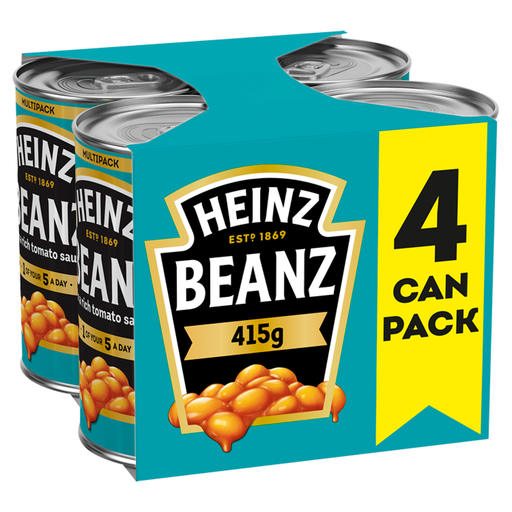 Image unavailable
Four standard-size tins provide separate cans for shared or repeated savoury recipes. Follow the can’s heating directions under adult supervision; refrigerate unused beans in a suitable non-metallic container and use them within the stated two days.
 Image unavailable
Four 410g tins suit recipes that use a standard-size can on more than one occasion. Check the current pack’s gluten-free and allergen wording if relevant; refrigerate leftovers and follow its two-day open-life instruction.
 Image unavailable
Six 410g tins offer separately sealed cans for repeated family recipes. Check the can’s heating directions before cooking; transfer any unused beans to a suitable covered container, refrigerate and use within the stated two days.
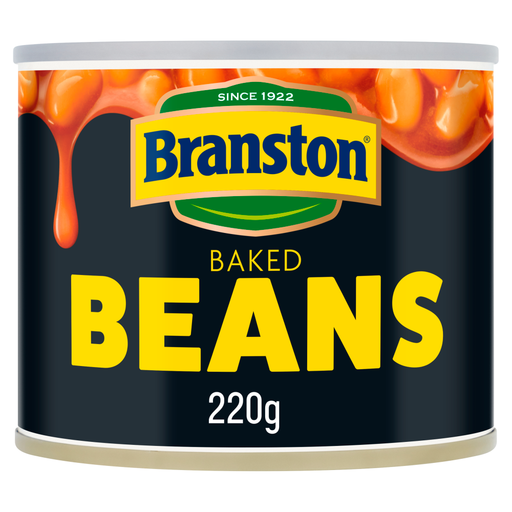 Image unavailable
The 220g tin is a smaller quantity to consider for a recipe test or small project. Read its heating directions before use; refrigerate any unused beans in a separate container and follow the stated two-day open-life.
 Image unavailable
Four 410g tins provide a reduced-sugar-and-salt variant for shared or repeated recipes. The ingredients include steviol glycosides: NHS guidance says children aged 4 or younger should avoid foods and drinks with sweeteners or sugar. Check the can’s heating directions and refrigerate leftovers according to its two-day instruction.
No single variant suits every recipe or age group. Compare salt and sugars per 100g and check the ingredients: the checked Tesco and Asda reduced variants contain sweeteners, and NHS guidance says children aged 4 or younger should avoid foods and drinks with sweeteners or sugar.
The checked tins give cool, dry storage instructions before opening. Read the date and storage wording on your can; once opened, follow its refrigeration and open-life instructions instead of returning it to the cupboard.
Transfer them to a suitable covered, non-metallic container and refrigerate them. Follow the time stated on that tin: the checked product instructions differ, so do not apply one open-life to every brand.
An adult should manage heating and hot containers when children help cook. Use a suitable bowl for microwave preparation, follow the tin’s stirring and heating directions, and check the food before serving.
No. Marks & Spencer labels Only 7 Ingredients Baked Beans vegan and vegetarian, but its product page says they are not suitable for people with milk or egg allergy. Check the current physical pack for the allergen information relevant to the person eating the recipe.