Households keeping a regular tea-time staple
If baked beans appear often at tea time, compare the nutrition panels and choose a tin size that fits the number eating, rather than deciding by pack format alone.


For a regular kids’ tea-time tin, compare sugars and salt per 100g before choosing between a no-added-sugar, reduced-sugar-and-salt or standard recipe. A multipack suits repeated meals, while a smaller tin may leave less to store after one meal. Check the current ingredients, allergy advice and storage instructions on the exact pack you buy.
If baked beans appear often at tea time, compare the nutrition panels and choose a tin size that fits the number eating, rather than deciding by pack format alone.
No-added-sugar and reduced-sugar-and-salt are different claims. Check sugars and salt per 100g, then read the ingredients if sugar or sweeteners matter to your choice.
Use the current pack’s allergy advice for the child who will eat the beans. If a tin will not be finished, its size and after-opening instructions also matter.
Start with the nutrition panel and ingredients, then choose a pack size around the meal you expect to serve. A reduction claim should be read alongside the values on the particular tin.
| Priority | What to check | Your needs |
|---|---|---|
| Nutrition labels | Compare sugars and salt per 100g across tins; then consider the amount you will serve. Read traffic-light colours alongside the figures, where they appear. | I want to compare different-sized tins on the same basis. In a Food Standards Agency and Ipsos Northern Ireland survey of 611 adults conducted from September to November 2024, 49% said they actively used traffic-light labelling when shopping for food. That figure describes general shopping in Northern Ireland, not parents choosing baked beans. |
| Recipe claims | Distinguish no added sugar from reduced sugar and salt. Check both per-100g values and the ingredients list for sugar or sweeteners. | If I am choosing a reduced recipe for regular meals, I need to know what the claim compares with and what remains in the tin. |
| Pack and leftovers | Match the tin to the number eating; check the after-opening refrigeration and use-by instructions. A multipack contains several tins, not one larger opened portion. | A smaller tin may make sense for one meal. When several people eat together or beans are served repeatedly, I may prefer family-sized tins or a multipack. |
| Allergy information | Read the exact pack’s ingredients and allergy advice, including on repeat purchases. Do not use a vegan or vegetarian label in place of allergy information. | For a child with an allergy, I need the current advice for this specific recipe, not an assumption based on the brand or a lifestyle label. |
Retailer panels for the named own-label recipes show different sugars and salt values per 100g. A reduction claim also refers to a particular comparison product, not every other tin on the shelf.
Compare both figures per 100g and check the ingredients before settling on a regular cupboard tin.
The ASDA and Heinz no-added-sugar products described by their retailer listings still show sugars on their nutrition panels and contain steviol glycosides.
If sweeteners matter to your household, read the ingredients as well as the front-of-pack claim.
After-opening instructions differ between products. Tesco and Waitrose give two days for their listed recipes, while ASDA says to use its listed no-added-sugar tin within four days.
Choose a size that suits the meal. Transfer any unused beans to a covered, non-metallic container, refrigerate them and follow that product’s instructions.
M&S labels its Only 7 Ingredients baked beans vegan but also says the product is not suitable for people with milk or egg allergy.
For an allergy, check the current ingredients and allergy statement on the exact pack, even if it is one you have bought before.
These examples illustrate differences between specific listed recipes; a brand name alone does not tell you a tin’s nutrition, ingredients or allergy advice.
Waitrose lists a Heinz No Added Sugar single-serve baked-beans tin.
Tesco lists a 420g Reduced Sugar and Salt baked-beans tin.
Sainsbury’s lists Reduced Sugar & Salt baked beans in a 4 × 400g multipack.
ASDA lists a 410g Reduced Salt & No Added Sugar tin.
M&S lists Only 7 Ingredients Baked Beans in a 220g tin.
Waitrose lists a 420g Essential Reduced Salt & Sugar baked-beans tin.
These standard baked-bean tins offer a smaller can or multipacks for kids’ tea-time meals. Compare their current labels with reduced recipes if sugars or salt are a deciding factor.
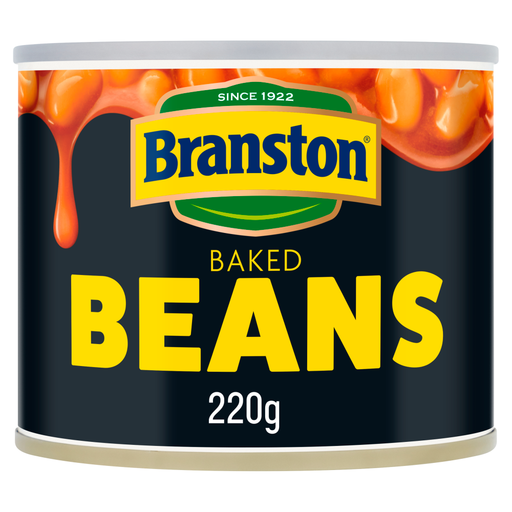 No image available
The 220g tin is a smaller-pack option when fewer people are eating. Check its current nutrition and allergy information, and follow the pack’s instructions for any leftovers.
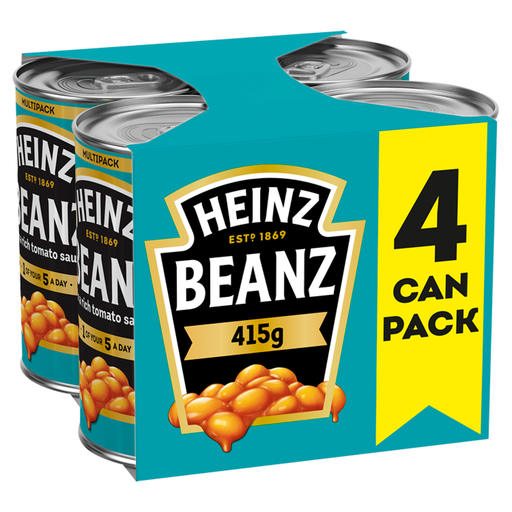 No image available
Four separate 415g tins provide a multipack for repeated meals. This is the standard recipe, so compare the current per-100g panel if you are considering a reduced alternative.
 No image available
Six separate 410g tins are a cupboard format for repeated tea-time meals. Check the current nutrition panel against other recipes and follow the storage instructions once a tin is opened.
 No image available
This four-tin 410g multipack is another format for keeping beans in the cupboard. Match each tin to the number eating, and check its label if sugars, salt or allergy advice affect your choice.
Start with sugars and salt per 100g, then consider how much you will serve. The NHS explains that pre-packed food labels give values per 100g and may also show values per portion; the portion on a label need not match the amount served at home.
No. A reduced-sugar claim compares a recipe with another product; it does not mean sugar-free. The listed Tesco and Sainsbury’s reduced recipes still contain sugar, while ASDA’s no-added-sugar recipe shows sugars on its nutrition panel and contains steviol glycosides.
Compare the beans’ salt values per 100g and consider the portion alongside the rest of the meal. NHS Healthier Families gives maximum daily salt amounts of 3g for children aged 4 to 6 and 5g for ages 7 to 10, so the tin is not the only food to consider.
Transfer leftovers to a covered, non-metallic container and refrigerate them, following the exact product’s time limit. Tesco and Waitrose specify two days for their listed recipes; ASDA says to use its listed 410g no-added-sugar product within four days.
Not automatically: check the current pack’s ingredients and allergy advice. M&S says its vegan-labelled Only 7 Ingredients baked beans are not suitable for people with milk or egg allergy.