Parents planning regular quick teas
Compare tin size and price per kg for the amount you expect to serve, alongside the nutrition information per 100g.


For a child’s tea, compare the price per kg with the amount your household will use, then check sugars and salt per 100g on the exact tin. A reduced recipe may suit a household seeking that formulation; a smaller tin may make more sense when a larger one would leave unused beans. A familiar brand is another choice, but its name alone does not establish better value.
Compare tin size and price per kg for the amount you expect to serve, alongside the nutrition information per 100g.
Check the sugars and salt figures on each tin. “Reduced sugar and salt” describes a comparison with another recipe, not an absence of either ingredient.
A larger tin may suit several eaters, while a smaller one may leave less over. Check how long the exact product can be kept after opening.
Start with the amount likely to be eaten at tea, then compare like-sized quantities and the recipes on their per-100g labels.
| Priority | What to check | Your needs |
|---|---|---|
| Usable amount | Compare price per kg as well as tin weight. Consider how many people will eat and whether leftovers can be used within the pack’s stated period. | If I am serving one child, a smaller tin could leave less over; for several eaters, a larger tin may fit the meal. |
| Recipe | Compare sugars and salt per 100g on the exact tins. NHS food-label guidance uses 5g or less sugars and 0.3g or less salt per 100g as its low thresholds; check the amount in the portion served too. | I want to compare a standard tin with a reduced recipe on the same basis, rather than relying on the wording on the front. |
| Leftovers | Read the opened-tin storage directions, including the container, refrigeration and use-by period specified for that product. | Will we use the remainder in time, or would a smaller tin better match this tea? |
| Ingredients | Read the current pack’s ingredients and allergen statement. Do not use a vegetarian or vegan description as a substitute for an allergy check. | If my child has an allergy or intolerance, I need to assess the exact recipe before serving it. |
Tins of different weights do not provide the same amount of food, and a larger tin may leave beans unused.
Compare price per kg, then choose a size your household can eat or use as leftovers.
Reduced sugar-and-salt recipes can still contain sugars and salt. The amount served also affects how much is eaten.
Check both figures per 100g and consider the portion you intend to serve.
Ingredients can change. Marks & Spencer states that its standard Baked Beans are not suitable for people with a milk or egg allergy.
Check the physical pack’s current ingredients and allergen statement before serving it to someone with an allergy.
The compared products give different periods for refrigerated leftovers, so one tin’s instructions should not be applied to another.
Transfer leftovers as directed on the exact pack, refrigerate them and note when the tin was opened.
These brands illustrate different recipes and tin sizes to compare; a brand reference does not establish the value of every product in its range.
Tesco lists standard and Reduced Sugar and Salt Baked Beans in 420g tins.
Sainsbury’s Reduced Sugar & Salt Baked Beans come in a 400g tin.
Asda lists a 410g Reduced Salt & No Added Sugar tin alongside other baked-bean recipes.
Waitrose Essential includes a Reduced Salt & Sugar recipe in smaller and larger tin formats.
Heinz offers No Added Sugar Beanz as a branded recipe to compare with standard and own-label tins.
M&S lists a standard 400g Baked Beans tin.
These options include standard and reduced-recipe tins, multipacks and a smaller tin. For a child’s tea, compare the pack size you will use, the current per-100g label and the price per kg before deciding which represents value for your household.
 No image available
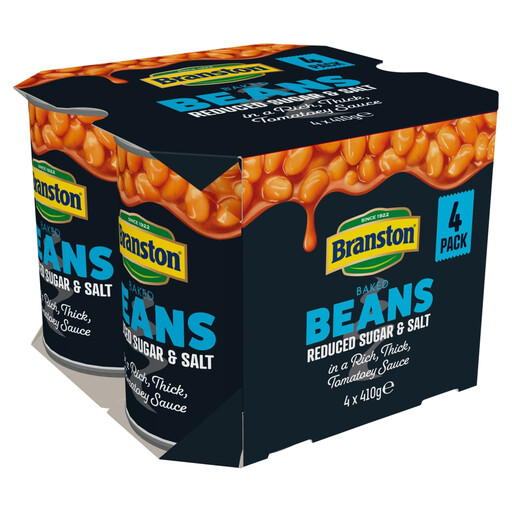
The four-tin pack is an option for repeat teas if this reduced recipe and tin size suit your household. Reduced does not mean free from sugar or salt: compare the current label per 100g, and follow the pack’s directions for opened beans.
 No image available
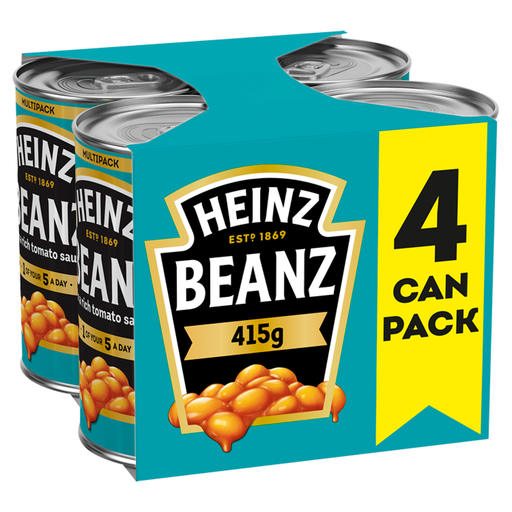
This four-tin pack offers a familiar branded standard recipe for regular teas. It is not the Heinz No Added Sugar product: check this pack’s sugars and salt per 100g when comparing recipes, and follow its opened-tin storage directions.
 No image available
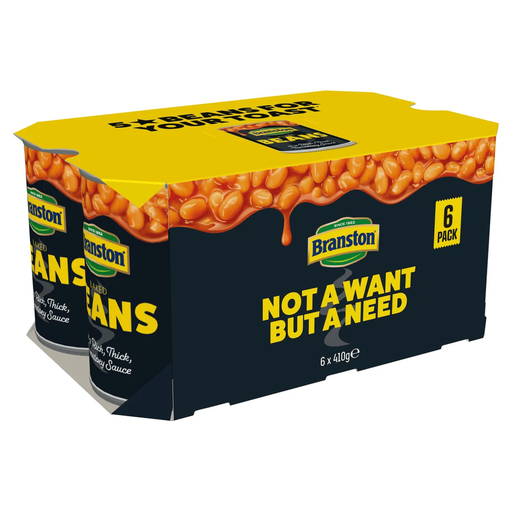
The six-tin pack may suit a household that serves baked beans regularly and can use that quantity. This is a standard recipe; compare its current per-100g label with reduced options and follow the directions for any beans left after opening a tin.
 No image available
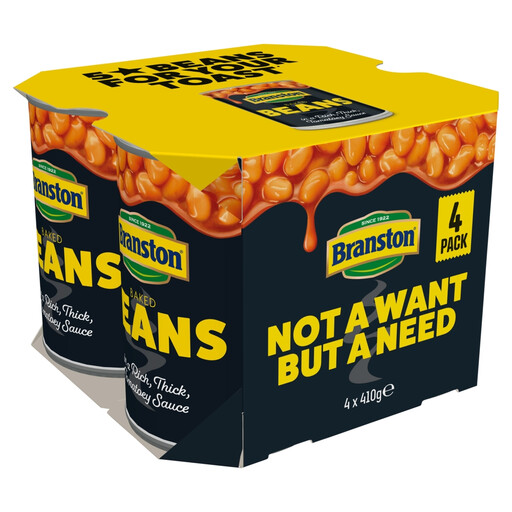
This four-tin standard-recipe pack is another quantity to consider for routine teas. Check sugars and salt per 100g against the reduced Branston pack, then compare the current price per kg and the amount your household will use.
 No image available
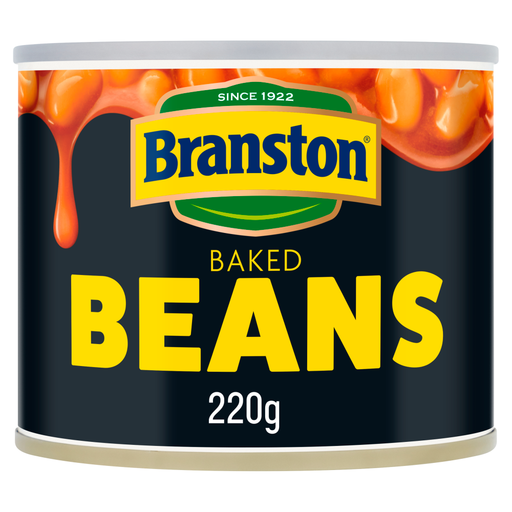
The 220g tin is worth considering when a smaller amount better matches the meal. It is a standard recipe; compare its per-100g label and price per kg with larger tins rather than assuming that the smaller tin is better value.
No. Compare price per kg for the quantity of beans, then consider how much your household will eat and whether leftovers can be used. Check the per-100g label as well if you are choosing between standard and reduced recipes.
Compare sugars and salt per 100g on the exact products, then consider the amount you intend to serve. NHS food-label guidance uses 5g or less sugars and 0.3g or less salt per 100g as low thresholds; the per-100g figures let you compare tins of different sizes.
No. “Reduced” describes a difference from a comparison recipe, not the absence of sugars or salt. Read the ingredients and nutrition panel of the tin you plan to buy; “no added sugar” is a different description and does not mean sugar-free.
Follow the storage instructions on the exact tin, including any direction to transfer the beans to a non-metallic container and refrigerate them. The compared Tesco, Sainsbury’s and Waitrose products specify use within two days; the compared Asda Reduced Salt & No Added Sugar product specifies four days.