Shoppers stocking low-fat cupboard staples
Compare fat per 100 g across the tins you are considering, then look at salt and sugars if more than one recipe meets your preference.


For a low-fat baked-bean choice, compare fat per 100 g before deciding between standard and reduced recipes. If salt or sugars also matter to you, compare those figures on the same basis; check the ingredients of no-added-sugar versions if you prefer to avoid sweeteners.
Compare fat per 100 g across the tins you are considering, then look at salt and sugars if more than one recipe meets your preference.
A reduced recipe may suit your priorities better than a standard sauce. Compare the figures on the same per-100 g basis and read the ingredients if sweeteners matter to you.
Check the current pack for sweeteners, other ingredients, allergen information and instructions for storing leftovers. A familiar brand name does not tell you whether every recipe is the same.
Start with comparable per-100 g nutrition figures, then use the ingredient list and the instructions on the particular tin to settle the details.
| Priority | What to check | Your needs |
|---|---|---|
| Fat | Compare total fat per 100 g, not a serving figure against another tin’s per-100 g figure. Check saturated fat separately if it matters to you. | I want to compare the fat in the beans themselves before choosing a cupboard staple. |
| Salt and sugars | Compare both per 100 g. Waitrose & Partners lists 0.30 g salt and 2.0 g sugars per 100 g for Essential Reduced Salt & Sugar beans; ASDA lists 0.34 g salt and 1.5 g sugars for its Reduced Salt & No Added Sugar beans. Their ingredient lists still matter. | If two tins meet my fat preference, I may favour the one whose salt and sugar figures fit the rest of my choices. |
| Ingredients | Distinguish a no-added-sugar recipe from a recipe without sweeteners. ASDA lists steviol glycosides from stevia in its Reduced Salt & No Added Sugar beans; check the current pack for ingredients and allergens. | I would rather know what is in a reformulated sauce than rely on its front-of-pack wording. |
| Serving basis | Check whether a figure is per 100 g, per serving or per half-can. Tesco Groceries gives fat, sugars and salt for half a can in its Reduced Sugar and Salt listing, so use the can’s per-100 g panel for a direct comparison with other tins. | When comparing recipes, I need the figures to describe the same amount of food. |
Tins with similar declared fat can differ in salt and sugars. For example, Sainsbury’s lists 0.58 g salt and 4.5 g sugars per 100 g for its standard baked beans, while Waitrose & Partners lists 0.30 g salt and 2.0 g sugars for Essential Reduced Salt & Sugar beans.
Compare fat first, then check salt and sugars if they also affect your choice.
A half-can figure and a per-100 g figure describe different amounts, so placing them side by side can give the wrong impression.
Use the same measurement basis for both tins; check the current can when a listing shows only portion figures.
ASDA’s Reduced Salt & No Added Sugar baked beans list steviol glycosides from stevia.
If you avoid sweeteners, read the ingredients of the exact recipe rather than relying on its name.
Instructions for opened beans belong to the particular product and may differ between recipes.
Follow the current can’s directions for transferring and refrigerating leftovers and for when to use them.
These ranges offer different standard and reformulated recipes; brand inclusion does not describe the nutrition of every tin in a range.
Heinz offers standard Beanz and a No Added Sugar recipe. A Waitrose & Partners listing describes the latter as low fat and made with a sweetener.
Tesco’s Reduced Sugar and Salt Baked Beans are an own-label option with a reformulated tomato sauce.
Sainsbury’s standard own-label Baked Beans provide a reference for comparing a conventional sauce with reduced recipes.
ASDA’s Reduced Salt & No Added Sugar Baked Beans combine those two recipe descriptions in one own-label tin.
M&S has a baked-beans product to consider alongside other cupboard tins.
Waitrose Essential Reduced Salt & Sugar Baked Beans are an own-label reduced recipe with published per-100 g figures.
These options include plain baked-bean multipacks and two bean-and-sausage tins. Compare the current label of each product against your fat, salt, sugar and ingredient priorities; a bean-and-sausage meal is not the same choice as plain beans.
 No image available
This four-tin pack is a reduced-sugar-and-salt recipe to compare with standard beans. Check its current per-100 g panel and ingredients if fat levels or sweeteners affect your choice.
 No image available
This six-tin pack offers a standard tomato-sauce recipe. Compare its current per-100 g fat, salt and sugars with a reduced recipe before choosing between them.
 No image available
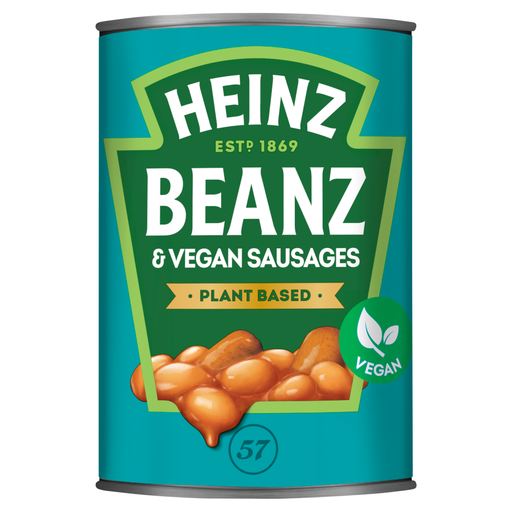
This is a bean-and-vegan-sausage meal rather than a plain tin of baked beans. Check the nutrition and allergen information for this combined recipe, not for Heinz beans alone.
 No image available
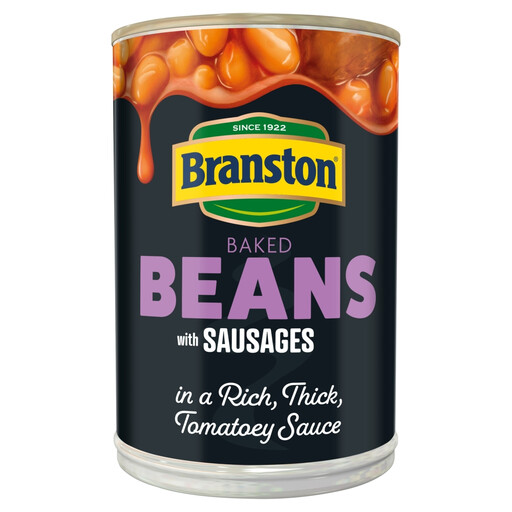
This single tin contains beans and sausages, so compare its own nutrition panel with other combined meals rather than assuming it matches plain beans. Read the current ingredients and allergen information too.
Yes, if salt or sugars also matter to your choice. Sainsbury’s lists 0.58 g salt and 4.5 g sugars per 100 g for its standard baked beans, compared with 0.30 g salt and 2.0 g sugars for Waitrose Essential Reduced Salt & Sugar beans, according to their respective product listings.
Some do: ASDA lists steviol glycosides from stevia in its Reduced Salt & No Added Sugar baked beans. Check the ingredient list of the exact tin if you prefer to avoid sweeteners.
Follow the instructions on that product’s current label. Check how it says to transfer and refrigerate leftovers, and use them within the time stated for that particular recipe.