Everyday-tin shoppers
If total fat is your main consideration, start with the per-100g nutrition panel. Several standard own-label tins meet the NHS low-fat labelling threshold, so a reduced recipe is not necessary for that criterion alone.


Standard baked beans can meet the NHS low-fat labelling threshold of 3g total fat or less per 100g: the ASDA Just Essentials, Sainsbury's, M&S and Essential Waitrose standard tins covered here list less than 0.5g or 0.4g per 100g. A reduced-sugar or reduced-salt recipe is a separate choice; compare those figures and the ingredients if they matter to you.
If total fat is your main consideration, start with the per-100g nutrition panel. Several standard own-label tins meet the NHS low-fat labelling threshold, so a reduced recipe is not necessary for that criterion alone.
Check sugars and salt separately from fat. Reduced recipes can have different figures from standard tins, and their ingredient lists may include sweeteners.
Compare the exact tin on the shelf rather than assuming a retailer's standard and reduced recipes have the same nutrition or ingredients. Check its storage instructions if you expect leftovers.
Check total fat per 100g first, then compare the other label details that affect your choice of recipe or tin size.
| Priority | What to check | Your needs |
|---|---|---|
| Total fat | Read total fat per 100g, not just per serving. The NHS low-fat labelling threshold is 3g or less per 100g. | I want to compare tins on the same basis, even if their suggested servings differ. |
| Sugars and salt | Compare each figure per 100g. Sainsbury's standard beans list 4.5g sugars and 0.58g salt; its reduced sugar and salt recipe lists 0.29g salt. | Fat is not my only consideration, so I want to see what changes when I choose a reduced recipe. |
| Ingredients | Read the exact variant's ingredient and allergy statements. Check the ingredient list if you have a preference about sweeteners. | I need to know what is in this tin, rather than relying on its recipe name. |
| Tin size and leftovers | Check the tin or pack quantity and its instructions for storing beans after opening. | A smaller tin may suit me if I would otherwise have leftovers to store. |
Sainsbury's standard beans list less than 0.5g fat and 0.58g salt per 100g; its reduced sugar and salt recipe lists 0.29g salt per 100g. The fat figure alone does not describe the salt content.
If salt matters to you, compare its per-100g row separately.
ASDA's reduced-salt, no-added-sugar beans still list 1.5g sugars per 100g.
Read the sugars row and ingredient list on the exact recipe, including any listed sweetener.
Pack quantity does not tell you how long an opened tin's contents can be kept.
Choose a tin size you can use and follow that product's instructions for refrigerating leftovers after opening.
These examples describe specific UK product lines, not every baked-bean recipe sold under each name.
Its Just Essentials standard tin and reduced-salt, no-added-sugar tin offer two distinct label profiles.
Its standard and reduced sugar and salt tins warrant separate nutrition-label checks.
Its standard and no-added-sugar beans are different recipes, so check the exact tin.
The Essential range includes standard and reduced salt and sugar beans.
Regular and no-added-sugar Heinz beans have different nutrition figures.
Tesco lists Stockwell & Co and Tesco own-label baked beans, including a reduced sugar and salt variant.
These Joybuy options are Heinz and Branston tins in single-can and multipack formats. Compare each exact pack's nutrition panel and storage instructions for your needs.
 No image available
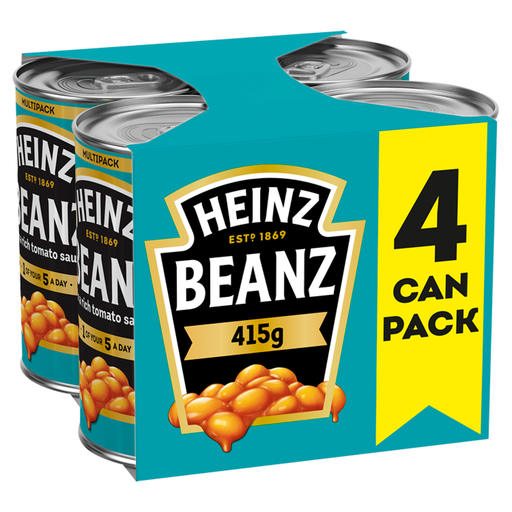
A four-tin format for cupboard use. The corresponding Heinz 4 x 415g listing at Sainsbury's gives 0.4g fat and 0.6g salt per 100g; check the current pack before use.
 No image available
Six 410g tins suit shoppers planning to keep multiple cans. Check total fat per 100g on this exact pack against the NHS low-fat labelling threshold of 3g or less per 100g, and follow its opened-tin storage instructions.
 No image available
This four-tin format gives you 410g cans. Sainsbury's lists 0.6g fat per 100g for a Branston 4 x 410g pack; check the nutrition panel on the pack you choose.
 No image available
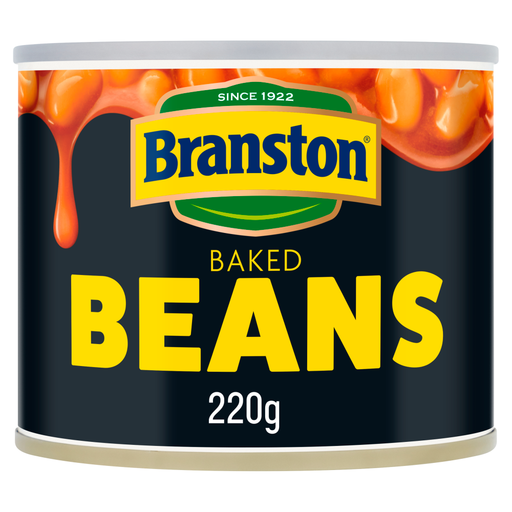
The single 220g tin is a different portion format from the multipacks. Check its own per-100g fat figure and any instructions for storing leftovers.
 No image available
This four-tin reduced sugar and salt recipe is worth comparing if those figures matter alongside fat. Read all three per-100g rows and the ingredient list on the exact pack.
The NHS low-fat labelling threshold is 3g total fat or less per 100g. Use the per-100g figure to compare tins with different serving suggestions.
Not for the fat criterion alone. ASDA Just Essentials, Sainsbury's standard and Essential Waitrose standard beans each list less than 0.5g fat per 100g, while M&S standard beans list 0.4g. Compare sugars and salt separately if they matter to you.
No. ASDA's reduced-salt, no-added-sugar beans list 1.5g sugars per 100g, and the Heinz No Added Sugar 4 x 200g listing gives 1.9g per 100g. Check the sugars row and ingredient list for the exact product.
Transfer leftovers to a covered, non-metallic container, refrigerate them and follow the storage period stated on that product's packaging. Do not assume different tins have identical instructions.
Yes. Read the ingredient and allergy statements on the exact can you receive, since recipes and production advice can differ between products and change over time. M&S advises that its beans, although made to a vegan recipe, are not suitable for people with milk or egg allergy because of the production environment.