Meals-on-wheels coordinators
Plan the number of tins around delivered meals, preparation equipment and the instructions for storing any opened beans.


Four-tin multipacks of around 400g to 415g per tin suit regular meal preparation when the quantity fits the menu cycle; a six-tin pack needs enough planned use to justify the extra stock. Choose a standard or reduced-sugar-and-salt recipe by checking the current nutrition panel, ingredients and allergen advice against each recipient’s requirements, then follow that product’s heating and leftover-storage directions.
Plan the number of tins around delivered meals, preparation equipment and the instructions for storing any opened beans.
Choose a manageable pack for simple hot meals, while checking portions and the current ingredients for the person eating them.
Compare standard, reduced-sugar-and-salt and no-added-sugar labels against individual dietary requirements. Check allergen advice on the exact product rather than relying on the recipe name.
Start with the number of meals the pack must cover, then check the recipe and the instructions that matter when those meals are prepared and delivered.
| Priority | What to check | Your needs |
|---|---|---|
| Pack and portions | Compare tin count, net weight and the label’s stated servings. Match the total quantity to the planned menu cycle and storage space. | I need enough beans for scheduled meals without opening more tins than the kitchen can use. |
| Recipe | Read salt and sugar values per 100g and per stated serving, alongside the ingredients. A reduction claim must be read against the product it names as its comparison. | For a recipient with documented dietary requirements, I need the exact recipe and portion to fit the meal plan. |
| Preparation and leftovers | Follow the tin’s heating directions and check that food is heated thoroughly before serving, as advised in Food Standards Agency caterer guidance. Read the opened-product storage instructions on that pack. | Our kitchen needs directions it can follow with its equipment, plus a clear plan for any beans left after portioning. |
| Allergens | Check the current ingredient list and allergy advice for each product received. Keep the relevant information available when meals are ordered and prepared. | I cannot assume that every baked-bean recipe has the same allergen advice, even when a product is labelled vegan. |
More tins mean more stock to store and rotate; pack size alone does not show how well the quantity fits the menu.
Work out the required portions and how often beans appear on the menu before choosing a four- or six-tin pack.
Waitrose Essential’s reduced recipe states 30% less sugar and salt than its regular Essential beans; Heinz states that its No Added Sugar beans have 25% less salt than standard Heinz beans. Neither comparison describes every alternative.
Check the exact nutrition panel, ingredients and intended portion against the recipient’s documented requirements.
Waitrose Essential instructs users to transfer opened beans to a covered, non-metallic container, refrigerate them and use them within two days. That instruction should not be assumed to apply to every tin.
Mark when a tin was opened and follow its own storage directions and stated period.
Marks & Spencer’s baked-bean listing says the product is unsuitable for people with milk or egg allergy. A dietary label does not replace product-specific allergy advice.
Check the current pack for the exact product being served and make its allergen information available to the people handling orders and meals.
Heinz has baked-bean multipacks including a No Added Sugar 4 × 415g option listed by Waitrose.
Its own-label baked beans come in a 4 × 400g multipack.
The range includes standard baked beans and a reduced-sugar-and-salt recipe.
Marks & Spencer lists a 400g baked-bean product in this range.
Branston baked beans appear in 410g tins and a six-tin multipack in Sainsbury’s listings.
These four- and six-tin baked-bean multipacks offer cupboard-stocking options for planned hot meals. Check each product’s current label and heating directions before it enters a meal-service menu.
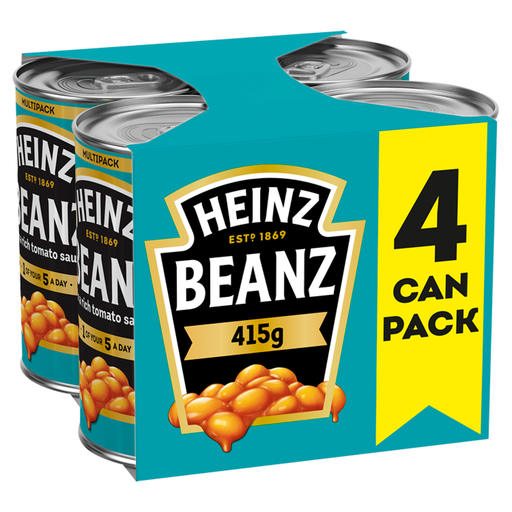 No image available
Four 415g tins provide a defined quantity for regular meal planning. Check the current heating, ingredient, allergen and opened-tin instructions before serving.
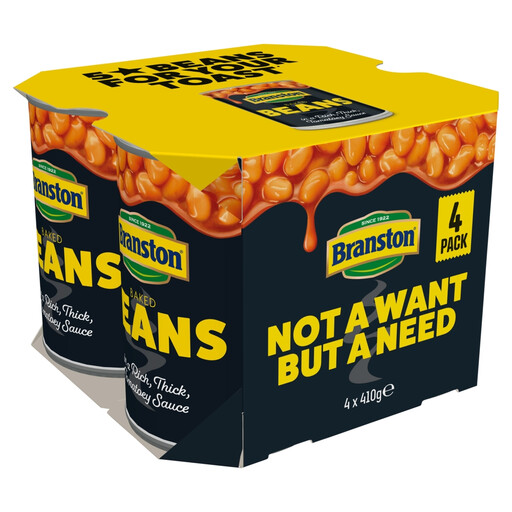 No image available
Four 410g tins suit a plan that calls for a smaller multipack. Follow the directions on the received pack for heating and storing opened beans, and check its ingredients and allergy advice.
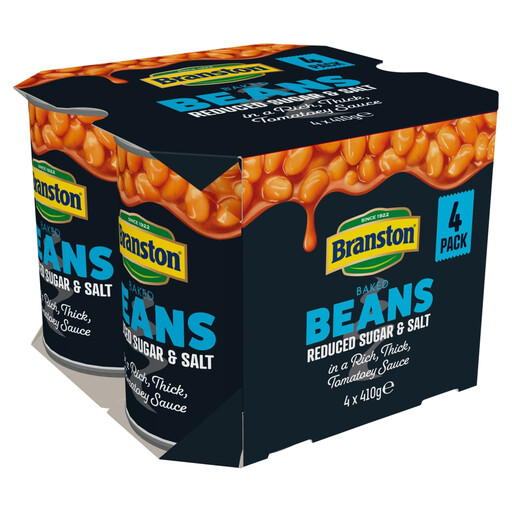 No image available
This four-tin recipe is an option when reduced sugar and salt are relevant to a planned meal. The name alone does not establish suitability: compare the current nutrition panel, portion and ingredients with the recipient’s requirements.
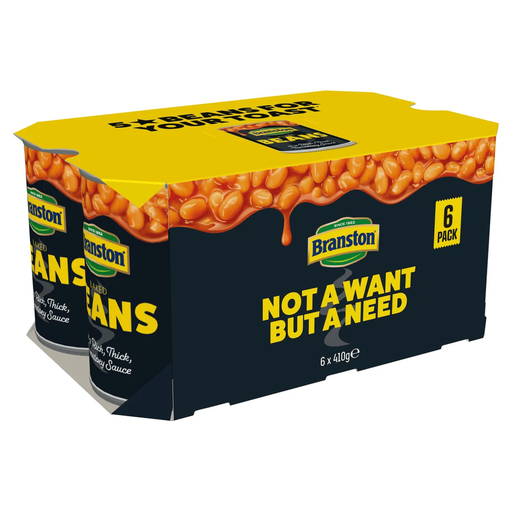 No image available
Six 410g tins fit a menu with enough planned servings to use the larger pack. Check the received pack for specific heating directions, ingredients and allergy advice; follow its instructions for any opened contents.
Plan them as a component rather than assuming a tin meets every requirement of a delivered meal. Choose the other components and the bean portion to suit the recipient’s meal plan.
Follow the directions on the exact tin. Waitrose Essential instructs users to transfer opened beans to a covered, non-metallic container, refrigerate them and use them within two days; do not apply that period to another product without checking its label.
Follow the product’s heating instructions and make sure the food is heated thoroughly before serving. Food Standards Agency caterer guidance calls for reheated food to reach a safe temperature at its centre; a brief warming is not a substitute.
GOV.UK food-delivery guidance says businesses must provide customers with allergen information when taking an order. Check the current product label so the information used for each meal matches its ingredients.
No. Marks & Spencer’s baked-bean listing labels its product vegan and vegetarian but also says it is unsuitable for people with milk or egg allergy. Check the allergy advice for the exact product received.