New parents planning quick adult meals
Baked beans can be kept for toast, jacket potatoes or other simple meals. Choose a can size that fits how many people will eat and whether you can store an opened portion.


For a tin you may use in meals shared with a baby starting solids, look for reduced-salt-and-sugar baked beans and check the ingredients as well as the nutrition panel; the NHS includes this type of bean in its baby and toddler meal ideas. For quick adult meals, a standard tin may suit, but compare salt and sugars per 100g. Choose a can size you can use promptly, taking account of the storage instructions for anything left after opening.
Baked beans can be kept for toast, jacket potatoes or other simple meals. Choose a can size that fits how many people will eat and whether you can store an opened portion.
If a baby starting solids or a young child may eat the same beans, check the exact recipe. The NHS includes reduced-salt-and-sugar baked beans in its baby and toddler meal ideas and advises against giving babies much salt.
Use the salt and sugars figures per 100g to compare tins of different sizes. Check the ingredients too: a no-added-sugar recipe can contain a sweetener.
Decide who may eat the beans, then compare recipes on a per-100g basis before choosing a can size.
| Priority | What to check | Your needs |
|---|---|---|
| Shared meals | Look for a reduced-salt-and-sugar recipe; read its ingredients for sweeteners and its nutrition panel for salt. The NHS includes reduced-salt-and-sugar baked beans in baby and toddler meal ideas. | If my baby is starting solids, I want to check the exact tin before using it in a family meal. |
| Recipe comparison | Compare salt and sugars per 100g, then check the amount you expect to serve. The NHS defines low salt as 0.3g or less per 100g; a reduced-salt claim does not, by itself, establish that a product meets that threshold. | For adult meals, I want to distinguish a standard recipe from one with reduced salt or sugar without confusing a whole-can figure with a per-100g figure. |
| Can size | Check the weight of each can, the number of cans and the instructions for opened contents. Several cited product instructions call for refrigeration and use within two days. | Some days I need a smaller adult portion; on others, a larger tin will be used across the household. |
| Meal planning | Plan what to serve with the beans. The NHS says 80g of beans or pulses counts as one 5 A Day portion, but beans and pulses count only once a day, however much is eaten. | I want a cupboard component for a simple meal, without counting extra helpings of beans as additional 5 A Day portions. |
A no-added-sugar recipe can contain a sweetener: the Heinz product listed by Waitrose & Partners describes beans in tomato sauce with sweetener. That label claim does not tell you the product’s salt content or whether its ingredients fit a meal for a young child.
For a meal a baby starting solids may share, look at the salt and sugars figures and read the full ingredient list. The NHS specifically includes reduced-salt-and-sugar baked beans in its baby and toddler meal ideas.
A whole-can or half-can figure covers a different amount of food when pack sizes differ. It cannot replace a like-for-like comparison of recipes.
Start with salt and sugars per 100g, then use the can size and intended portion to judge how much will be served.
A larger tin can leave beans to store after a one-person meal. The cited Tesco, Heinz and Branston product instructions call for unused contents to be transferred to a suitable container, refrigerated and used within two days.
Choose a smaller can for an occasional individual meal, or check that a larger tin’s opened contents can be used within its stated period.
Any remainder not used within the stated storage period may have to be discarded.
The NHS says an 80g portion of beans or pulses counts towards 5 A Day, but they count only once a day regardless of the amount eaten.
If 5 A Day is part of your meal planning, count beans once and consider other fruit or vegetables separately.
These examples illustrate recipe and pack-size differences; check the label of the particular tin you choose.
The cited Heinz range includes standard baked beans and a 200g No Added Sugar single-serve product.
Tesco lists standard baked beans in 420g tins and a separate reduced-sugar-and-salt line.
The cited Reduced Salt & Sugar baked beans come in a 220g tin.
The cited standard Branston baked beans provide an example for comparing a conventional recipe with reduced-recipe options.
These Joybuy options cover multipacks for repeated adult meals and a smaller can for an individual adult meal. If beans may be shared with a baby starting solids, assess the exact product’s ingredients and nutrition label separately.
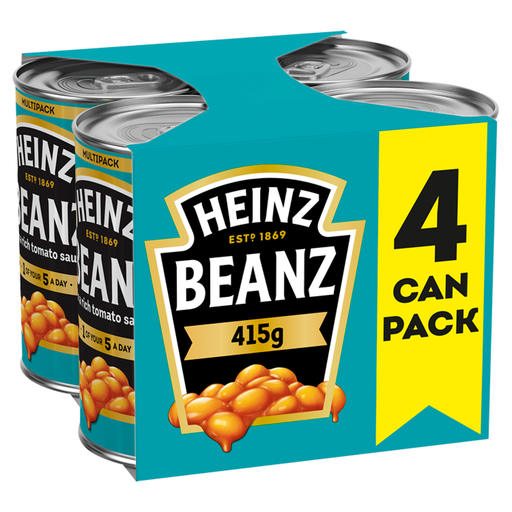 No image available
Four 415g cans offer separate tins for repeated adult meals. For a meal shared with a young child, check the current salt and sugars figures rather than treating this standard recipe as a reduced-salt-and-sugar option. Follow the can’s instructions for any opened contents.
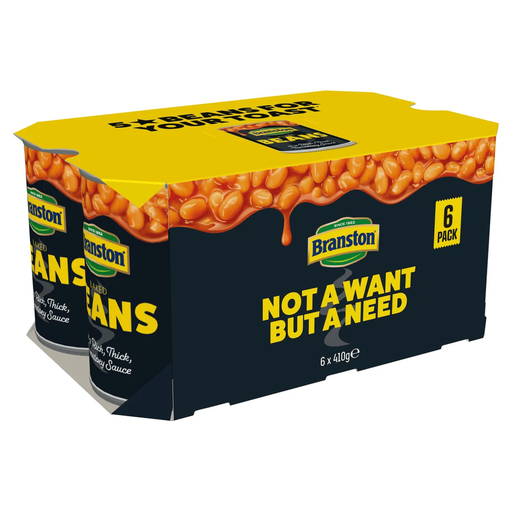 No image available
Six 410g cans suit a household planning several adult meals rather than an occasional single portion. Check the nutrition panel if salt is a deciding factor, and follow the storage instructions for beans left after opening.
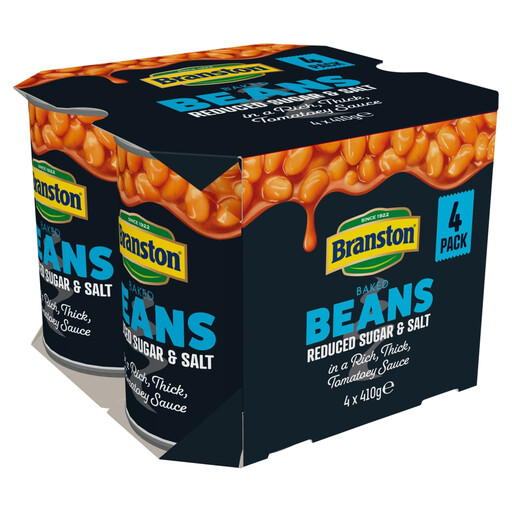 No image available
This four-can, 410g-per-can pack offers an adult-meal option labelled reduced sugar and salt. Compare its per-100g figures with any standard recipe you are considering; the reduced-recipe name alone does not establish that it meets the NHS low-salt threshold. Check the ingredients for sweeteners before choosing it for a shared child’s meal.
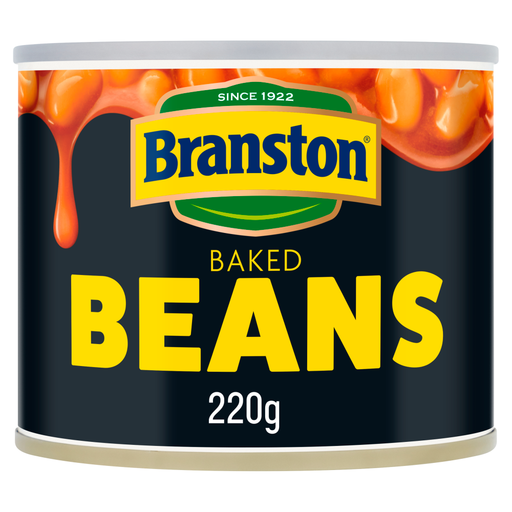 No image available
The 220g can offers a smaller format for an individual adult meal, which may leave less to store after opening than a larger can. Check its current salt and sugars figures if comparing recipes, and follow the pack’s instructions for any remainder.
The NHS includes reduced-salt-and-sugar baked beans with toast in its baby and toddler meal ideas and advises against giving babies much salt. Check the ingredients and nutrition panel of the exact tin; do not assume every reduced-sugar recipe is the same.
Use salt per 100g for a like-for-like comparison across different can sizes. The NHS defines low salt as 0.3g or less per 100g. A per-can or per-serving figure tells you about that stated amount of food, not a different recipe’s equivalent weight.
According to the NHS, 80g of beans or pulses counts as one 5 A Day portion. Beans and pulses count only once a day towards that total, even if you eat more than 80g.
Follow the particular product’s storage instructions. The cited Tesco, Heinz and Branston instructions call for unused beans to be transferred to a suitable container, refrigerated and used within two days.