Hosts planning a bean side
If baked beans are one part of a fakeaway meal, the number of diners and the tin’s stated servings help you decide how much to open.


For a one-off fakeaway side, start by checking whether a standard 400–420g tin gives you the portions you need, then compare its salt, sugars and ingredients with any reduced recipe you are considering. A multipack makes more sense when you plan to use several tins before their best-before dates and have room to store them; a no-added-sugar recipe may contain sweetener.
If baked beans are one part of a fakeaway meal, the number of diners and the tin’s stated servings help you decide how much to open.
If salt, sugars, sweeteners or dietary suitability matter for your meal, compare the nutrition table and ingredients on the exact tin.
If you use beans across several meals, consider how many tins you will use before their best-before dates and where you will keep them.
Choose the recipe and portion size for the meal first, then decide whether a single tin or several tins fit your plans.
| Priority | What to check | Your needs |
|---|---|---|
| Salt and sugars | Compare figures per 100g and per stated serving on the same basis. The Food Standards Agency says traffic-light labels can help compare nutrition information at a glance; still read the figures behind the colours. | I’m serving beans alongside other sauces or sides, so I want to see what this portion contributes. Tesco lists 0.49g salt per 100g for its standard 420g tin; Waitrose & Partners lists 0.30g per 100g for Essential Reduced Salt & Sugar beans. |
| Ingredients | Read the exact pack’s ingredient list, sweetener information and dietary statements. A reduced or no-added-sugar description does not mean the beans contain no sugars or sweetener. | If I’m avoiding sweeteners or serving someone with a dietary requirement, the recipe matters more than the category name. Waitrose & Partners lists steviol glycosides in Heinz No Added Sugar beans. |
| Portions | Check net weight and stated servings rather than assuming every tin serves the same number of people. Consider whether you can use any opened remainder within the pack’s storage period. | For one fakeaway night, I’d rather open the amount we expect to eat. If there are leftovers, I need a covered container and fridge space. |
| Repeat use | Count the tins in a multipack, check their best-before dates and allow cupboard space. Compare the recipe on the multipack with the single tin you would otherwise choose. | When beans feature in several planned meals, I can make use of a multipack; for one occasion, extra tins may simply occupy cupboard space. |
Recipes can differ even when the tins are close in size. Tesco lists 1.03g salt per half can for its standard beans, while Waitrose & Partners lists 0.63g per half can for Essential Reduced Salt & Sugar beans.
Compare both per-100g and stated-serving figures, particularly if beans will accompany other salty foods.
The Heinz No Added Sugar recipe listed by Waitrose & Partners contains steviol glycosides and still declares sugars.
Check the ingredients and nutrition table on the exact tin if either matters to your choice.
A multipack suits repeat meals, but additional tins need cupboard space and have best-before dates to consider.
Choose the pack quantity against meals you actually have in mind.
The reviewed Heinz, Waitrose Essential and Branston product instructions call for opened contents to be covered, refrigerated and used within two days.
Follow the instructions on your pack; transfer leftovers to a suitable covered container rather than leaving them at room temperature.
These product-line examples show why it is worth checking the particular recipe and pack, rather than choosing by brand name alone.
Heinz has standard baked beans and a separate No Added Sugar recipe; the distinction matters when comparing ingredients and nutrition.
The standard baked beans listed by Waitrose & Partners are a tomato-sauce recipe with stated dietary information.
Tesco lists a standard 420g own-label tin and a separate Healthy Living reduced sugar-and-salt product.
Sainsbury's lists standard baked beans in single tins and a 4 x 400g pack for repeat use.
Waitrose Essential lists standard beans and a separate Reduced Salt & Sugar recipe.
These are reduced-recipe and standard baked-bean multipacks for shoppers planning more than one meal. If you only need beans for one fakeaway night, check whether the pack quantity fits your plans.
 No image available
A four-tin reduced-recipe option for planned repeat meals. The product information describes 30% less sugar and salt than standard Branston beans and lists steviol glycosides; check the ingredients if you avoid sweeteners.
 No image available
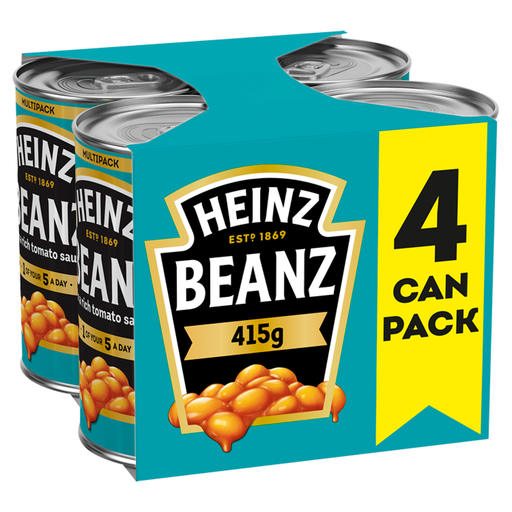
Four tins of the standard tomato-sauce recipe suit meals you have planned beyond one fakeaway night. The product information includes ingredients, per-100g nutrition and hob and microwave heating directions; allow space for the remaining tins.
No image available
This four-tin pack is another standard-recipe option for repeat meals. The product information gives ingredients and nutrition per 100g and per half can, so you can check the stated portion against your meal.
 No image available
Consider the six-tin quantity if beans are already part of several planned meals and you have cupboard space. The product information gives ingredients and per-100g nutrition for this tomato-sauce recipe.
Start with a standard 400–420g tin if its stated servings fit the diners and its ingredients suit the meal. If salt or sugars are a particular consideration, compare the same serving basis with a reduced recipe and check for sweeteners.
Compare the per-100g figures, then check what each tin calls a serving. The Food Standards Agency says traffic-light labels help compare food products at a glance: green indicates low, amber medium and red high for the nutrient shown.
Check the exact pack rather than assuming every recipe is suitable. Tesco labels its reviewed standard 420g tin suitable for vegans, while the Branston standard listing reviewed by Waitrose & Partners states suitable for vegetarians; recipes with additions may differ.
Follow the pack’s storage instructions and refrigerate leftovers in a suitable covered container. The reviewed Heinz, Waitrose Essential and Branston instructions say to use opened contents within two days; do not store them in the cupboard.
Yes, if the label gives no different storage instruction and the can is intact. Food Standards Australia New Zealand advises a cool, dry place when no instructions are given and warns against buying cans with swelling, leakage, rust or damaged seams.