Who is choosing?
The useful distinction is often how much you will serve at breakfast and whether the exact recipe meets a dietary requirement.
Households planning a cooked breakfast
If beans are going alongside toast, eggs or other breakfast dishes, compare tin size with the portions you expect to use. A multipack suits repeated breakfasts only if its quantity makes sense for your household.
Shoppers comparing sugar and salt
Check the nutrition panel of each regular, reduced or no-added-sugar recipe. The NHS advises using food labels to compare products; per-100g figures give a consistent basis, while serving figures help you consider the amount you will eat.
Shoppers with dietary requirements
Read the ingredients, allergy statement and any vegan, vegetarian or gluten-free declaration on the exact tin. Similar-looking baked beans need not carry the same declarations: Marks & Spencer says its No Added Sugar Baked Beans are not suitable for people with milk or egg allergy.
What should you check?
Start with the recipe and tin size, then check the label for anything that could change how you serve or store the beans.
| Priority | What to check | Your needs |
|---|
| Sugar and salt |
Compare sugars and salt per 100g, then check the stated serving size. Read what a reduced claim is compared with and check the ingredients if sweeteners matter to you. |
I want to choose between regular and altered recipes without assuming that “no added sugar” means sugar-free. Waitrose & Partners compares its reduced Essential beans with its regular Essential beans, not with every brand. |
| Tin size |
Check the weight of each tin and the number of tins in a pack. Compare that quantity with your planned portions and the product’s instructions for leftovers. |
For breakfasts on my own, I would rather consider a smaller tin than leave much of a larger one open. If several people will eat beans regularly, a multipack may fit the plan. |
| Ingredients |
Read the current ingredient list, allergy statement and any dietary declarations for the exact recipe. Recheck when changing brand, recipe or pack format. |
I need a tin that fits my dietary requirements, not an assumption about baked beans generally. Marks & Spencer’s allergy statement for its no-added-sugar beans shows why the individual label matters. |
| Preparation and storage |
Follow the tin’s heating directions and its instructions for opened leftovers. Tesco and Sainsbury’s product directions specify a covered, non-metallic container in the fridge and use within two days for their cited multipacks. |
If I expect to serve only part of a tin, I need to know how I will store the rest. For microwave preparation, I will check the chosen product’s directions before heating. |
Brand and product references
These examples show why it helps to compare specific recipes and labels rather than apply one brand-wide rule.
Heinz
Heinz Beanz No Added Sugar provides an example of a recipe whose front-of-pack description needs context.
- Waitrose & Partners lists it as gluten-free and states that it has 25% less salt than standard Heinz Beanz.
- The same listing says it contains naturally occurring sugars; the salt comparison is within the Heinz products named.
Tesco
Tesco’s Baked Beans in Tomato Sauce 6 x 420g is a multipack example for planned cupboard use.
- The six-tin format lets a household open one tin at a time.
- Tesco instructs shoppers to transfer unused contents to a covered, non-metallic container, refrigerate them and consume them within two days of opening.
Sainsbury’s
Sainsbury’s Baked Beans 4 x 400g offers another specified multipack size.
- Its product directions include transferring the beans to a covered microwaveable dish for microwave preparation.
- Sainsbury’s instructs shoppers to transfer opened leftovers to a non-metallic container, refrigerate them and use them within two days.
ASDA
ASDA lists a Reduced Salt & No Added Sugar Baked Beans 410g recipe.
- ASDA describes this specific product as having 60% less sugar and 30% less salt than a standard equivalent.
- That stated reference is a standard equivalent, not every baked-bean recipe. Compare the current nutrition panel with any other tins you are considering.
M&S
M&S No Added Sugar Baked Beans illustrate why a recipe name cannot answer an allergy question.
- Marks & Spencer states that this product is not suitable for people with milk or egg allergy. Check its current label for your requirements.
Waitrose Essential
Essential Reduced Salt & Sugar Baked Beans in Tomato Sauce uses a named product within the Essential range as its comparison.
- Waitrose & Partners states that it contains 30% less sugar and 30% less salt than regular Essential baked beans in tomato sauce.
- The percentages describe that particular comparison, not a comparison with all regular baked beans.
Joybuy baked-bean options
These tins cover standard baked-bean multipacks, a smaller tin and a reduced-sugar-and-salt multipack for planning weekend breakfasts. Compare each exact recipe and pack size before choosing.
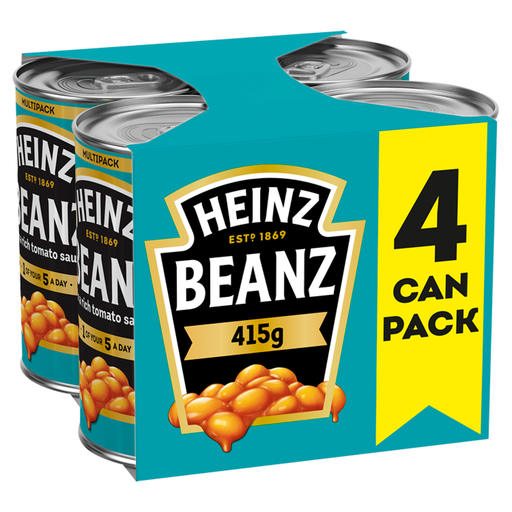 Image unavailable
HEINZ Baked Beans in Tomato Sauce 4 x 415g
Four 415g tins suit a plan to serve beans at several breakfasts. Check the current tin’s nutrition panel, ingredients and instructions for storing any leftovers.
 Image unavailable
Branston Baked Beans 4 x 410g
This four-pack provides 410g tins for breakfasts on more than one occasion. Use the exact pack label to check ingredients, dietary suitability and preparation directions.
 Image unavailable
Branston Beans in Tomato Sauce 6 x 410g
Six 410g tins provide a larger cupboard supply for repeated breakfasts. Consider how much you serve at a time, and check the current tin for heating and opened-storage instructions.
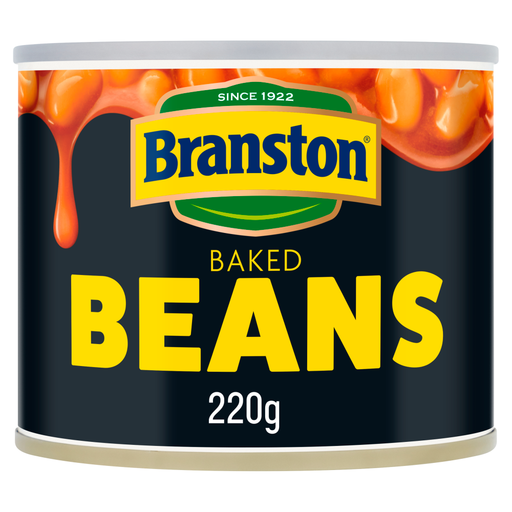 Image unavailable
Branston Baked Beans in Tomato Sauce 220g
The 220g tin is worth considering if you prefer a smaller quantity for one breakfast. Check whether it matches the portion you intend to serve, along with its current ingredients and heating directions.
 Image unavailable
Branston Reduced Sugar & Salt Baked Beans 4 x 410g
This four-pack contains 410g tins labelled reduced sugar and salt. Compare the current per-100g figures and ingredients with your other choices; the recipe name alone does not establish how it compares with every standard tin.
Questions about choosing and using baked beans
How do I compare regular, reduced and no-added-sugar baked beans?
Compare sugars and salt per 100g on the exact tins, then consider the portion you will serve. “No added sugar” does not mean sugar-free: Waitrose & Partners says Heinz Beanz No Added Sugar contains naturally occurring sugars. A reduction also needs its stated reference product; Waitrose compares its reduced Essential beans with regular Essential beans.
Are all baked beans suitable for vegans or people with food allergies?
No single dietary declaration applies to every baked-bean recipe. Read the current tin’s ingredients and allergy statement alongside any vegan or gluten-free claim. Marks & Spencer states that its No Added Sugar Baked Beans are not suitable for people with milk or egg allergy.
How should I keep beans left over from an opened tin?
Follow the chosen product’s label. Tesco’s 6 x 420g and Sainsbury’s 4 x 400g product directions say to transfer leftovers to a covered, non-metallic container, refrigerate them and use them within two days of opening.
What does “best before” mean on a tin?
A best-before date concerns food quality, whereas a use-by date concerns safety, according to GOV.UK. Keep the tin according to its storage instructions and check its date label when organising your cupboard.
Can I heat baked beans in their tin in the microwave?
Use a microwaveable dish rather than the tin when following Sainsbury’s cited microwave directions: they instruct you to transfer the beans and cover the dish. Follow the heating instructions on the particular product you choose.


