Older adults who regularly eat baked beans
If beans are a familiar cupboard meal component, compare the nutrition panel and the portion usually eaten, not just a reduced-salt or no-added-sugar claim on the front.


For an older person who regularly eats baked beans, compare salt per 100g and per portion, then choose a flavour and tin size they are likely to use. A reduced-salt recipe is worth considering when salt is a concern, but poor appetite or unintentional weight loss calls for a wider meal plan; any prescribed diet needs individual advice rather than a choice based on the front of the tin.
If beans are a familiar cupboard meal component, compare the nutrition panel and the portion usually eaten, not just a reduced-salt or no-added-sugar claim on the front.
The decision is about how an accepted portion fits into a meal, not simply finding the tin with the lowest sugar or salt figure. Milton Keynes University Hospital’s food-first guidance discusses adding energy and protein without increasing portion size.
Check the person’s individual advice before making beans a regular meal component. North Bristol NHS Trust notes that beans contain potassium and that a dietitian can advise people who need to manage their intake.
Start with the amount likely to be eaten, then compare labels on the same basis and consider how the beans fit into the rest of the meal.
| Priority | What to check | Your needs |
|---|---|---|
| Salt per portion | Compare salt per 100g across tins, then calculate it for the portion served. Consider other foods in the meal; a reduced-salt claim is relative to another recipe, not an individual limit. | I serve beans regularly and want to know how much salt the usual portion adds, especially alongside foods such as cheese or processed meat. |
| Appetite and meal content | Read energy and protein values for the amount eaten. If intake is low or weight is falling unintentionally, consider the whole meal and seek advice rather than choosing by a single sugar or salt figure. | A smaller meal that gets eaten matters more to me than choosing a tin by one number. Milton Keynes University Hospital’s food-first guidance addresses adding energy and protein without enlarging portions. |
| Sugar claims | Distinguish reduced sugar from no added sugar, and compare the nutrition panels. Neither description tells you the salt content or whether a recipe fits a prescribed diet. | I’m considering a no-added-sugar recipe, but still need to check its salt declaration and the portion served. |
| Tin size and leftovers | Check the tin size against the number of servings needed. Read the particular product’s directions for heating, transferring, refrigerating and using leftovers. | For a one-person meal, I want a manageable portion and a clear plan for anything left after opening. |
| Prescribed requirements | Check ingredients and the nutrition panel against the person’s own dietary instructions. Ask their clinical team or dietitian where a potassium-managed or other therapeutic diet applies. | I’m buying for someone whose individual dietary plan must take precedence over a general claim about baked beans. North Bristol NHS Trust advises that a dietitian can guide potassium restrictions. |
A reduced recipe still contributes salt, and the amount eaten matters. GOV.UK advises adults to have no more than 6g of salt a day; a clinician may set an individual target.
Compare the label per 100g and for the portion served, then consider the rest of the meal and follow any individual advice.
A different tin does not address poor appetite or unintentional weight loss on its own. Milton Keynes University Hospital’s food-first guidance focuses on adding energy and protein without simply increasing portion size.
Plan an accepted meal around the beans where appropriate, and seek professional advice if poor intake or weight loss continues.
North Bristol NHS Trust notes that beans contain potassium; whether someone needs to limit them depends on their individual renal advice.
Check with the person’s renal team or dietitian before using beans routinely as part of a potassium-managed plan.
A partly used tin needs handling according to its own storage instructions, which can differ between products.
Consider a smaller tin for one serving, or transfer the remainder to a suitable covered container, refrigerate it and follow the time stated on the label.
These label examples show why it is useful to compare the specific recipe and portion, rather than treating a brand name as a nutrition guide.
Heinz describes its No Added Sugar Beanz as having 25% less salt than standard Heinz Beanz.
Tesco lists a 220g Reduced Sugar & Salt Baked Beans tin.
Sainsbury’s lists Reduced Sugar & Salt Baked Beans in a 400g tin.
Asda lists a Reduced Salt & No Added Sugar baked-bean recipe.
M&S lists a No Added Sugar Baked Beans recipe.
Waitrose lists Essential Reduced Salt & Sugar Baked Beans in a 220g tin.
These options include plain baked beans and bean-and-sausage recipes. If the meal calls for plain beans, check the latter recipes carefully rather than treating them as interchangeable.
 No image available
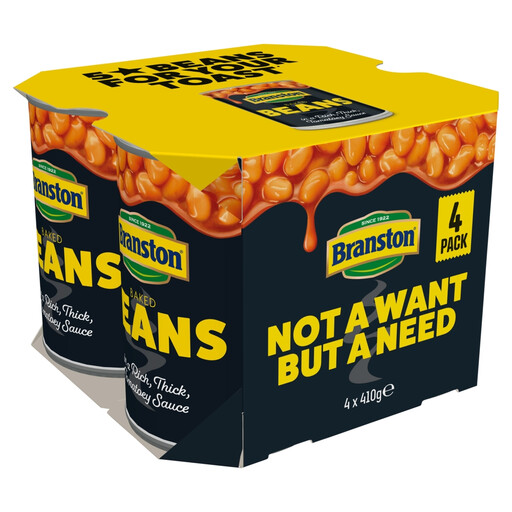
A four-tin option for someone who wants a reduced-sugar and reduced-salt Branston recipe. Joybuy’s product declaration gives 0.39g salt per 100g; compare the portion served and check the current label against any individual dietary instructions.
 No image available
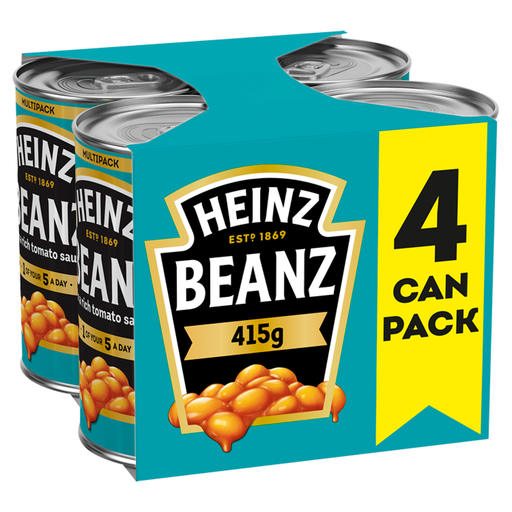
Plain baked beans in a four-tin pack for cupboard meals. Compare the current nutrition panel with reduced-salt recipes using the same portion size, and plan how to store any beans left after opening.
 No image available
A four-tin pack of plain beans in tomato sauce. If brand familiarity matters, still use the current label to compare salt for the amount eaten and check whether a 415g tin suits the meal.
 No image available
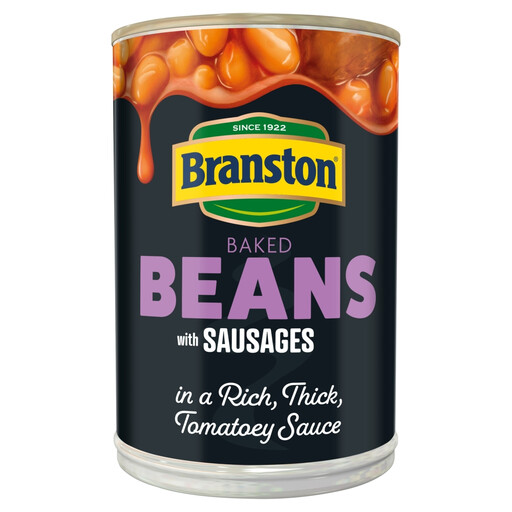
This is a bean-and-sausage recipe rather than plain baked beans. Check its ingredients and allergens, compare the salt in the portion served, and consider it within the person’s wider meal plan.
 No image available
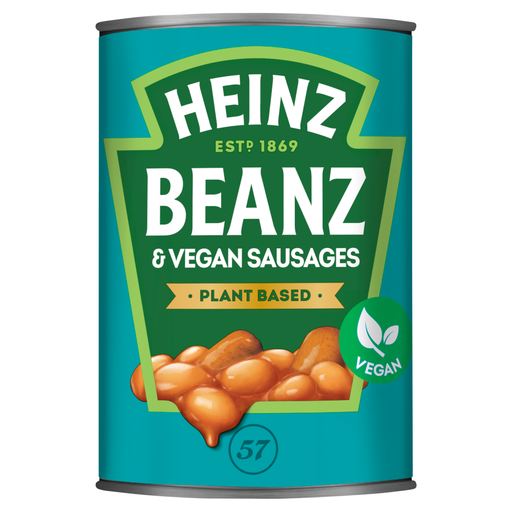
A bean-and-vegan-sausage recipe for someone seeking that combination rather than plain beans. Check the current ingredient and allergen declarations, salt per portion and directions for any leftovers.
Not necessarily. A reduced-salt recipe is worth comparing when salt intake matters, but the portion, the rest of the meal, appetite and any individual dietary instructions also affect the choice. GOV.UK advises adults to have no more than 6g of salt a day; that general figure does not replace an individual target.
No single tin addresses the whole meal plan. Milton Keynes University Hospital’s food-first guidance discusses adding energy and protein without increasing portion size; seek advice from the person’s GP, dietitian or care team if poor intake or unintentional weight loss continues.
Follow their individual renal advice rather than deciding from the diagnosis alone. North Bristol NHS Trust notes that beans contain potassium and that a dietitian can advise whether potassium-containing foods need to be reduced.
No. The sugar description does not state the salt content. For example, Marks & Spencer declares 0.43g salt per 100g for its No Added Sugar Baked Beans; compare the current label per 100g and for the portion served.
Follow that tin’s storage directions: transfer leftovers to a suitable covered container, refrigerate them and use them within the period on its label. Product instructions differ; Marks & Spencer’s No Added Sugar Baked Beans page, for example, states two days.