Older adults eating alone
If one meal uses only a small portion, compare an individual tin with a 400–420g tin. The deciding question is whether the rest of a larger tin will be used within its storage instructions.


A family pack of full-size tins makes sense when beans are eaten regularly by more than one person, or when leftovers can be stored and used as directed. For someone who usually eats alone or has smaller meals, an individual tin may be more practical. Compare salt and sugars for the exact recipe and portion rather than assuming that a standard, no-added-sugar or reduced-salt-and-sugar label settles the choice.
If one meal uses only a small portion, compare an individual tin with a 400–420g tin. The deciding question is whether the rest of a larger tin will be used within its storage instructions.
A multipack of full-size tins can suit regular shared meals. Check the salt in the portion each person will eat, and plan what to do with any opened-tin leftovers.
Compare the exact recipe’s nutrition label per 100g and per intended serving. No-added-sugar and reduced-salt-and-sugar beans have different claims; neither label describes the whole nutritional profile.
Start with the amount likely to be eaten at one meal, then compare the recipes on the same nutrition basis and check the opened-tin instructions.
| Priority | What to check | Your needs |
|---|---|---|
| Salt | Compare salt per 100g and per intended serving. Check a reduced-salt claim against the particular standard recipe named on the label. | I want to know how much salt my portion contains, not just whether the pack says no added sugar. The NHS advises adults to have no more than 6g of salt a day from all foods. |
| Portions and storage | Compare full-size 400–420g tins with smaller individual tins. Read the instructions for transferring, refrigerating and using any leftovers; Tesco and Sainsbury’s specify use within 2 days for their cited multipacks. | A smaller tin may suit me if I eat alone and would otherwise leave much of a larger one. For shared meals, I can consider whether a full-size multipack will be used regularly. |
| Recipe | Check sugars and salt separately, using per-100g values for like-for-like comparison. Read the ingredients and allergen information on the pack received. | If I am choosing a no-added-sugar or reduced-salt-and-sugar variety, I need the figures for that exact recipe and the portion I expect to eat. |
| Meal context | Compare protein and fibre on the exact product label. Consider the rest of the meal rather than treating one tin as a complete eating plan. | I may want beans as one part of a meal. If appetite is low or weight loss is unintentional, a different pack size alone does not address the underlying concern. |
An unfinished full-size tin needs storing, and some of its contents may go unused if meals are small or irregular.
Compare the usual portion with an individual tin before stocking up. Follow the particular pack’s instructions for opened contents.
Sugars and salt are separate label values. For example, the Heinz No Added Sugar 4 x 415g listing at Waitrose & Partners gives 0.4g salt per 100g.
Compare salt and sugars for the exact recipe, both per 100g and for the portion to be served.
A portion-size change does not assess unintentional weight loss or a loss of interest in eating. The NHS identifies both as possible signs of malnutrition.
If these changes are occurring, seek advice from an appropriate healthcare professional rather than relying on a baked-bean choice.
Ingredients and nutrition information can change, as Tesco Groceries notes in its product information.
Check the pack received for its ingredients, allergens, nutrition values and storage directions.
These examples show pack formats and recipes worth comparing; the figures apply to the specified products, not every item from each brand.
The cited range includes 4 x 415g tins and smaller 200g portions.
The cited Tesco baked beans multipack contains four 420g tins.
The cited Sainsbury’s multipack contains four 400g tins.
The cited Reduced Salt & Sugar baked beans are a single 420g tin rather than a fixed family multipack.
M&S describes its beans range as including small and large tins and no-added-sugar beans.
These options include full-size multipacks for planned household use and one smaller individual tin to compare when a full-size tin may leave leftovers.
 No image available
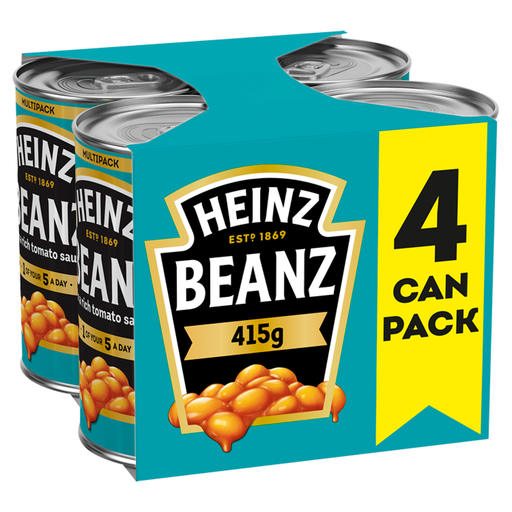
Four full-size tins are a format to consider for planned shared meals. Joybuy’s listing gives 0.39g salt per 100g for this recipe; compare the intended serving and check the pack label before use.
 No image available
This four-tin format suits consideration when full-size tins will be used regularly. Joybuy’s product information says to transfer opened leftovers to a non-metallic, airtight container, refrigerate them and consume them within 2 days.
 No image available
Six full-size tins are worth considering when a household uses beans regularly. Check how much of each opened tin will be eaten and follow its storage directions.
 No image available
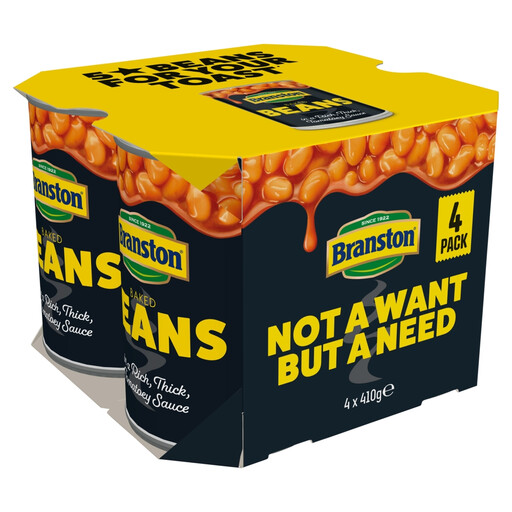
This four-pack offers full-size tins for planned meals. If one person usually eats only a small portion, compare it with an individual tin and read the opened-tin storage instructions.
 No image available
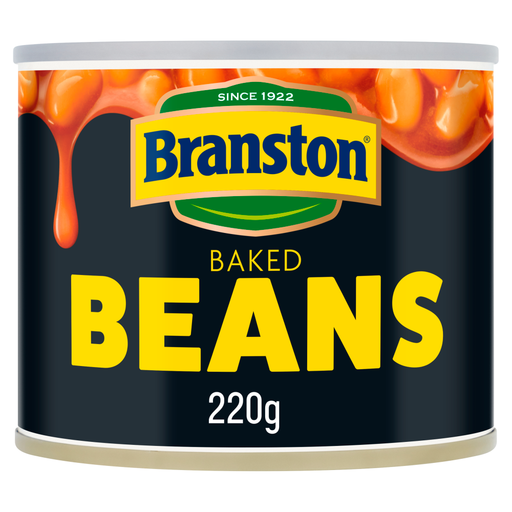
This single 220g tin is an alternative to a family pack when a full-size tin may be too much for one meal. It can still leave leftovers, so check the storage directions if it will not be finished.
They can form part of a meal: the NHS identifies beans and other pulses as sources of fibre and protein. Check the particular recipe and portion against the person’s overall diet and any individual dietary advice; baked beans are not a response to suspected malnutrition.
A full-size multipack is more practical if the beans will be eaten regularly or the leftovers will be used as directed. For the cited Tesco and Sainsbury’s packs, opened contents must be transferred to a non-metallic container, refrigerated and used within 2 days. Compare a smaller tin if that is unlikely.
Not necessarily: read the salt value separately. The Heinz No Added Sugar 4 x 415g listing at Waitrose & Partners gives 0.4g salt per 100g; its 25% less salt claim is specifically relative to standard Heinz Beanz.
Use the label’s salt value for the amount that will actually be eaten, alongside salt from the rest of the day’s food. The NHS advises adults to have no more than 6g of salt a day.
Seek advice from an appropriate healthcare professional rather than treating a different baked-bean pack as the solution. The NHS identifies unintentional weight loss and loss of interest in eating or drinking as possible signs of malnutrition.