Group-picnic planners stocking a cupboard
Standard tins or a multipack can cover a shared meal while leaving unopened tins for another occasion. Check how many tins you are likely to use.


For a group picnic or repeated cupboard use, a multipack makes sense if you expect to use the unopened tins; for one person, a smaller can may leave less to store after opening. Choose a reduced-sugar or reduced-sugar-and-salt recipe by checking its exact nutrition and ingredient label, not its range name alone. If you open a tin at the picnic, plan how to keep any leftovers cool and follow that product’s storage instructions.
Standard tins or a multipack can cover a shared meal while leaving unopened tins for another occasion. Check how many tins you are likely to use.
A smaller can may be easier to carry and finish in one sitting. Check the serving size before choosing a standard tin.
Compare the exact recipe’s sugars and salt per 100g, ingredients, allergen information and any vegan, vegetarian or gluten-free statement that matters to you.
Decide how much you will open at the picnic, then check the recipe label and make a plan for any leftovers.
| Priority | What to check | Your needs |
|---|---|---|
| Pack size | Check the number of tins and the weight of each. A multipack leaves tins unopened for later only if you open what the picnic needs. | I am feeding a group, or I will use the remaining unopened tins for other meals. |
| Portions | Compare a smaller 200g–220g can with a standard 400g–420g tin. Check the label’s serving information rather than assuming one tin is one portion. | For a solo picnic, I would rather carry a smaller can than deal with an opened remainder. |
| Recipe and label | Compare sugars and salt per 100g on the exact products. Read ingredients, allergens and product-specific dietary statements. | I want a recipe that fits my dietary requirements, without assuming that a no-added-sugar label also describes its salt content. |
| Opened-tin storage | Read the tin’s refrigeration and use-period instructions. If food remains, have a suitable covered container and a way to keep it cool. | If we might not finish a tin outdoors, I need a workable plan for the leftovers. |
Nutrition and ingredients differ between named recipes. For example, Marks & Spencer lists 1.2g sugars per 100g for its No Added Sugar Baked Beans and marks that product unsuitable for people with milk or egg allergy.
Compare sugars and salt per 100g, then read the ingredients and allergen statement on the tin you will use.
Unfinished beans need different handling once the tin is opened. The cited Heinz, Branston, Sainsbury's and Waitrose product instructions call for refrigeration and a two-day use period; the cited M&S standard tin specifies three days.
Take a suitable covered container if leftovers are likely, keep them cool and follow the period on the exact product label.
A dietary statement for one baked-bean recipe does not establish the ingredients or allergen suitability of another, even within the same range.
Check the physical pack before serving anyone with an allergy or intolerance. Marks & Spencer marks its No Added Sugar Baked Beans unsuitable for people with milk or egg allergy.
These examples describe particular products and formats; check the label of the tin you choose.
The range includes standard 415g tins, smaller cans, multipacks, Snap Pots and no-added-sugar variants.
The cited range includes standard 410g tins, a smaller 220g tin and a reduced-sugar-and-salt recipe.
The cited own-label baked beans come in a 4 x 400g pack that can leave unopened tins for later meals.
The cited standard baked beans come in a 420g tin; a smaller format is also described in the range.
The cited range includes a standard 400g tin and a 390g no-added-sugar recipe.
Tesco’s cited category listing includes own-label standard, organic and reduced-sugar-and-salt choices alongside branded formats.
These options include multipacks for group or later cupboard use, a smaller tin for a lighter picnic load, and a reduced-sugar-and-salt recipe. Compare the exact pack and label with the amount you plan to open.
 No image available
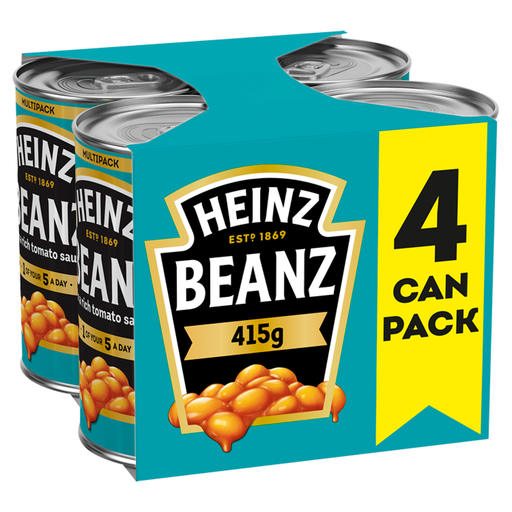
Four tins suit a shared picnic or meals on separate days. Joybuy’s product instructions say these beans may be served hot or cold; after opening, transfer unused beans to a non-metallic airtight container, refrigerate and use within two days.
 No image available
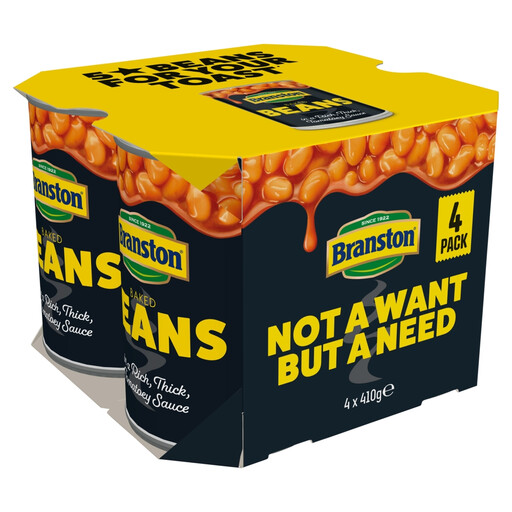
This four-tin pack is an option when several tins will be used across a group picnic or later meals. Follow the pack’s serving instructions; refrigerate any opened leftovers and use them within the stated two-day period.
 No image available
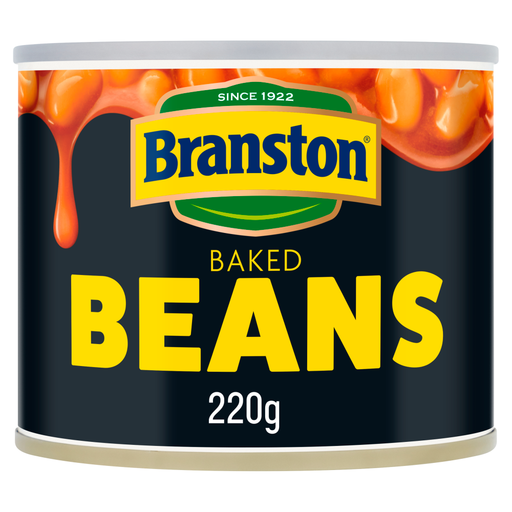
The 220g can is worth considering when you want to open a smaller quantity at a solo picnic. Its product description identifies it as vegetarian friendly; refrigerate leftovers in a separate container and use within two days.
 No image available
This four-tin pack offers a named reduced-sugar-and-salt recipe for shoppers comparing labels. Joybuy lists 2.8g sugars and 0.39g salt per 100g for this product; its ingredients include steviol glycosides, so check the current label if sweeteners matter to you.
 No image available
Six 410g tins give a group or a household more unopened tins to use across separate meals. If a tin is not finished, transfer the leftovers to a covered container, refrigerate and use within two days.
Choose a multipack if several people will eat the beans or you expect to use its unopened tins later. For one person, a 200g–220g tin or portioned format may be easier to carry and finish without leftovers.
Check the exact product’s instructions. Joybuy’s description of Heinz Baked Beans in Tomato Sauce 4 x 415g says they may be served hot or cold; follow that pack’s directions rather than assuming every recipe says the same.
Transfer them to a suitable covered container, refrigerate and follow the product’s stated use period. The cited Heinz, Branston, Sainsbury's and Waitrose instructions specify two days, while Marks & Spencer specifies three days for its cited standard tin.
Store unopened tins as their labels direct. Once a tin is opened, plan to keep any leftovers cool until they can be refrigerated: Food Standards Scotland advises that foods normally kept in the fridge at home also need to be kept cool at a picnic.