What to compare on the label
Start with protein for the portion you will eat, then compare sugars, salt and dietary information on that same tin.
| Priority |
What to check |
Your needs |
| Protein per portion |
Compare protein per 100g and the pack's serving size. ASDA lists 4.9g per 100g and 10g per half-can for its standard 410g tin; Sainsbury's lists 3.8g per 100g and 7.5g per half-can for its standard 400g tin. |
I want to know what the amount I actually eat contributes to my meal, and whether I need another protein food alongside it. |
| Sugars and salt |
Compare both values per 100g, then check the portion. Waitrose & Partners lists 1.9g sugars and 0.4g salt per 100g for Heinz No Added Sugar; it lists 0.6g salt per 100g for standard Heinz Baked Beans. |
If I eat beans often or have a larger portion, I want the sauce's sugars and salt to fit my priorities, not just the protein figure. |
| Fibre and dietary suitability |
Read fibre per 100g and the exact tin's vegetarian or vegan declaration. Check allergen and cross-contact wording independently of those declarations. |
A plant-based cupboard option matters to me, but an allergy warning could change which product I can use. |
| Individual dietary advice |
Check the portion, protein and salt against any advice given for your condition. University Hospitals Coventry and Warwickshire NHS Trust notes that kidney-disease diets vary with the person's stage and treatment. |
If I have a clinician-directed diet, I need advice for my circumstances rather than choosing the tin with the largest protein figure. |
Brand and range references
Brand names alone do not establish protein, sugars, salt or allergy suitability; compare the particular recipes and pack labels.
Heinz
Waitrose & Partners lists standard Heinz Baked Beans at 4.8g protein and 0.6g salt per 100g, and Heinz No Added Sugar at 4.6g protein, 1.9g sugars and 0.4g salt per 100g.
- The two recipes offer different protein and salt figures to compare.
- The no-added-sugar version has less declared protein per 100g than the standard version; check its ingredients if sweeteners matter to you.
Tesco
Tesco Groceries lists Tesco Organic Baked Beans alongside branded and other canned-bean options.
- Its category includes own-label and branded choices.
- Compare the nutrition panel of the particular Tesco tin before choosing it for its protein, sugars or salt.
Sainsbury's
Sainsbury's lists 3.8g protein and 0.58g salt per 100g for its standard Baked Beans in Tomato Sauce 400g.
- The stated half-can serving provides 7.5g protein.
- The stated half-can also contains 1.16g salt, so compare portions as well as per-100g values.
Asda
ASDA lists 4.9g protein and 4.6g fibre per 100g for its standard Baked Beans in a Rich Tomato Sauce 410g.
- Its stated half-can provides 10g protein.
- That half-can also contains 0.96g salt. ASDA's reduced-salt, no-added-sugar recipe is a separate product and needs its own label check.
M&S
Ocado lists 4.5g protein, 1.2g sugars and 0.43g salt per 100g for M&S No Added Sugar Baked Beans; its standard M&S listing gives 4.4g protein per 100g.
- The no-added-sugar and standard recipes have distinct declared nutrition figures.
- Ocado says both listed products are unsuitable for people with milk or egg allergy because of possible cross-contact, despite their vegan-recipe or vegan-suitability descriptions.
Waitrose
Waitrose & Partners lists essential Reduced Salt & Sugar Baked Beans at 4.0g protein, 2.0g sugars and 0.30g salt per 100g.
- Waitrose states that this recipe has 30% less sugar and 30% less salt than its regular essential baked beans; that comparison is specific to those products.
- Check the amount you intend to eat as well as the per-100g figures when comparing its 220g can with larger tins.
Joybuy product options
These options include plain baked-bean multipacks and two bean-and-sausage tins. The sausage products are different meals from plain baked beans, so compare them separately when planning your portion.
 No image available
Branston Reduced Sugar & Salt Baked Beans, 4 x 410g
A four-tin option if you want a reduced-sugar-and-salt Branston recipe. Compare its current per-100g label and serving size with any standard tin you are considering; check the ingredients if you avoid sweeteners.
View on Joybuy
 No image available
HEINZ Baked Beans in Tomato Sauce, 4 x 415g
A multipack of standard tomato-sauce beans for meals where you want to decide the protein contribution by portion. Use the current pack's protein, sugars and salt figures when comparing it with a no-added-sugar recipe.
View on Joybuy
 No image available
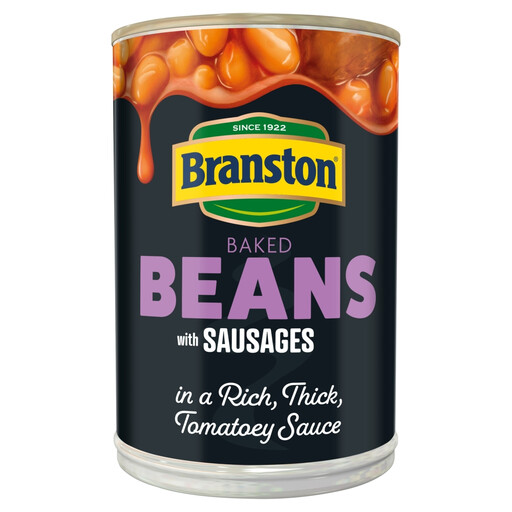
Branston Baked Beans & Sausages 405g
This is a bean-and-sausage tin, not plain baked beans. If considering it for a meal, compare its serving information and salt declaration separately from those of standalone beans, and check the allergen statement.
View on Joybuy
 No image available
Branston Beans in Tomato Sauce, 6 x 410g
A six-tin pack of tomato-sauce beans for keeping in the cupboard. Compare protein for your intended portion with the per-100g nutrition panel, and check the current pack's dietary declaration if vegetarian or vegan suitability matters to you.
View on Joybuy
 No image available
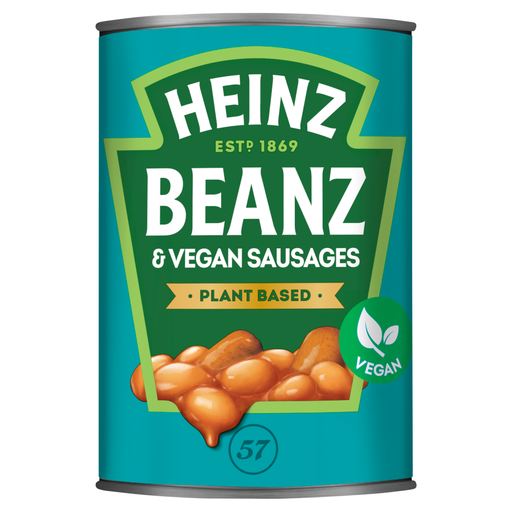
Heinz Beanz & Vegan Sausages 415g
A bean-and-vegan-sausage tin rather than a standalone baked-bean product. Check its portion and protein declaration for the meal you have in mind, and read the allergen statement separately from the vegan wording.
View on Joybuy
Questions about choosing and using baked beans
Are baked beans enough protein for a high-protein meal?
Do not assume a half-can meets your meal's protein target on its own. ASDA lists 10g protein per half-can of its standard beans and Sainsbury's lists 7.5g for its standard half-can; assess those amounts alongside the other foods in your meal and any individual advice you follow.
Should I choose standard, no-added-sugar or reduced-salt beans?
Choose by comparing the nutrients that matter to you on the exact tins, rather than assuming one recipe suits every meal. Waitrose & Partners lists 4.8g protein and 0.6g salt per 100g for standard Heinz Baked Beans, against 4.6g protein and 0.4g salt per 100g for Heinz No Added Sugar; the latter lists 1.9g sugars per 100g.
How should I store leftover baked beans?
Follow the storage instructions on the product you open and refrigerate leftovers when the pack directs you to. For standard Heinz Baked Beans, the Waitrose & Partners listing says to refrigerate unused contents and use them within two days.
Does a vegan description mean the beans suit a milk or egg allergy?
No: a vegan-recipe description does not replace the allergen statement. Ocado says M&S No Added Sugar Baked Beans may contain milk and egg and are not suitable for people with milk or egg allergy, so check the exact product label.
Should someone with kidney disease choose beans by protein content?
Not without individual dietary advice. University Hospitals Coventry and Warwickshire NHS Trust explains that kidney-disease diets vary with disease stage and treatment, and that some people may need to limit protein; ask your renal clinician or dietitian how a portion fits your plan.


