Choose a four-, six- or eight-can pack according to how often your household uses baked beans, rather than treating a larger pack as a way to get more protein per serving. Standard Heinz 415g beans provide 10g protein per half can, according to Heinz To Home; compare the portion, salt and sugar figures on the recipe you plan to buy, since a reduced-sugar or no-added-sugar version may have a different nutrition profile.
Who might use a family pack?
Families serving beans regularly
A multipack makes practical sense when several breakfasts, lunches or dinners already include baked beans. For a portion reference, Heinz To Home lists 10g protein per half can of its standard 415g beans. The NHS Eatwell Guide describes beans and other pulses as sources of protein and fibre within a varied diet.
Households comparing recipes
If beans appear in meals often, look beyond the protein figure to the salt and sugar values for the amount served. ASDA Groceries lists 1.3g salt per half can of standard Heinz 415g beans; Waitrose & Partners lists 0.4g salt and 1.9g sugars per 100g for the Heinz no-added-sugar 415g recipe. These are different serving bases, so compare the same quantity before drawing a conclusion.
Households deciding how many cans to keep
Four 415g cans provide 1.66kg in total, while eight provide 3.32kg. Choose a count that fits your cupboard space and the number of meals for which you expect to use the cans; a larger unopened pack does not change how you need to handle leftovers from an opened can.
What should you check?
Start with the portion you will serve, then compare recipes on the same per-100g basis and choose a pack count that suits your routine.
| Priority | What to check | Your needs and food-label use |
|---|
| Portion and nutrition |
Read protein, fibre, sugar and salt figures for the same serving size. Heinz To Home lists 10g protein per half can of standard 415g beans; ASDA Groceries lists 1.3g salt for that portion. Check whether a traffic-light label refers to per 100g or per serving. |
I want to know what the portion I serve contributes, not just what the front of the pack says. In a Food Standards Agency and IPSOS Northern Ireland survey, approximately 49% of 611 adults interviewed in Northern Ireland between September and November 2024 said they actively used traffic-light labelling when shopping for food. That figure concerns general food shopping, not baked-bean purchases. |
| Recipe |
Compare standard and no-added-sugar products per 100g, including protein, sugars and salt. Waitrose & Partners lists 4.6g protein, 1.9g sugars and 0.4g salt per 100g for Heinz no-added-sugar 415g beans; the recipe includes a sweetener. |
If I prefer a no-added-sugar recipe or want to compare salt figures, I need to check the exact variant rather than assume every can with the same brand name has the same ingredients. |
| Pack size |
Check both can size and count: 4 x 410g is 1.64kg, 6 x 410g is 2.46kg, and 8 x 415g is 3.32kg. Compare the best-before dates and the storage instructions on the pack. |
Will these cans fit in my cupboard and become part of meals I already make? A smaller multipack may be easier to use if beans are only an occasional choice. |
| Role in meals |
Use the stated portion to judge the beans' protein contribution, then consider the other foods in the meal. The NHS Eatwell Guide places beans and pulses among a range of protein foods. |
Beans can be one protein-containing part of our meals; I do not want the number of cans in the cupboard to stand in for planning a varied diet. |
Common buying mistakes
-
Assuming beans alone define a high-protein diet
Heinz To Home lists 10g protein per half can of standard 415g baked beans. That describes one food and one portion, not the protein content of everything eaten across a day. The NHS Eatwell Guide includes beans and pulses among a range of protein foods.
Use the portion figure when planning a meal, and consider the other foods eaten across the day.
-
Choosing the largest pack without a plan to use it
Eight 415g cans take more cupboard space than four and may remain there longer if beans are eaten infrequently.
Check the total pack weight, best-before dates and your usual number of bean-based meals before choosing the can count.
-
Overlooking salt and sugar when comparing protein
ASDA Groceries lists 1.3g salt per half can of standard Heinz 415g beans. Waitrose & Partners lists 0.4g salt and 1.9g sugars per 100g for the Heinz no-added-sugar 415g recipe, which also contains a sweetener. The figures need the same serving basis for a direct comparison.
Read protein, salt, sugars and ingredients together on the exact recipe you intend to serve.
-
Relying on an older product-page label
A recipe or its label can differ from product information viewed earlier, which matters when an ingredient or nutrition value affects your choice.
Check the can you receive, particularly if you need to avoid an ingredient or follow specific dietary instructions.
Brand and range references
These examples show the pack formats and recipes to distinguish; a brand name alone does not establish the nutrition of every variant.
Heinz
Standard baked beans are listed in 415g cans and multipacks, alongside a no-added-sugar 415g recipe.
- Heinz To Home lists a 4 x 415g standard pack and 4.8g protein per 100g for that recipe.
- Waitrose & Partners lists 4.6g protein per 100g for the no-added-sugar 415g recipe. Check the variant rather than applying the standard recipe's figures to it.
Branston
Tesco Groceries lists a 4 x 410g baked-bean pack; a standard 410g can provides a separate nutrition reference.
- Waitrose & Partners lists 4.6g protein and 5.9g fibre per 100g for standard Branston 410g beans.
- Check the nutrition panel of the multipack and of any reduced-sugar-and-salt variant rather than assuming they match the standard single can.
Tesco
Tesco Groceries lists own-label standard and reduced-sugar-and-salt baked beans in 4 x 420g packs.
- Both listed recipes offer a four-can format for households comparing standard and altered recipes.
- Read the nutrition and ingredients on the exact pack before comparing its protein, sugar or salt with another product.
Essential Waitrose
Waitrose & Partners lists standard and reduced-salt-and-sugar Essential baked beans as individual 420g cans.
- Individual cans let shoppers choose a quantity without committing to a multipack.
- Check each recipe's label when comparing its nutrition with a family pack from another range.
Joybuy baked-bean multipacks
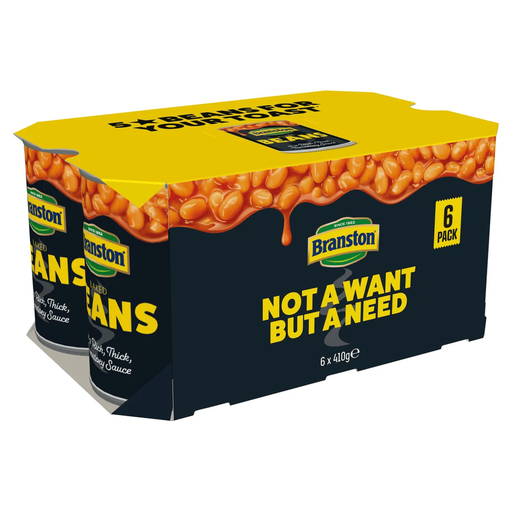
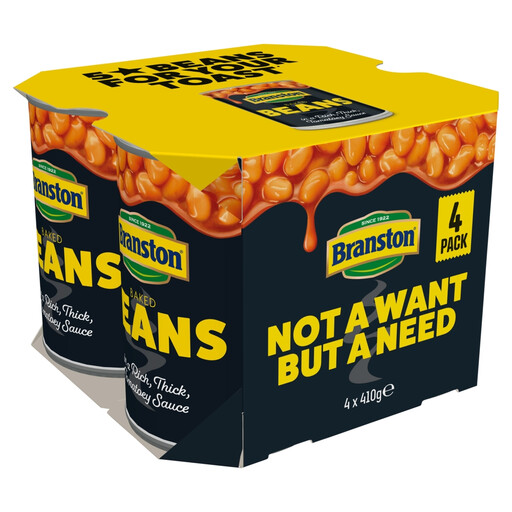
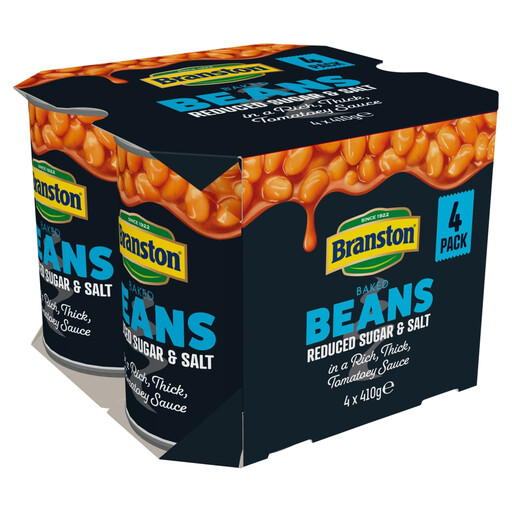
These Branston four- and six-can packs cover households considering standard baked beans and a reduced-sugar-and-salt variant. Choose by the number of cans you expect to use, then check the exact recipe's label for your usual portion.
 No image available
Branston Beans in Tomato Sauce 6 x 410g
Six 410g cans give a household that serves beans regularly 2.46kg across separate cans. Check the nutrition panel for the portion you serve and follow the can's instructions for any leftovers.
View on Joybuy
 No image available
Branston Baked Beans 4 x 410g
Four 410g cans provide 1.64kg for households that want several cans without choosing a larger pack. Waitrose & Partners lists 4.6g protein and 5.9g fibre per 100g for a standard Branston 410g can; check the multipack label for its current figures and serving basis.
View on Joybuy
 No image available
Branston Reduced Sugar & Salt Baked Beans 4 x 410g
This four-can variant is an option when the reduced-sugar-and-salt recipe matters to your choice. Compare its protein, sugars and salt per 100g with the standard recipe on the cans you receive, and read the ingredients if sweeteners affect your preference.
View on Joybuy
Frequently asked questions
How much protein is in a serving of baked beans?
It depends on the recipe and the portion. ASDA Groceries lists 10g protein and 8g fibre for half a standard Heinz 415g can. Use the serving and per-100g figures on the can you buy when comparing it with another recipe.
Can baked beans be the only protein food in my meals?
Baked beans can contribute protein, but they do not describe your whole eating pattern. The NHS Eatwell Guide places beans and pulses among a range of protein foods, so consider them alongside the other foods you eat.
How does Heinz no-added-sugar differ from standard Heinz beans?
The checked 415g recipes have different nutrition figures and ingredients. ASDA Groceries lists 4.8g protein and 0.6g salt per 100g for standard Heinz beans; Waitrose & Partners lists 4.6g protein, 1.9g sugars and 0.4g salt per 100g for the no-added-sugar version, which contains a sweetener. Compare the current labels if these differences affect your choice.
How should I handle beans left in an opened can?
Follow the storage instructions on the can you receive. For the standard Heinz 415g product described in the supplied product information, unused contents should be transferred to a suitable covered container, refrigerated and used within two days.


