People planning repeatable meals
If baked beans regularly feature in your meals, compare protein per 100g and the amount you normally serve. Pack size matters when deciding how many tins to keep in the cupboard.


Compare baked beans by protein per 100g and the portion you expect to eat, then check salt, sugars and the exact recipe. Tesco lists 4.6g protein per 100g for standard Branston beans, compared with 3.8g on Sainsbury's four-pack; that difference alone does not decide which pack fits your meals.
If baked beans regularly feature in your meals, compare protein per 100g and the amount you normally serve. Pack size matters when deciding how many tins to keep in the cupboard.
Beans can contribute plant protein to meals such as beans on toast or jacket potatoes. Check the exact recipe's dietary and allergen statements rather than assuming every tin has the same labelling.
Standard, reduced-sugar-and-salt and no-added-sugar recipes need separate label checks. Compare the figures per 100g and for the portion you intend to eat.
Start with a like-for-like nutrition comparison, then use your usual portion and the exact recipe to narrow the choice.
| Priority | What to check | Your needs |
|---|---|---|
| Protein contribution | Compare protein per 100g on the same basis. Tesco lists 4.6g per 100g and 9.4g per half can for standard Branston beans; Sainsbury's lists 3.8g per 100g for its 4 x 400g beans. | I want to know what my usual serving adds to a meal, not judge it by wording on the front of the tin. |
| Pack and portion | Check the weight of each tin, the number of tins and the nutrition panel's serving size. A per-100g figure makes differently sized tins easier to compare. | A smaller tin may suit one meal; a multipack makes more sense if I use beans repeatedly. |
| Salt and sugars | Compare both values per 100g and for your portion. Tesco lists 0.60g salt per 100g and 1.24g per half can for standard Branston beans; M&S lists 1.2g sugars and 0.43g salt per 100g for its No Added Sugar recipe. | If I eat a generous portion or choose beans often, I want to see how the exact recipe's salt and sugars fit with the rest of the meal. |
| Recipe and storage | Read the pack's allergen and dietary statements. Check its instructions for refrigerating and using leftovers after opening. | Everyone eating the beans needs a suitable recipe, and I want to use any leftovers within the period stated on that pack. |
The protein contribution depends on how much you serve and what else is in the meal. Tesco lists 9.4g protein for a half can of standard Branston beans.
Use the panel's per-100g and serving figures to compare the portion you actually plan to eat.
Tesco lists 1.24g salt for a half can of standard Branston beans. Other parts of the meal also contribute salt.
Check salt for your portion, and compare the exact labels if a reduced-salt recipe interests you.
Recipe statements and directions for opened beans can differ, even between standard and no-added-sugar versions from the same brand.
Read the exact pack before serving it to someone with an allergen requirement, and follow its instructions for leftovers.
A standard recipe to compare with reduced-sugar-and-salt variants when protein and salt figures both matter.
An own-label four-pack for comparing protein and salt against other multipacks.
A standard baked-bean option available in different tin and multipack formats.
Standard and No Added Sugar recipes give shoppers two distinct nutrition panels to compare.
The range includes a 420g tomato-sauce tin and reduced-salt-and-sugar variants.
These standard and reduced-sugar-and-salt baked-bean packs offer different tin sizes and recipes for comparing protein contributions and portions. Check each listing's current status and the pack label before choosing.
 Image unavailable
Four standard tins suit meals where you want to compare portions across several servings. Joybuy lists 4.6g protein and 0.60g salt per 100g; check the salt figure against the portion you serve.
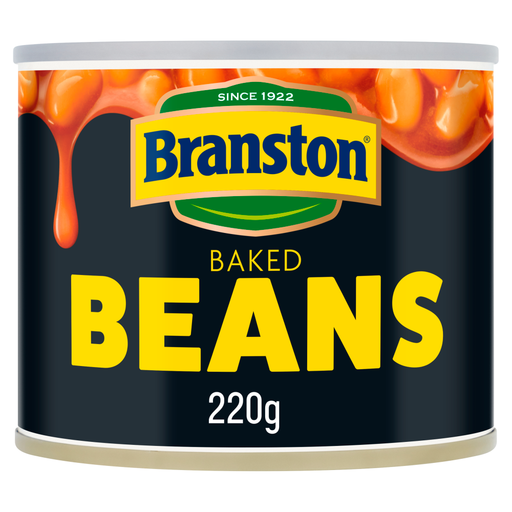 Image unavailable
The 220g single tin is a different portion format from a standard-sized multipack tin. Use its own nutrition panel when working out the contribution of the whole can.
 Image unavailable
This four-pack is the reduced-sugar-and-salt Branston recipe, not the standard one. Compare its own protein, sugars and salt panel for your portion. The listing was marked unavailable, so check its current status.
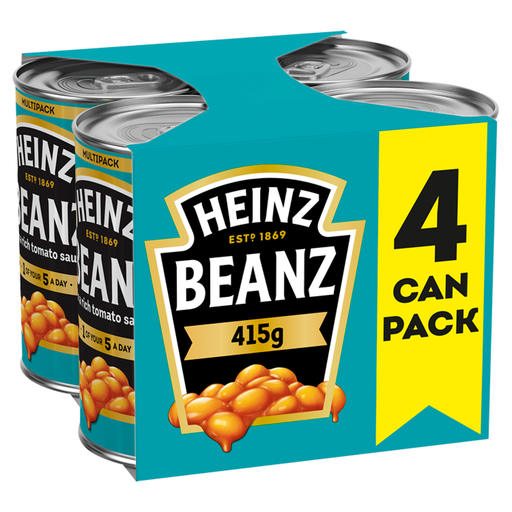 Image unavailable
The four 415g tins offer another standard-recipe format to compare per 100g. Joybuy lists 4.8g protein and 0.6g salt per 100g. The listing was marked no longer available; check its current status.
 Image unavailable
Six 410g tins are a format for households that use beans in repeat meals. Check this pack's nutrition panel for the protein and salt in your usual portion.
Yes. Cambridge University Hospitals NHS Foundation Trust identifies pulses as plant-based protein foods, while Tesco lists 9.4g protein for a half can of standard Branston beans. Use the serving figure to see what your portion contributes alongside the other foods in the meal.
Compare protein per 100g first, then check the weight you would actually serve. A half-can figure can be useful, but make sure it belongs to the exact tin you are considering.
Not necessarily. Check both figures on the exact recipe: M&S lists 1.2g sugars and 0.43g salt per 100g for its No Added Sugar baked beans. The words “no added sugar” do not give you the salt figure.
The amount eaten changes the salt contribution. Tesco lists 0.60g salt per 100g for standard Branston beans and 1.24g for a half-can serving, so use the figure that reflects the portion on your plate.
Follow the exact pack's storage instructions. M&S directs shoppers to transfer unused standard baked beans to a non-metallic container, refrigerate them and eat them within three days; its No Added Sugar version specifies two days.