Lunch eaters comparing salt and sugar
If beans on toast or a jacket potato is a regular lunch, compare the salt and sugars on the tin rather than assuming tomato-sauce recipes have similar values.


If reducing salt and sugar is your priority, start with a reduced-sugar-and-salt tin, then compare its nutrition panel per 100g and for the portion you plan to eat: recipes differ, and “reduced” does not mean free of either. A smaller tin may make more sense for one lunch, while beans can be paired with a higher-fibre starchy food and vegetables rather than treated as the whole meal.
If beans on toast or a jacket potato is a regular lunch, compare the salt and sugars on the tin rather than assuming tomato-sauce recipes have similar values.
Baked beans can provide fibre and protein. Wholegrain toast and vegetables are other practical components to consider alongside them.
A smaller tin may suit one lunch. If you open a larger tin, plan when you will use the remainder and follow its storage instructions.
Choose the tin size that suits your meals, then compare nutrition panels on the same per-100g basis before checking your intended portion.
| Priority | What to check | Your needs |
|---|---|---|
| Salt and sugars | Compare both figures per 100g, then check the values for the portion you expect to serve. “Reduced” describes a comparison with another recipe, not an absence of salt or sugar. | I want to choose a tin by its label values, rather than its front-of-pack wording. Tesco Groceries says its Reduced Sugar and Salt beans have 30% less sugar and 25% less salt than Tesco standard baked beans; those comparisons are within Tesco’s range. |
| Fibre and protein | Read the fibre and protein figures per 100g alongside salt and sugars. Consider what else will be on the plate. | Beans are one part of my lunch; I could serve them with wholegrain toast and vegetables. The Eatwell Guide describes balance across a day or week, rather than requiring every meal to contain every food group. |
| Tin size and leftovers | Check the tin weight, stated servings and the exact pack’s instructions for storing beans after opening. | For one lunch, I would rather choose a smaller tin or have a plan for the remainder of a larger one. |
| Ingredients and allergens | Read the ingredients and allergen statement on the can in hand, particularly if you are choosing a specific recipe or avoiding an ingredient. | A short ingredient list or a vegan label does not answer every question I may have about allergens. |
The values vary by recipe, so a familiar brand name or a reduced-recipe label is not enough to compare the portion on your plate.
Read salt, sugars, fibre and protein per 100g first, then check the serving you intend to eat.
Beans can contribute fibre and protein, but the Eatwell Guide describes a balance of foods across a day or week.
Consider serving them with wholegrain toast or another higher-fibre starchy food and some vegetables.
Recipes and allergen information can change, which matters especially when an ingredient must be avoided.
Check the ingredients, allergen statement, nutrition panel and storage directions on the tin you buy.
Unused beans need handling according to the product’s storage instructions.
Plan another use or choose a smaller format. Transfer leftovers to a covered, non-metallic container, refrigerate them and follow the tin’s directions for when to use them.
Compare specific recipes, not brands as a whole: standard, reduced and smaller-tin versions can answer different lunch needs.
Standard baked beans and a no-added-sugar variant are distinct recipes.
The Reduced Sugar and Salt recipe offers an alternative to Tesco standard baked beans.
Its standard baked beans offer a reference point when comparing everyday tomato-sauce recipes.
Its Only 7 Ingredients Baked Beans come in a 220g tin, a format to consider for a smaller lunch.
The Essential range includes standard and Reduced Salt & Sugar baked beans.
These options include reduced-sugar-and-salt beans, standard tomato-sauce beans, a smaller tin and multipacks. Use the current can’s label to compare recipes and portions.
 No image available
A four-tin option if you want to compare a reduced recipe with standard beans for regular lunches. Check the current panel for salt and sugars per 100g; “reduced” does not mean that either is absent.
 No image available
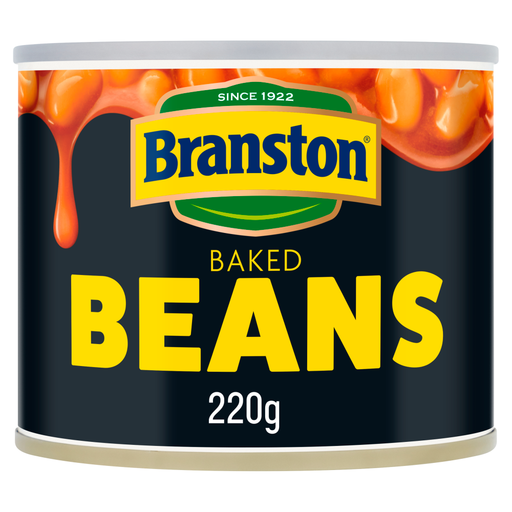
The 220g tin is a smaller format to consider when cooking for one. Check its stated serving size rather than assuming that the whole tin is one portion, and compare its salt and sugars if those guide your choice.
 No image available
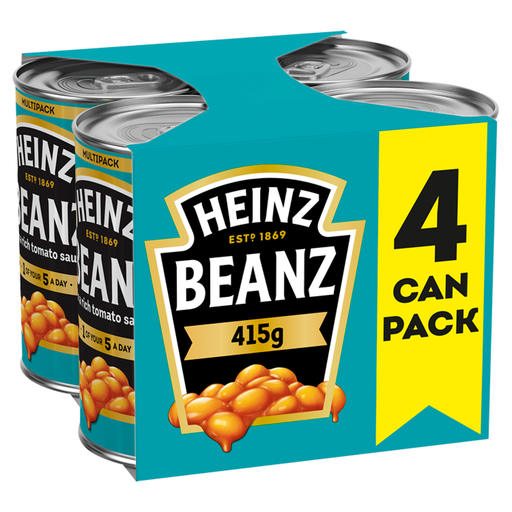
A four-tin pack of standard tomato-sauce beans for cupboard lunches. Waitrose & Partners lists 4.3g sugars and 0.60g salt per 100g for Heinz baked beans; check the cans in this pack when comparing recipes and portions.
 No image available
The six-tin format may suit a household planning several bean-based lunches. Compare the current can’s per-100g panel with reduced recipes if salt or sugars are a deciding factor, and follow its directions for leftovers.
 No image available
This four-tin pack is another standard-beans format for cupboard lunches. Check its nutrition panel against the reduced recipe if that distinction matters to you, and use the can’s storage instructions after opening.
Beans can provide fibre and protein, but they need not be the only food on the plate. Wholegrain toast, a jacket potato and vegetables are ways to build a lunch around them; the Eatwell Guide considers food-group balance across a day or week.
Choose by the current nutrition panel and the value you want to compare. “Reduced sugar and salt” compares a recipe with another version, while “no added sugar” describes a different recipe; check sugars, salt and ingredients on each tin rather than treating the phrases as interchangeable.
Transfer leftovers to a covered, non-metallic container and refrigerate them rather than leaving them in the opened tin. Follow that product’s pack instructions for when to use the remainder.
No. The M&S Only 7 Ingredients beans are described as vegan, yet their product information warns that they are not suitable for people with milk or egg allergy. Check the ingredients and allergen statement on the current tin if an allergen matters to you.