Retirement-shop stock buyers
Buyers choosing tinned beans for a retirement-focused shop need pack quantities that fit their shelf space, handling arrangements and expected turnover.


For a retirement-focused shop, keep a reduced-salt or no-added-sugar four-pack as a distinct choice if customers ask for one; consider larger branded multipacks where the expected turnover justifies the quantity, or four-packs when smaller batches fit the shelf better. Compare the serving-size nutrition, ingredients, allergen information and pack format rather than assuming a reduced recipe suits everyone.
Buyers choosing tinned beans for a retirement-focused shop need pack quantities that fit their shelf space, handling arrangements and expected turnover.
A shop whose customers compare salt and sugars can stock a clearly labelled reduced-recipe option alongside standard beans. The nutrition panel and ingredients still matter for each product.
Buyers building a regular tinned-food range can compare four-packs, larger multipacks and offers on individual tins, while checking the recipe and format of each item before ordering.
Start with the recipes customers want, then choose a quantity the shop can store and turn over. Check the physical tins and their labels when stock arrives.
| Priority | What to check | Your needs |
|---|---|---|
| Salt and sugars | Compare values per 100g and per stated serving. Check whether the label says reduced salt, reduced sugar or no added sugar; those terms describe different recipes. | I want customers to be able to compare a standard tin with a clearly labelled alternative, without suggesting that one recipe suits every person. |
| Pack quantity | Check both the number of tins and the weight of each tin. A four-pack is different to a six- or eight-pack, and an offer on four separate tins is not a sealed multipack. | A smaller batch may fit my shelf or turnover better; if beans move steadily, I can consider a larger pack without assuming it is the right choice for every shop. |
| Nutrition and portions | Read fibre and protein values on the same serving basis when comparing recipes. If beans will be served with other food, use the portion actually served rather than treating a whole tin as the default. | I need label information that makes sense for the portions customers buy or the portions we serve. |
| Labels and tin condition | Check ingredients, allergen information, best-before dates and storage instructions. Inspect tins for bulging or deep dents that could affect the seal. | When stock arrives, I need intact tins and accessible label information; if the shop also serves food, staff need to follow the relevant allergen-information rules. |
ASDA Groceries lists 0.70g salt per half-can serving for its reduced-salt, no-added-sugar 4 x 410g beans. The description of a recipe does not replace its serving-size nutrition values.
Offer reduced-recipe beans as a labelled choice and compare salt and sugars using the portion customers are likely to use.
A sealed four-pack and four individually selected tins involve different stock handling. Tin sizes also vary between the listed multipacks.
Confirm the tin count, weight per tin and whether the offer is a packaged multipack or a selection of singles.
A larger quantity can occupy shelf or storage space for longer if sales are slower than expected.
Ingredients, nutrition and storage wording need to match the tins the shop receives, particularly before staff describe a product by a dietary attribute.
At goods-in, check the physical label for ingredients, allergens, nutrition, best-before date and instructions for storing opened contents.
Health and Social Care Northern Ireland warns that a deep dent can conceal a split or broken seal and advises against eating food from a visibly bulging can.
Inspect deliveries and set aside visibly bulging tins or cans with deep dents or damaged seams rather than offering them for sale.
These ranges illustrate recipe and pack-format choices; a retailer’s single-tin offer should not be mistaken for a sealed multipack.
A branded line with standard and no-added-sugar baked beans in multipack formats.
A grocery range in which buyers can compare several baked-bean pack formats.
An own-label four-pack route for a standard baked-bean line.
An own-label four-pack with a reduced-salt, no-added-sugar recipe.
A reference for comparing individual tins and their label information.
A range with Essential individual tins and branded multipacks.
These Branston four- and six-tin packs offer a reduced-sugar-and-salt recipe and standard baked-bean options for a retirement-focused shop. Choose by recipe and pack quantity, then check the current label before stocking.
 No image available
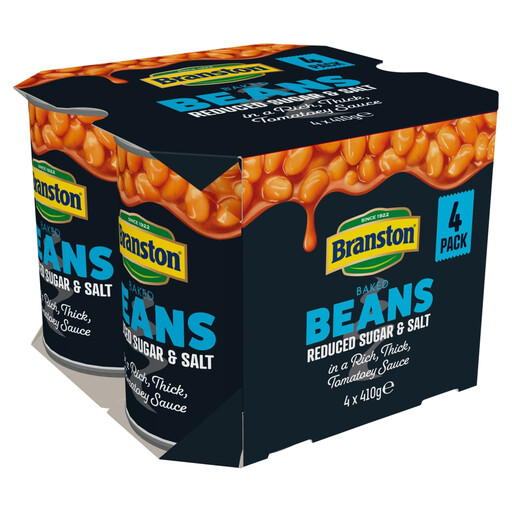
A four-tin option for a shop that wants to offer a labelled reduced-sugar-and-salt recipe. Reduced sugar does not mean no added sugar; check the ingredients and serving-size values when comparing it with other tins.
 No image available
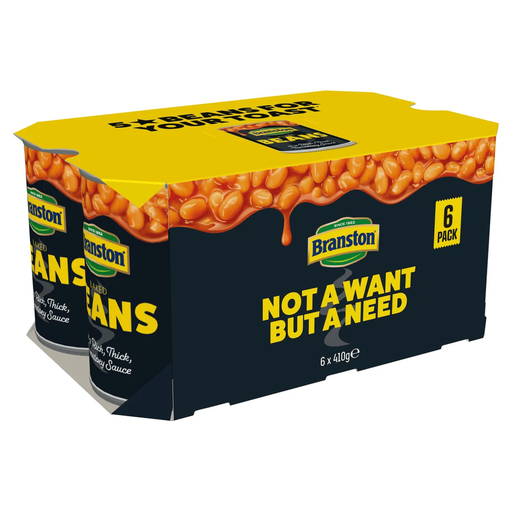
Six 410g tins give a shop more tins per pack than a four-pack. If customers need a reduced-salt or reduced-sugar choice, check this recipe’s label rather than assuming a standard tomato-sauce pack provides one.
 No image available
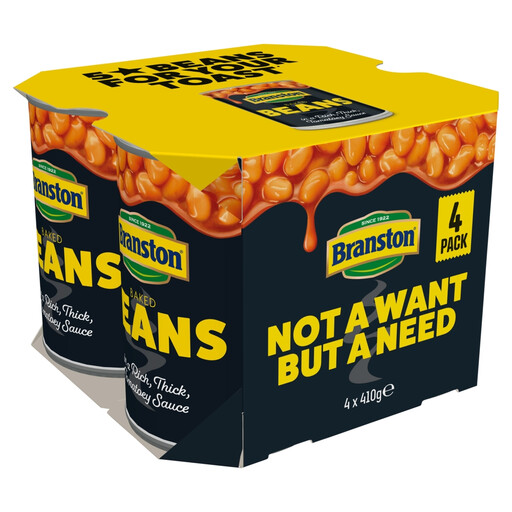
A four-tin standard baked-bean option where smaller batches suit the shop’s shelf or turnover. Compare its nutrition and ingredients with the reduced-recipe four-pack if you intend to stock both.
No. A reduced-salt option gives customers a labelled choice, but it is not universally suitable. Compare the salt and sugars in the portion likely to be used; ASDA Groceries lists 0.70g salt per half-can serving for its reduced-salt, no-added-sugar 4 x 410g beans.
No. Choose a tin count that fits storage and expected turnover, and confirm whether the item is a sealed multipack. Four individually selected tins under an offer are a different handling format from a packaged four-pack.
Check the label and best-before date, then inspect the tins before shelving them. Health and Social Care Northern Ireland warns that deep dents can hide damage to a seal and advises against eating food from visibly bulging cans; set those tins aside.
Follow the instructions on the particular tin. For example, Marks & Spencer says to transfer unused contents of its 400g baked beans to a non-metallic container, refrigerate them and consume within three days; do not apply that time limit to every brand.
The Food Standards Agency says retail and catering food businesses must provide allergen information for prepacked and non-prepacked food and drink and follow the labelling rules that apply to how it is supplied. Keep the information for the actual beans sold or served accessible to staff and customers.