Parents packing regular school lunches
If beans appear in several lunches, consider whether you can use a larger tin across those lunches or another household meal.


For one school lunch, a 220g tin offers a smaller quantity to handle; a larger tin makes more sense when you can use the rest for another meal. Whichever size you choose, check the current label for ingredients and allergens, and plan how the lunch will be stored and served.
If beans appear in several lunches, consider whether you can use a larger tin across those lunches or another household meal.
A 220g tin may be easier to plan around when opening a 420g tin would leave more beans than you expect to use.
Standard and reduced sugar and salt variants need separate label checks. Read the current tin when ingredients, allergens or nutrition matter for your child.
Start with the quantity you can use, then check the particular tin’s label and how the packed lunch will be carried.
| Priority | What to check | Your needs |
|---|---|---|
| Tin size | Compare 220g tins with 420g tins. For multipacks, check the size of each tin as well as the number of tins. | I only need a small amount for one lunch, or I can use the rest of a larger tin for another meal. |
| Lunch composition | Plan what else will go in the lunch. NHS guidance identifies pulses such as beans as sources of protein and fibre; it does not make a tin a complete lunch. | Beans will be one part of the packed lunch rather than the whole meal. |
| Ingredients and nutrition | Compare the current nutrition panels of standard and reduced sugar and salt variants. Read the physical tin for ingredients and allergens: Tesco notes that food formulations can change. | A particular recipe or allergen declaration matters for my child, so I need to check the tin I actually use. |
| Lunchbox storage | Check whether any food in the lunch needs chilling. Safefood advises keeping such food as cold as possible until eaten, using an insulated box or bag and a separate compartment where practical. | I’m packing chilled food alongside the beans and need a way to carry it until lunchtime. |
| School arrangements | Read the school’s packed-lunch policy and check how your child will be able to eat the beans at lunchtime. | I need to know whether the planned lunch works with my child’s school-day arrangements. |
Standard and reduced sugar and salt tins are different variants, and ingredients, nutrition and allergen information can change when foods are reformulated.
Check the current physical tin, especially when an ingredient or allergen matters for your child.
The Department for Education’s school food standards concern food provided to pupils by state-funded schools. They do not replace the practical arrangements in your school’s packed-lunch policy.
Check the school’s written policy before making beans a regular packed-lunch item.
These ranges illustrate different tin sizes and recipes; check the particular product rather than assuming every tin from a brand is alike.
Tesco Groceries lists Stockwell & Co, standard Tesco and reduced sugar and salt Tesco baked beans in 420g tins, as well as a standard Tesco 220g tin.
Waitrose & Partners lists Essential baked beans in tomato sauce in 420g and 220g tins.
The observed Waitrose listing includes a Heinz baked-bean pack containing four 200g tins.
Marks & Spencer describes a 400g baked-bean tin and a separate 220g Only 7 Ingredients product.
These tins and multipacks offer smaller and larger formats for planning beans as part of a school lunch or another household meal.
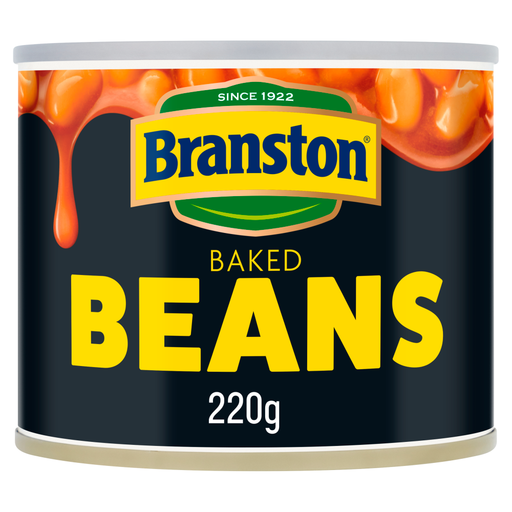 Image unavailable
The 220g tin is a smaller-quantity option when opening a larger tin would leave more beans than you plan to use. Check the current label for ingredients and allergens.
 Image unavailable
This reduced sugar and salt variant contains four 410g tins, so plan how to use the remainder if one tin is more than you need for lunch. Check the current nutrition panel and allergen declaration.
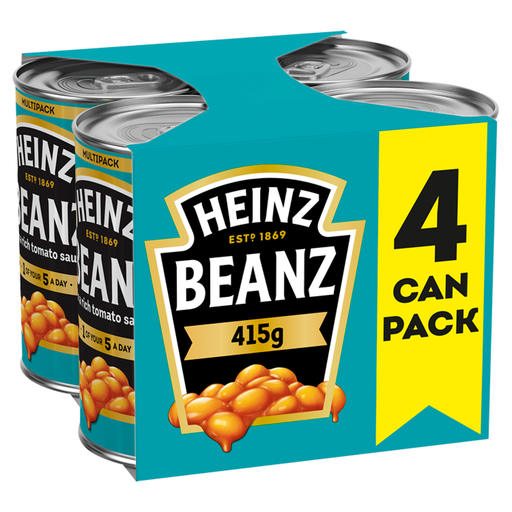 Image unavailable
Four 415g tins suit a plan that uses beans across several lunches or household meals. If opening one tin leaves beans over, plan how you will store and use them.
 Image unavailable
The six-pack provides 410g tins for households planning to use beans on several occasions. Each tin is larger than the 220g option, so consider what you will do with any remainder.
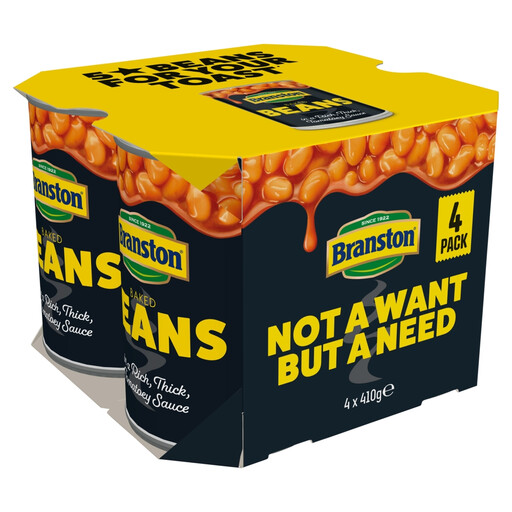 Image unavailable
This pack contains four 410g tins for lunches and other meals where that tin size is useful. Check the physical tin’s ingredients and allergen information before serving.
Yes, as one component alongside other lunch foods. NHS Eatwell guidance identifies pulses such as beans as sources of protein and fibre; check your school’s packed-lunch policy and how the beans will be served.
Choose the size according to how much you expect to use. A 220g tin offers a smaller quantity for one lunch, while a 420g tin is more practical when you can use the remainder for another serving or meal.
Read the current physical tin before serving. Tesco notes that food formulations can change, so an earlier online description should not replace the tin’s ingredient, nutrition and allergen information.
Keep them as cold as possible until they are eaten. Safefood advises using an insulated lunchbox or bag and placing foods that need chilling in a separate compartment where practical.