For one child’s packed lunch, consider a 150g–220g tin if the child is likely to eat that portion and you want to avoid storing leftovers. A 400g-plus tin makes more sense when you plan to divide it at home or use the rest; if salt or sugar matters to your choice, compare the exact recipe’s label rather than relying on tin size. Check how the beans will be prepared and served, along with the school’s packed-lunch rules.
Who is each tin size for?
The useful starting point is how much will be eaten at lunch and what you would do with any opened beans left at home.
Parents packing one child’s lunch
A 150g–220g tin is worth considering when that amount fits the child’s lunch and avoiding leftovers matters. Check the portion against what the child is likely to eat rather than assuming every small tin is one suitable serving.
Parents comparing recipes
Standard, reduced-sugar-and-salt and no-added-sugar recipes are available in small tins. Read the per-can nutrition panel and ingredients for the exact recipe; a smaller tin does not necessarily contain less salt per can than another small tin.
Households using beans across several meals
A larger tin can be divided at home when more than one portion is planned. Follow its label for transferring, refrigerating and using any contents left after opening.
What should you check before choosing?
Choose the portion and a workable way to serve it first, then compare recipes and labels for the tins that fit.
| Priority |
What to check |
Your needs |
| Portion and leftovers |
Compare the tin’s weight and serving declaration with the planned lunch portion. Sainsbury's describes its 400g standard tin as two servings, as does the Branston 410g listing at Waitrose & Partners; check the label’s instructions if you will keep leftovers. |
I’m packing for one child and would rather not open a larger tin unless I have a use for the rest. |
| Salt and sugar |
Compare salt and sugars for the amount that will be eaten, and check ingredients for sweeteners. Waitrose & Partners lists 1.20g salt per can for standard Heinz Single Serve 200g, 0.80g for Heinz No Added Sugar Single Serve 200g and 0.66g for Essential Reduced Salt & Sugar 220g. |
I want to compare the actual recipes, not assume that a small tin or a no-added-sugar name tells me everything about its contents. |
| Serving at school |
Check the can’s heating directions, choose a suitable separate food container for the planned preparation, and confirm whether the school permits that type of lunch or a food flask. |
Beans need to fit the school’s lunch arrangements; I can’t rely on an opened tin as the serving plan. |
| Ingredients and allergens |
Read the current ingredient and allergen information on the exact tin, particularly when choosing a different recipe or buying for a child with an allergy. |
I need to check what is in this particular recipe before packing it. |
What can catch you out?
-
Assuming one large tin means one lunch portion
Sainsbury's describes its 400g standard tin as two servings, and the Branston 410g listing at Waitrose & Partners also states two servings per can. Opening either for one lunch leaves contents to handle.
Compare smaller tins with the portion you intend to pack. Choose a larger tin when you will divide it at home or have a plan for the remainder, and follow its post-opening storage directions.
-
Using tin size as a shortcut for salt content
At Waitrose & Partners, the listed standard Heinz 200g Single Serve contains 1.20g salt per can, while the listed Essential Reduced Salt & Sugar 220g contains 0.66g per can. These are different recipes as well as different sizes.
Compare the current per-can panel for the portion you intend to serve, and read the ingredients if sweeteners or particular ingredients matter.
-
Planning to serve beans from the opened tin
A small tin solves neither preparation nor school-container questions. The checked Heinz single-tin directions call for a suitable container when heating, while post-opening instructions for checked products call for transferring unused contents before refrigeration.
Check the can’s preparation directions and the school’s rules, then plan a suitable separate container if beans will be packed.
-
Relying on an older ingredient listing
An online description of a recipe is not a substitute for checking the particular tin being packed, especially when an allergen affects the child.
Read the current ingredient and allergen information on the tin each time you buy it.
Which brand ranges are relevant?
These ranges illustrate the small-tin and recipe choices to compare; the details apply to the named products, not every tin made by each brand.
Heinz
Waitrose & Partners lists Heinz standard baked beans in 150g and 200g tins, alongside a 200g No Added Sugar Single Serve recipe.
- The listed standard 200g tin contains 1.20g salt per can; the No Added Sugar 200g recipe lists 0.80g per can.
- The No Added Sugar recipe contains sweetener. Check its ingredients if that affects your choice.
Tesco
Tesco lists 220g standard and reduced-sugar-and-salt baked beans as well as a 420g standard tin.
- The two listed 220g recipes allow a small-tin choice without moving to a larger format.
- Compare the current labels of the exact 220g recipes for nutrition, ingredients and preparation directions.
Sainsbury's
Sainsbury's lists 215g standard and reduced-sugar-and-salt tins alongside a 400g standard tin.
- The 215g tins are an alternative to opening the 400g standard tin, which Sainsbury's describes as two servings.
- Check the exact 215g tin’s nutrition and ingredients rather than applying figures from the 400g recipe.
Waitrose Essential
Waitrose & Partners lists 220g standard and Reduced Salt & Sugar Essential baked beans.
- The Reduced Salt & Sugar 220g listing gives 0.66g salt and 4.3g sugars per can.
- Waitrose & Partners states that this recipe has 30% less salt and 30% less sugar than regular Essential Waitrose Baked Beans; that comparison is specific to its own regular recipe.
M&S
Marks & Spencer lists baked beans in 220g and 400g formats, alongside a 390g no-added-sugar option.
- The listed formats offer a choice between a smaller tin and a larger one to portion at home.
- Check the exact 220g tin’s current nutrition, ingredients and allergen label before choosing it for lunch.
Joybuy small-tin option
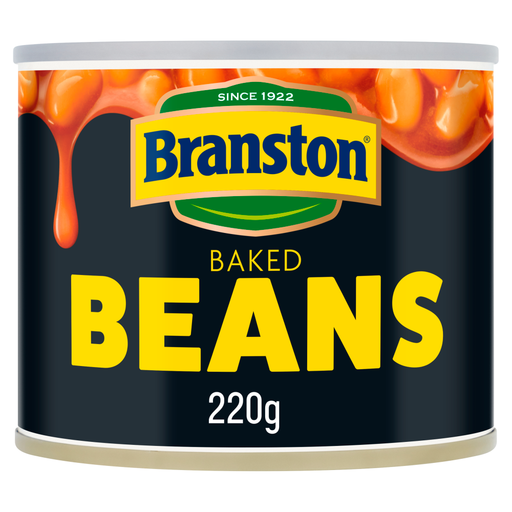
This 220g single tin is an option to consider when shopping for one school lunch; check whether its portion and preparation directions fit your plan.
 No image available
Branston Baked Beans in Tomato Sauce 220g
The 220g single tin may suit a planned lunch portion without opening a larger can. Check the current ingredient and allergen label, the can’s preparation directions and the school’s rules before deciding how to pack it.
View on Joybuy
Questions about packing baked beans
Can a small tin go straight into a school lunchbox?
A small tin can help you choose a lunch-sized amount, but it does not settle how the beans should be prepared or served. The checked Heinz 150g and 200g listings direct users to transfer contents to a suitable container before heating; check the exact can and the school’s rules on tins, hot food and food flasks.
What should I do with beans left in a larger tin?
Follow that tin’s post-opening instructions. The checked Heinz, Sainsbury's and Branston product listings direct users to transfer unused contents to a suitable container, refrigerate them and use them within two days.
How do I compare reduced-sugar-and-salt beans with standard beans?
Compare the nutrition panel for the amount you plan to serve, then read the ingredients. Waitrose & Partners lists 0.66g salt per can for Essential Reduced Salt & Sugar 220g and 0.80g per can for Heinz No Added Sugar Single Serve 200g; the Heinz recipe contains sweetener. These figures describe different products and can sizes, so also compare their other label details.
Is a vegetarian or vegan description enough to check for allergens?
No. Read the current ingredient and allergen information on the exact tin being packed; a vegetarian or vegan description does not replace that product-specific check.


