Households packing regular school lunches
If beans appear in several lunches, consider how many tins you will use and whether an opened tin can provide a second serving.


For regular secondary-school packed lunches, a larger tin or multipack is useful only if the household can use its portions and store opened beans as directed. A smaller tin may make portion planning easier when leftovers are impractical; if sugar or salt matters to you, compare the per-100g labels and ingredients before choosing a recipe.
If beans appear in several lunches, consider how many tins you will use and whether an opened tin can provide a second serving.
Check the nutrition panel and ingredients when choosing between standard and reduced-sugar-and-salt recipes. Some no-added-sugar products contain sweetener.
A smaller tin may fit the lunch plan more readily if using or refrigerating the remainder of a larger tin is impractical.
Start with the portion the pupil will take to school, then consider how the rest of the tin or pack will be used. Compare labels for the recipes that fit that routine.
| Priority | What to check | Your needs |
|---|---|---|
| Pack size | Check the weight of each tin and the number of tins. Match a multipack to how often the household uses beans. | Beans are a regular lunch choice, so I can use the tins in a larger pack. |
| Portions and leftovers | Read the tin’s serving guidance and opened-product storage instructions. ASDA Groceries describes its Just Essentials 410g tin as providing two suggested servings; Waitrose & Partners labels its essential 420g tin as two servings. | A smaller tin would be easier for this lunch, or I can refrigerate the remainder of a larger one and use it within the label’s stated period. |
| Sugar and salt | Compare sugars and salt per 100g, then read the ingredients for sweeteners. ASDA Groceries labels its reduced-salt, no-added-sugar four-pack as having 60% less sugar and 30% less salt than a standard equivalent. | I want to compare a reduced-sugar-and-salt recipe with a standard tin without relying on the front-of-pack wording alone. |
| Ingredients and allergens | Read the current physical pack for ingredients and allergen statements, particularly when a recipe has changed or an allergy matters. | For an allergy, the tin’s current label and the school’s individual policy need checking before I pack it. |
| Lunch arrangements | Check whether the school permits the planned container and whether the pupil can eat the beans as packed or has access to heating. | I need a portion and container that work with this school’s lunchtime arrangements. |
A smaller tin can avoid leftovers, but it may not suit a household that would use a second portion from a larger one.
Decide on the lunch portion first, then check whether the rest of a larger tin can be used within its storage instructions.
No-added-sugar recipes may contain sweetener, and a salt-reduction claim has its own comparison basis.
Compare sugars and salt per 100g, read the ingredients and check what the stated reduction is measured against.
The checked ASDA and essential Waitrose tins give different periods for using refrigerated contents after opening, ranging from two to four days.
Transfer unused beans to a suitable non-metallic container, refrigerate them and follow the period on that product’s label.
A second portion that cannot be used within the stated period may become food waste.
Recipes and allergen information can change. Marks & Spencer states that its Only 7 Ingredients and No Added Sugar baked beans are not suitable for people with a milk or egg allergy.
Read the current physical pack and follow the school’s individual allergy policy before packing the lunch.
These examples show differences in tin size, recipe and labelling; a retailer’s range should not be assumed to have the same details as every product it sells.
ASDA lists a Just Essentials 410g standard tin and a reduced-salt, no-added-sugar pack of four 410g tins.
Sainsbury's lists 400g standard and reduced-sugar-and-salt own-label tins, as well as a standard four-pack.
The essential Waitrose standard baked-bean tin is 420g and is labelled as containing two servings.
The checked Heinz No Added Sugar Beanz include a 415g tin listed by Tesco and a 200g single-serve tin listed by Waitrose & Partners.
Tesco lists Heinz No Added Sugar Beanz in a 415g tin; this example is a branded product sold by Tesco, not a Tesco own-label recipe.
M&S lists an Only 7 Ingredients baked-bean recipe and a separate No Added Sugar recipe.
These standard and reduced-sugar-and-salt tins include multipacks for repeated use and a smaller 220g tin to consider for portion planning. Check each pack’s current label and how its size fits your lunch routine.
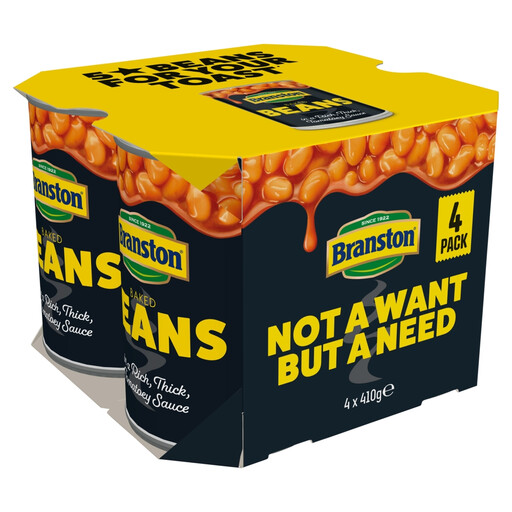 No image available
Four 410g tins suit a household that will use several standard tins. Plan how to store and use any beans left after preparing a lunch portion.
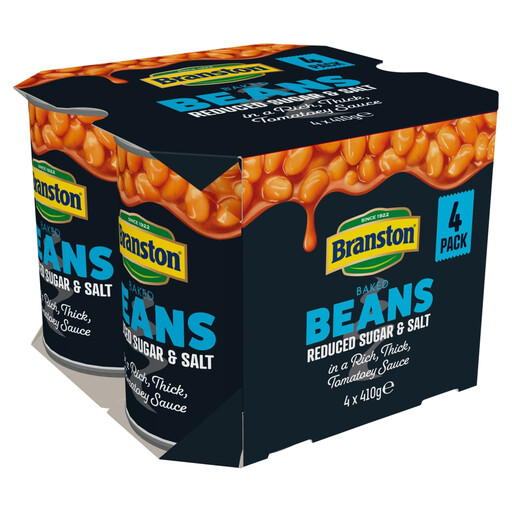 No image available
Consider this four-pack of 410g tins when comparing reduced-sugar-and-salt recipes for regular lunches. Read the current ingredients and per-100g nutrition panel alongside the standard version.
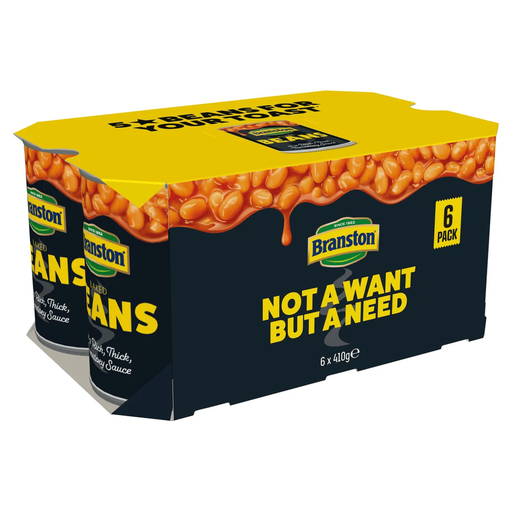 No image available
Six 410g tins make sense to consider when the household will use them regularly and has room to store the pack. Plan portions and opened-tin storage separately from the number of unopened tins.
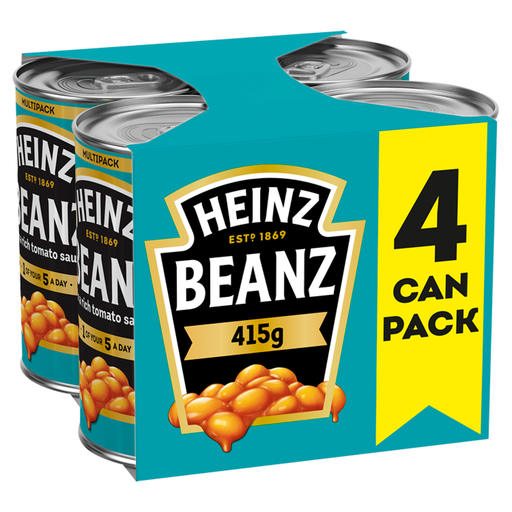 No image available
This pack contains four 415g tins of the standard tomato-sauce recipe. Check the planned lunch portion and how you will store any opened-tin remainder.
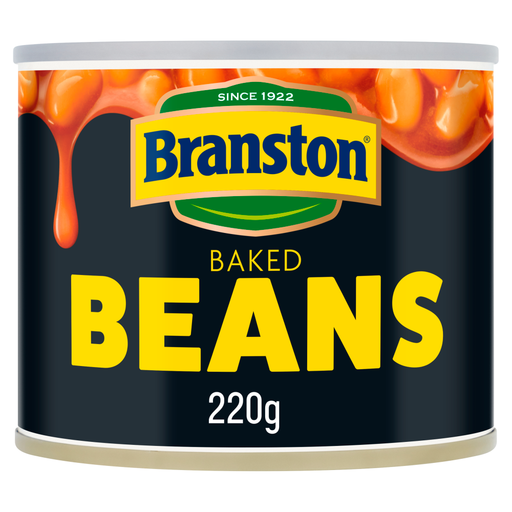 No image available
The 220g tin is smaller than the 410g and 415g formats listed here, making it worth considering when planning a smaller portion. Check whether its contents fit the pupil’s lunch rather than assuming the whole tin is one serving.
The Department for Education’s guidance dated 14 September 2026 describes the statutory standards as applying to food and drink provided to pupils on school premises in state-funded schools. For a home-packed lunch, check the individual school’s policy and practical arrangements, including containers and heating.
Do not assume so: ASDA Groceries describes its checked 410g tin as providing two suggested servings, while Waitrose & Partners labels its essential 420g tin as two servings. Decide how much to pack and plan for any remainder according to the tin’s storage instructions.
No. Compare salt and sugars per 100g and check the basis of any reduction claim. ASDA Groceries describes its reduced-salt, no-added-sugar beans as having 60% less sugar and 30% less salt than a standard equivalent; Tesco’s Heinz No Added Sugar listing describes 25% less salt than standard Heinz Beanz.
No. Marks & Spencer states that its checked Only 7 Ingredients and No Added Sugar baked beans are not suitable for people with a milk or egg allergy. Read the current physical pack and follow the school’s individual allergy policy.