Parents planning quick school-week meals
A cupboard tin can go alongside toast or a jacket potato when time is short. For the meal as a whole, the NHS Eatwell Guide advises variety across food groups rather than relying on beans alone.


Choose baked beans by the portions your household will use and the nutrition label on the exact tin. A smaller can may mean fewer leftovers for one person, while a multipack makes sense when several full-size tins will be used; compare salt, sugars, ingredients and allergen information rather than assuming standard, reduced-sugar-and-salt and no-added-sugar recipes are interchangeable.
A cupboard tin can go alongside toast or a jacket potato when time is short. For the meal as a whole, the NHS Eatwell Guide advises variety across food groups rather than relying on beans alone.
Standard, reduced-sugar-and-salt and no-added-sugar recipes need separate label checks. Compare the same per-100g measures, then read the ingredients of the particular tin.
A smaller tin may fit a meal with fewer leftovers. If you open a larger tin, follow its instructions for transferring, refrigerating and using the remainder.
Start with the amount you expect to use at one meal, then compare recipes and the practicalities of keeping any leftovers.
| Priority | What to check | Your needs |
|---|---|---|
| Recipe | Compare salt and sugars per 100g on the exact tins. Read claims such as ‘no added sugar’ alongside the ingredients and nutrition panel. | I want a recipe that fits my household’s salt, sugar or ingredient preferences without assuming similarly named options are identical. |
| Portion and pack | Check the weight of each tin, the number of tins in a multipack and any stated servings. Consider whether each opened tin is likely to be finished. | A smaller can may suit a meal for one; for several school-week meals, I may have a use for full-size tins or a multipack. |
| Storage | Check the best-before marking and unopened storage directions. For leftovers, follow that tin’s container, refrigeration and use-within instructions. | I need a cupboard option I can rotate through meals, with a plan for any beans left after opening. |
| Suitability | Read the current ingredients and allergen information for the exact recipe. Do not transfer a vegan or other suitability statement from one tin to another. | Where an allergy or ingredient restriction matters, I need to check the physical pack before using it. |
‘No added sugar’ does not tell you that a tin has the same ingredients or salt content as a ‘reduced sugar and salt’ recipe. Tesco’s listing for Heinz No Added Sugar Beanz, for example, names steviol glycosides in its ingredients.
Compare salt and sugars per 100g, then check the ingredient and sweetener declarations on the tins you are choosing between.
The directions differ: Sainsbury’s standard baked beans specify use within two days after transfer and refrigeration, while the M&S standard tin specifies three days.
Follow the instructions on your tin and plan when you will use the remaining portion.
Suitability can depend on the exact recipe. The M&S standard baked-bean listing says the product is not suitable for people with milk or egg allergy.
If an allergy is relevant, read the current physical pack’s ingredients and allergen information rather than relying on another variant’s listing.
These examples show why the recipe and pack format matter more than the name on the tin; they do not describe every product in a brand’s range.
Retailer listings include standard beans, a no-added-sugar recipe and smaller-can formats.
A full-size multipack is one option for households expecting to use several tins.
Its own-label standard and reduced-sugar-and-salt 400g tins offer a comparison within the same range.
M&S lists a standard 400g tin and a separate seven-ingredient recipe.
Waitrose lists standard and reduced-salt-and-sugar Essential baked beans in 420g tins.
These options include smaller and multipack tins of Branston baked beans, plus a Heinz bean-and-vegan-sausage meal. The Heinz tin is a combined meal, not a plain baked-bean alternative.
 No image available
A reduced-sugar-and-salt recipe in four full-size tins for households planning to use several cans. Compare its current nutrition and ingredient label with any standard or no-added-sugar recipe you are considering.
 No image available
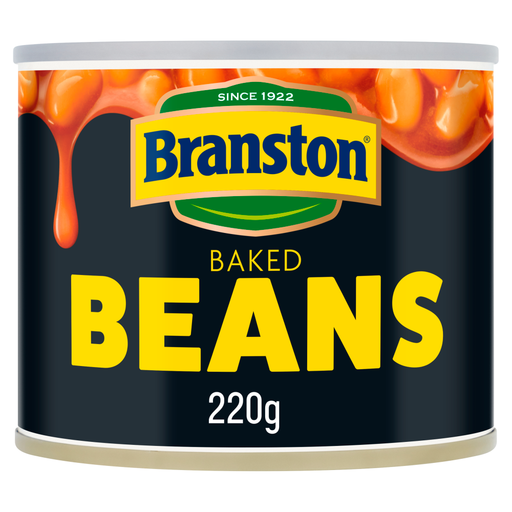
The 220g tin is worth considering when a larger can would leave more unused beans. Check whether that amount fits the portion you intend to serve, and follow the tin’s directions for any leftovers.
 No image available
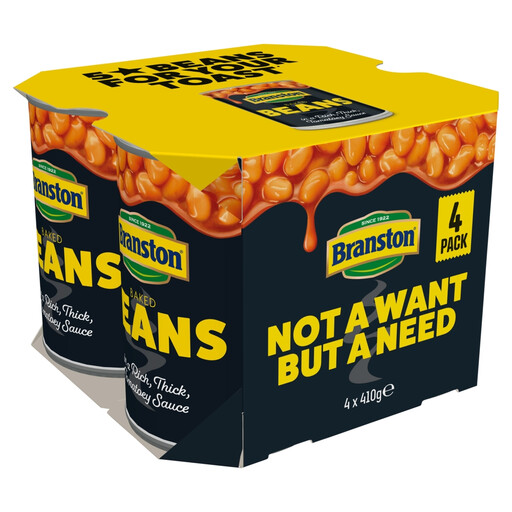
Four 410g tins suit a plan that uses several full-size cans. This is the standard Branston recipe, rather than the reduced-sugar-and-salt one; Joybuy lists 0.60g salt per 100g for this multipack.
 No image available
This six-pack of standard 410g tins fits a cupboard plan that calls for several bean meals. Consider the storage space and whether each opened tin suits the portions your household uses.
 No image available
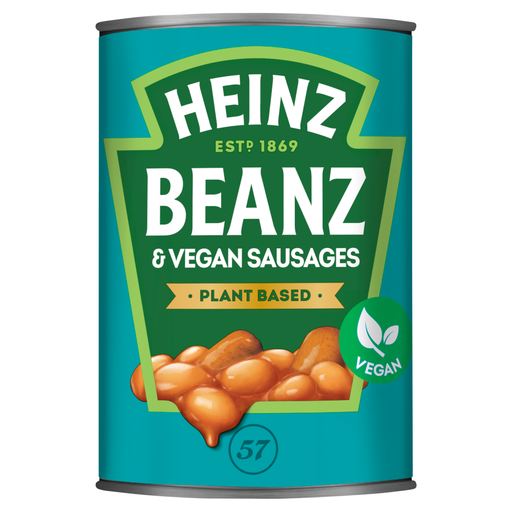
This 415g tin combines beans and vegan sausages for a different cupboard-meal option, rather than plain baked beans. Its listed ingredients contain wheat; check the current pack if wheat avoidance or an allergy is relevant.
Beans can be one part of a meal, but the NHS Eatwell Guide advises variety across food groups. Serve them with a starchy food such as toast or a jacket potato, and consider what else is in the meal rather than relying on beans alone.
Compare both tins per 100g, then consider the amount you are likely to serve. Sainsbury’s lists 0.29g salt and 2.8g sugars per 100g for its reduced recipe, against 0.58g salt and 4.5g sugars per 100g for its standard recipe. For a no-added-sugar option, read the ingredients too: Tesco’s Heinz listing names steviol glycosides.
Follow the directions on that tin. Sainsbury’s standard beans specify transferring unused contents to a non-metallic container, refrigerating and using them within two days; the M&S standard tin specifies refrigeration in a non-metallic container and use within three days.
Check the exact product. Tesco labels its standard Heinz 415g beans suitable for vegans, while the M&S standard baked-bean listing says that product is not suitable for people with milk or egg allergy. Where an allergy matters, use the current physical pack’s ingredients and allergen information rather than another recipe’s description.