Full Scottish breakfast planners
If beans are one part of a cooked breakfast, choose a can size that fits the number eating and check the heating and leftover-storage instructions on the tin.


For a full Scottish breakfast, choose a standard tin if its flavour, can size and label values suit your household. If you want to compare lower salt and sugars together, look at a reduced recipe; if avoiding added sugar is the specific requirement, check a no-added-sugar tin instead. Those claims mean different things, so compare salt and sugars per 100g, ingredients and the current pack before stocking the cupboard.
If beans are one part of a cooked breakfast, choose a can size that fits the number eating and check the heating and leftover-storage instructions on the tin.
Standard, reduced salt-and-sugar and no-added-sugar recipes call for different label checks. Compare the per-100g figures and ingredients rather than relying on the front-of-pack wording alone.
Check the exact tin for dietary suitability, ingredients and allergen information. A vegan declaration does not replace an allergy check.
Start with the recipe claim, then compare tins on the same per-100g basis. Can size, storage and dietary information determine whether the product works for the breakfast you are planning.
| Priority | What to check | Your needs |
|---|---|---|
| Salt and sugars | Compare both figures per 100g. Waitrose & Partners lists 0.30g salt and 2.0g sugars for its Essential Reduced Salt & Sugar beans; ASDA Groceries lists 0.4g salt and 1.9g sugars for Heinz No Added Sugar beans, which contain naturally occurring sugars and steviol glycosides. Read the claim and ingredients as well as the numbers. | I want to choose between reducing both salt and sugars and avoiding added sugar specifically; the two claims do not describe the same recipe. |
| Can size and leftovers | Match the pack size to the number eating. Check the tin for heating directions and its opened-product storage limit; ASDA Groceries specifies use within four days for its 410g standard beans. | A smaller can may suit one breakfast, while a multipack may suit repeated meals. If I expect leftovers, the instructions on the particular tin matter. |
| Diet and allergens | Read the current ingredients, allergen statement and vegan or vegetarian declaration for the exact product. Marks & Spencer labels its checked baked beans vegan and vegetarian but separately says they are not suitable for people with milk or egg allergy. | Before serving someone with an allergy or a strict dietary requirement, I need the current pack to confirm suitability. |
| Fibre and protein | Compare declared amounts per 100g, keeping the product and serving size clear. Tesco Groceries lists 3.9g fibre and 4.4g protein for its standard 420g beans; ASDA Groceries lists 4.6g fibre and 4.9g protein for its standard 410g beans. | If these label values matter to me, I can compare the tins directly without treating the beans as a measure of the whole breakfast. |
Waitrose & Partners compares its reduced recipe with its regular Essential beans. ASDA Groceries lists naturally occurring sugars and steviol glycosides in Heinz No Added Sugar beans. Neither claim, by itself, tells you how the two products compare on every ingredient or nutrient.
Read the per-100g salt and sugars figures alongside the ingredient lists, then choose the claim that matches what you want to compare.
ASDA Groceries lists 0.47g salt per 100g for its standard 410g beans, while Tesco Groceries lists 0.6g per 100g for standard Heinz Beanz 415g.
Use the per-100g panel for a like-for-like check, particularly when choosing beans alongside other savoury breakfast foods.
A dietary label and an allergy warning answer different questions. For example, the checked M&S beans are labelled vegan, yet Marks & Spencer says they are not suitable for people with milk or egg allergy.
For an allergy or strict dietary requirement, check the ingredients and allergen information on the current tin before serving.
An opened tin may leave more beans than the household needs for one breakfast, and storage instructions are product-specific. ASDA Groceries states a four-day limit for its checked standard tin.
Plan portions around the household and follow the exact pack’s directions for transferring, refrigerating and using leftovers.
These examples describe particular UK product lines, not every recipe sold under each name. Check the current tin when ingredients, allergens or nutrition values affect your choice.
Standard Beanz 415g and a separate No Added Sugar recipe offer two different starting points for a breakfast-side comparison.
Its standard 420g baked beans provide an own-label tomato-sauce option.
Its standard baked beans are listed in a 4 x 400g pack for households planning several breakfasts.
Its standard 410g tomato-sauce tin is an own-label option with a stated opened-product limit.
Its 400g baked beans illustrate why a dietary declaration and an allergy warning must be read separately.
Essential includes standard 420g beans and a separate 420g Reduced Salt & Sugar recipe.
These tins cover standard tomato-sauce beans in different pack sizes and one reduced sugar-and-salt recipe. Compare their current labels with your breakfast plans; the product list does not settle whether a no-added-sugar recipe is right for you.
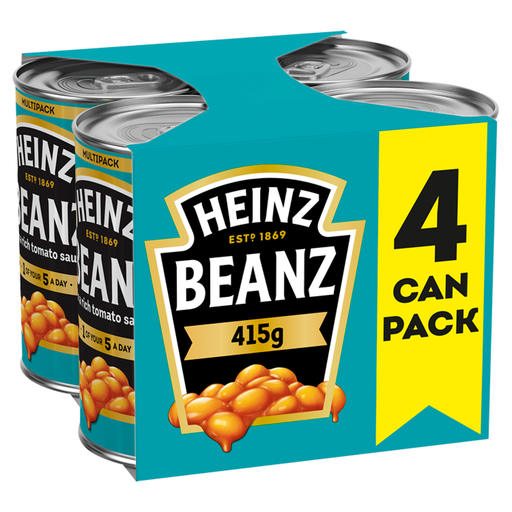 No image available
A four-tin standard recipe for households planning more than one cooked breakfast. Tesco Groceries lists 0.6g salt and 4.3g sugars per 100g for standard Heinz Beanz 415g; check the current tins for ingredients, allergens and storage directions.
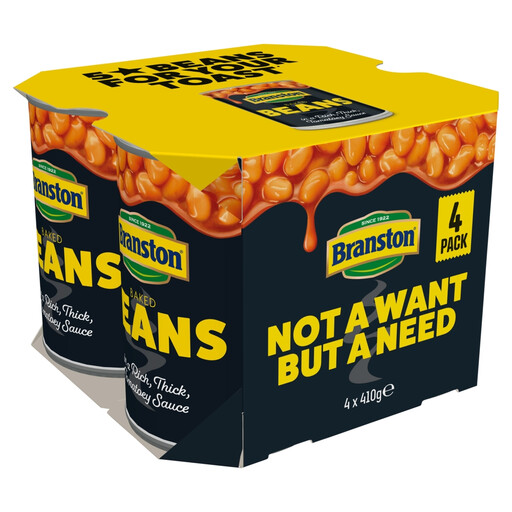 No image available
Four standard-size tins offer portions for repeated breakfasts. Compare the current per-100g salt and sugars figures with other standard recipes, and check the tin if vegan suitability matters.
 No image available
The six-tin pack is a cupboard option if the household expects to serve beans on several occasions. Check the current cans for heating, opened-product storage and any dietary information you need.
 No image available
This four-tin reduced recipe is relevant if you are comparing salt and sugars together. Read its per-100g values, ingredients and stated comparator on the current pack rather than assuming it has less of either nutrient than every other tin.
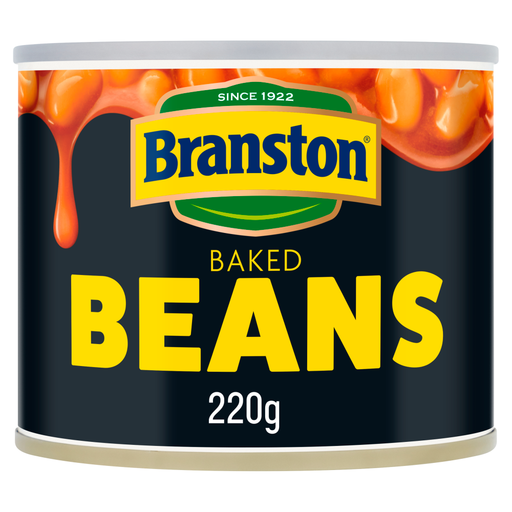 No image available
The single 220g tin offers a smaller quantity than the multipacks above. Check whether that amount fits the number eating, and follow the current can’s heating and dietary information.
Do not assume so from the category. Tesco Groceries labels its standard beans and standard Heinz Beanz suitable for vegans, while the checked ASDA standard-beans information states vegetarian suitability. Read the current tin for the exact product you intend to serve; a vegan label also does not replace an allergen check.
No. ASDA Groceries lists 1.9g sugars per 100g for Heinz No Added Sugar beans and identifies naturally occurring sugars and the sweetener steviol glycosides. Compare the nutrition panel and ingredients if either sugars or sweeteners affect your choice.
Follow the storage instructions on the particular tin, including its directions for transferring and refrigerating leftovers. ASDA Groceries specifies use within four days after opening for its checked standard 410g beans; do not apply that period to another product without checking its pack.
Read the current tin’s ingredients and allergen information before serving it to someone with an allergy. Food Standards Scotland says UK food businesses must tell consumers when food contains any of the 14 allergens that require declaration; a product’s vegan or vegetarian wording is not a substitute for that check.