Shoppers planning familiar meals
If baked beans are on the list for toast, breakfast or jacket potatoes, check the tin's weight and serving statement rather than assuming every single tin holds the same amount.


For a single tin with clearly stated serving figures, Sainsbury's Reduced Sugar & Salt 400g lists 5.5g sugars and 0.59g salt per half can. ASDA Reduced Salt & No Added Sugar 410g is an alternative if its no-added-sugar recipe matters more to you; it lists 3.1g sugars and 0.70g salt per half can. If you are considering Tesco's Reduced Sugar and Salt 420g tin, compare its current pack label before making nutrition the deciding factor.
The useful tin size depends on how much you serve at once and which recipe details matter in your weekly shop.
If baked beans are on the list for toast, breakfast or jacket potatoes, check the tin's weight and serving statement rather than assuming every single tin holds the same amount.
Reduced-sugar, no-added-sugar and reduced-salt descriptions answer different questions. Compare the declared amounts per 100g and per serving, and read the ingredients if sweeteners affect your choice.
Several 400–420g tins in the supermarket listings are presented as two servings. Check the serving statement and opened-pack instructions if you expect to keep the remainder for another meal.
Start with the amount you expect to use, then compare nutrition on the same declared basis and check the exact recipe.
| Priority | What to check | When it matters |
|---|---|---|
| Tin size | Check the net weight and stated servings. A 220g tin is a different portion-planning choice from the 400–420g tins discussed here. | I want enough for the meal I have planned without assuming that a single tin always provides two portions. |
| Sugars and salt | Compare both figures per 100g, then check the stated serving size. A reduced claim refers to a particular comparator; a no-added-sugar label does not give the tin's total sugars figure. | I use the numeric label and any traffic-light colours to compare recipes. In the Food Standards Agency and Ipsos Northern Ireland's 2024 survey of 611 Northern Ireland respondents, 49% said they actively use traffic-light labelling when shopping for food; this was not a baked-beans-specific measure. |
| Ingredients | Read the exact tin's ingredient and allergy statements. Check for sweeteners where relevant, and do not treat a vegan statement as an allergy statement. | If I prefer a particular recipe or need to avoid an ingredient, I need the information for the tin I am buying, not another variety from the same brand. |
| Leftovers | Check whether the tin is presented as two servings and follow its instructions for transferring, refrigerating and using opened contents. | When I only use part of a tin, I need to know how to store the rest before opening it. |
A reduced claim describes a difference from a stated comparator, while the amount in your portion depends on the tin's figures and serving size.
Compare salt and sugars per 100g and per stated serving. Sainsbury's 400g reduced-sugar-and-salt tin lists 0.59g salt per half can; ASDA's 410g reduced-salt-and-no-added-sugar tin lists 0.70g per half can.
The Sainsbury's and ASDA reduced variants described here use sweeteners, so their ingredient lists matter if you have a recipe preference.
Read the ingredients on the exact tin rather than choosing by the reduced-sugar or no-added-sugar wording alone.
A two-serving tin may leave beans to store after the first meal. Waitrose instructs shoppers to transfer its Essential baked beans to a non-metallic container, cover and refrigerate them, then use them within two days.
Plan when you will use the remainder and follow the storage directions on your own tin, as instructions can differ between products.
These examples refer to particular supermarket tins, not to every recipe made by each brand.
Waitrose lists Heinz Baked Beans 415g as an original-recipe single tin.
Tesco lists a Reduced Sugar and Salt Baked Beans in Tomato Sauce 420g single tin.
Sainsbury's Reduced Sugar & Salt Baked Beans in Tomato Sauce comes in a 400g tin presented as two servings.
ASDA Baked Beans Reduced Salt & No Added Sugar is a 410g single tin.
M&S lists a 400g baked-beans recipe with nutrition information per 100g.
Waitrose Essential Baked Beans in Tomato Sauce is a 420g own-label tin presented as two servings.
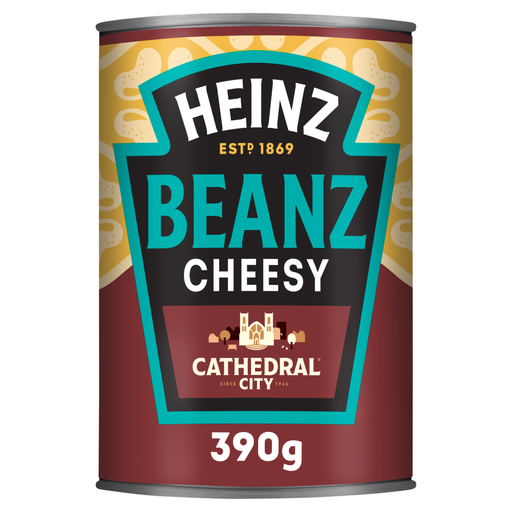
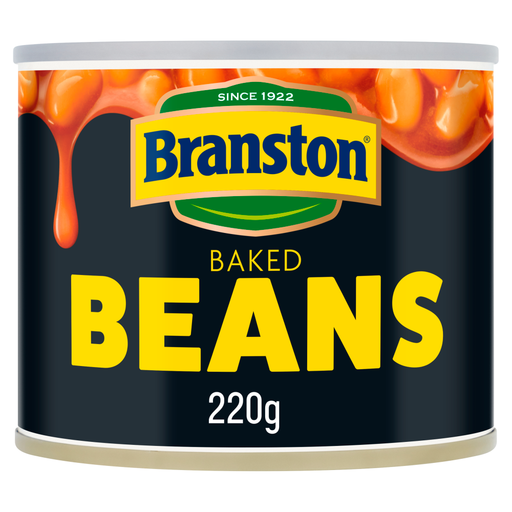
These options are a 390g Heinz Beanz Cheezy tin and a smaller 220g Branston tomato-sauce tin. Their different recipes and sizes matter when comparing them with the 400–420g supermarket tins above.
 No image available
This 390g single tin is a Cheezy recipe rather than the original Heinz beans described above. It contains milk, so check its current ingredient and allergy information if that affects your choice.
 No image available
The 220g tin is a smaller portion-planning option than the 400–420g tins discussed above. Check its serving statement for your meal, and follow its instructions for any contents left after opening.
No. Compare the salt figure on the exact tin using the same weight basis. Sainsbury's Reduced Sugar & Salt 400g declares 0.59g salt per half can, while ASDA Reduced Salt & No Added Sugar 410g declares 0.70g per half can; those half-can servings are different weights.
Some do, but check the individual tin. Sainsbury's 400g reduced-sugar-and-salt beans and Waitrose Essential 420g beans are presented as two servings, whereas the 220g Branston tin shown here is a smaller format.
Follow your tin's opened-pack directions rather than leaving the remainder in the can. Waitrose instructs shoppers to transfer its Essential baked beans to a non-metallic container, cover and refrigerate them, and use them within two days; another product's instructions may differ.
Use the heating method and container specified on the product label instead of assuming the tin itself is suitable for heating. Check the instructions for hob or microwave preparation before you start.
No. M&S describes its 400g baked beans as vegan and vegetarian but also states that they are not suitable for people with a milk or egg allergy. Read the current pack's allergy statement for the exact recipe; the Heinz Beanz Cheezy tin shown here contains milk.