Regular weekly shoppers
If beans are a recurring cupboard staple, compare tin sizes and multipacks against how many meals your household is likely to make. Check the ingredients and nutrition of the exact recipe you choose.


For a weekly shop, a multipack makes sense when your household will use the tins, while a smaller tin may suit occasional meals with fewer leftovers. If salt or sugar content matters, compare the exact recipes’ nutrition panels and ingredients; check the current pack for allergens and instructions for storing opened beans.
If beans are a recurring cupboard staple, compare tin sizes and multipacks against how many meals your household is likely to make. Check the ingredients and nutrition of the exact recipe you choose.
If either nutrient affects your choice, compare the figures on the exact tins. A no-added-sugar recipe and a reduced-salt-and-sugar recipe describe different product claims.
A smaller tin may fit an individual meal more closely. If you choose a larger tin, plan how you will store and use what remains after opening.
Start with the amount your household will use, then compare the exact recipes and their on-pack instructions.
| Priority | What to check | Your needs |
|---|---|---|
| Pack size | Check the weight of each tin, the number of tins and the best-before date. Match the total quantity to meals you expect to make. | Beans are a regular part of our weekly shop, so I can use a multipack. |
| Salt and sugars | Compare salt and sugars per 100g and per stated serving on the exact variants. Check what a reduced or no-added-sugar claim refers to. | I want to compare recipes on the same nutrition basis, rather than assume their front-of-pack claims mean the same thing. |
| Ingredients | Read the ingredient list and any highlighted allergens on the current tin. Check the recipe rather than extending one variant’s claims to another. | An ingredient or allergen affects what I can serve at home. |
| Leftovers | Check the tin size and its opened-storage instructions, including the stated refrigerated-use period. | For an occasional meal, I would rather choose a size I can use or have a plan for the remainder. |
| Current label | Check the physical pack’s nutrition declaration, date marking and storage directions. Tesco and M&S warn that online ingredient and nutrition details can change when products are reformulated. | I need the information for the tin I am buying, particularly when a recipe change would matter. |
“No added sugar” and “reduced salt and sugar” describe different claims; neither tells you every nutrition value of a competing tin.
Compare the salt and sugars figures, ingredients and stated claim basis on the exact variants.
A larger tin may leave opened beans that need refrigerated storage and use within the period on its label.
Choose a smaller tin for an occasional meal, or plan another use and follow the opened-storage directions on the pack.
Tesco and M&S warn that reformulation can change ingredients, nutrition and allergen information.
Check the physical tin’s ingredients and highlighted allergens when you buy it, especially if those details affect your household.
These ranges offer different recipes and formats; check the exact product rather than treating a brand name as a single recipe.
Heinz standard baked beans appear in single tins and multipacks, alongside a no-added-sugar variant.
Tesco lists standard and no-added-sugar own-label baked beans.
Sainsbury's lists standard, reduced-sugar-and-salt and organic own-label baked beans, as well as branded products.
Asda lists standard own-label and Just Essentials baked beans in 410g tins.
M&S lists standard, organic, no-added-sugar and ingredient-focused baked-bean variants within its tinned-beans range.
Waitrose lists Essential standard baked beans in 220g and 420g tins, as well as a reduced-salt-and-sugar 420g variant.
These options include standard multipacks, a reduced-sugar-and-salt multipack, a smaller tin and a cheese-containing variant. Choose by the recipe and amount your household expects to use.
 No image available
Four 410g tins suit a household planning several baked-bean meals. Compare this reduced-sugar-and-salt recipe’s current nutrition panel and ingredients with the standard variant before choosing.
 No image available
This four-tin pack is an option if your household wants the standard Heinz tomato-sauce recipe across several meals. Check the pack’s ingredients, nutrition and opened-storage directions.
No image availableFour 410g tins provide a standard baked-bean option for repeated cupboard use. Compare the recipe and nutrition panel with other standard multipacks you are considering.
 No image available
The 220g tin may be easier to match to an occasional smaller meal than a multipack. If you do leave any beans, follow the tin’s opened-storage instructions.
 No image available
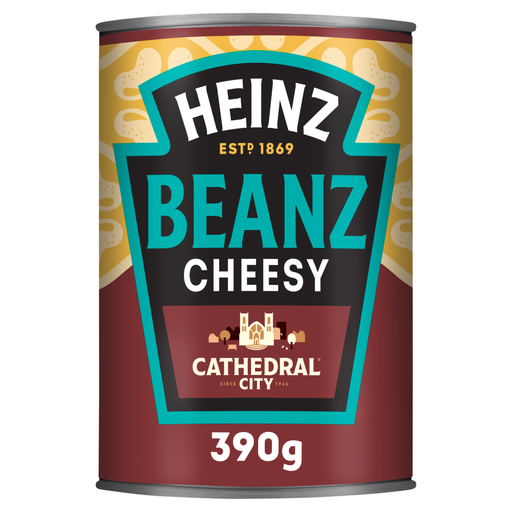
This 390g cheesy variant is a different recipe from standard baked beans in tomato sauce. Check the current ingredients and highlighted allergens if the cheese-containing recipe affects your choice.
No: “no added sugar” does not mean sugar-free. Read the sugars figure and ingredients on the exact tin. Heinz describes the salt in its no-added-sugar variant as 25% lower than in its own standard range, not lower than in every competing product.
Compare the figures per 100g on the exact products, then check the stated serving sizes if you use those figures too. The NHS explains that nutrition labels can help shoppers compare foods; front-of-pack traffic-light information may also be shown.
Follow the directions on the individual tin. Asda’s standard 410g listing instructs shoppers to transfer unused beans to a suitable non-metallic container, cover and refrigerate them, and use them within four days; do not apply that period to other products without checking their labels.
Use it to plan, but check the physical pack before serving the beans. Tesco and M&S warn that reformulation can change ingredients, nutrition and allergen information.
Check its ingredients, relevant date marking and any storage instructions, along with the nutrition information important to your choice. GOV.UK guidance for UK prepacked food identifies core labelling information including the food name, net quantity, ingredients, necessary warnings and applicable date and storage information.