Students planning several quick dinners
A larger tin or multipack may fit your meal plan if you know when you will use each opened tin. Check the weight of each can, not just the number of cans in the pack.


For a student dinner, choose a 400–420g tin if you can use the contents or refrigerate the remainder as the label instructs; a 200–220g tin is more practical when you are cooking for one and cannot manage leftovers. For salt, sugars or dietary requirements, compare the label on the exact tin rather than assuming the recipes are alike.
A larger tin or multipack may fit your meal plan if you know when you will use each opened tin. Check the weight of each can, not just the number of cans in the pack.
A 200–220g tin may be easier to finish in one meal. With a larger tin, check whether you can store and use the remainder within its labelled open-life period.
Compare salt and sugars on the same per-100g basis, then read the ingredients and allergen statement on the tin you intend to use. Recipes and labelling can change.
Start with the amount you will use at dinner, then check storage instructions and the label details that matter to you.
| Priority | What to check | Your needs |
|---|---|---|
| Pack size | Check the weight of each tin and the number of tins in a multipack. Compare a 200–220g tin with a 400–420g tin against the portions you plan to use. | I am cooking for one and would rather finish a smaller tin, or I can use a larger tin across meals. |
| Salt and sugars | Compare the exact products’ salt and sugars per 100g; check the serving information if you use a different portion. Treat reduced or no-added wording as a reason to read the panel. | Salt or sugars matter to my choice, so I want to compare the recipes on the same basis. |
| Opened-tin storage | Read the tin’s refrigeration and open-life instructions. Check that you have a suitable container and space for any remainder. | Will I use the remaining beans within the period on the label, or is a smaller tin easier to manage? |
| Dietary suitability | Read the current ingredients, allergen statement and any vegan or vegetarian labelling on the physical pack. | I need to check the specific tin against my dietary or allergen requirements, not rely on the baked-beans category. |
An opened tin may leave more beans than you will use at one dinner, and the remainder needs to be handled according to its label.
Before opening it, decide when you will use the rest and check the tin’s container, refrigeration and open-life instructions.
Standard and no-added-sugar products can list different salt and sugars values. A vegan label does not, by itself, establish suitability for every allergy: the cited M&S 220g tin also warns against use by people with milk or egg allergy.
Compare per-100g nutrition and read the ingredients and allergen statement on the physical tin.
GOV.UK guidance says how long canned food remains acceptable after its best-before date depends on the product, storage conditions and brand.
Follow the manufacturer’s storage instructions and check the packaging rather than applying a blanket time extension.
Heinz has standard baked beans in 200g multipack tins and a 415g No Added Sugar product among the cited listings.
Tesco lists standard, reduced sugar and salt, and Stockwell & Co. baked-bean lines.
The cited range includes Sainsbury’s standard baked beans in a 4 x 400g pack and Stamford Street Co. beans in a 400g tin.
M&S lists an Only 7 Ingredients baked-bean tin in a 220g format.
The cited Essential baked beans come in a 420g tin.
These options include a smaller tin and multipacks for planning student dinners. Check each pack size against the amount you will use and how you will store an opened tin.
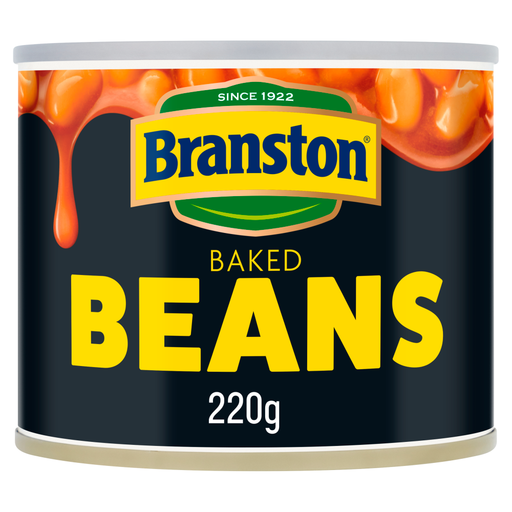 Image unavailable
The 220g tin is a smaller-format option for a one-person dinner. If you leave any beans after opening, the product information advises refrigerating them and using them within two days.
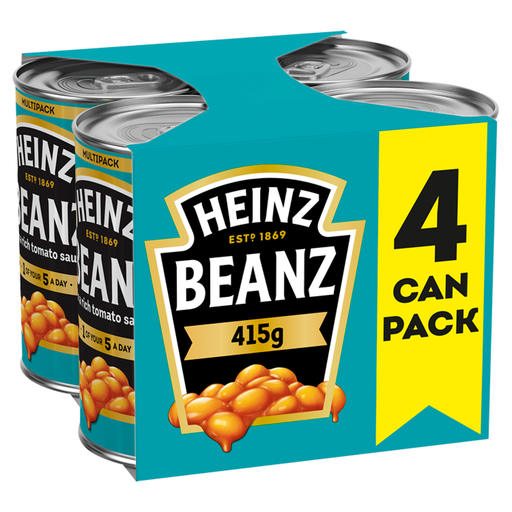 Image unavailable
Four separate 415g tins suit meals planned across several days. After opening a tin, the product information advises transferring any remainder to a non-metallic airtight container, refrigerating it and using it within two days.
 Image unavailable
Six separate 410g tins allow for several planned meals. The product information advises covering and refrigerating opened contents and using them within two days.
 Image unavailable
This four-tin pack can be planned across separate dinners. For any remainder from an opened tin, the product information advises transfer to a container, refrigeration and use within two days.
 Image unavailable
This four-tin pack is an option to compare when salt and sugars matter to your choice; check the current per-100g panel against another tin on the same basis. The product information advises refrigerating opened contents and using them within two days.
Choose the size you can use or store according to its label. A 400–420g tin works when you have a plan for any remainder; a 200–220g tin may be easier to finish when cooking for one.
Follow the instructions on the exact tin. The cited Waitrose and Heinz products instruct you to transfer unused beans to a suitable container, refrigerate them and use them within two days; Food Standards Scotland also advises checking the product’s open-life label.
No single time extension applies to every tin. GOV.UK guidance says acceptability after a best-before date depends on the canned product, its storage conditions and its brand, so follow the manufacturer’s instructions and check the packaging.
Compare salt per 100g on both labels, then consider the portion you will use. For the cited products, Sainsbury’s standard beans list 0.58g salt per 100g and Heinz No Added Sugar lists 0.4g per 100g; check the current tin before relying on either figure.
Check the physical pack before eating. Retailer information warns that formulations and allergen details can change, and a vegan-labelled product may still carry a relevant allergy warning: the cited M&S 220g tin states that it is not suitable for people with milk or egg allergy.