Regular baked-bean eaters watching portions
If beans appear often in your meals, compare the energy in the amount you actually serve. The NHS advises comparing nutrition information per 100g and, where given, per portion.


Choose a multipack by comparing energy per 100g and the portion you expect to eat, rather than relying on a front-of-pack description. Lower-sugar recipes are worth comparing if sugars and salt matter to you, but check their ingredients for sweeteners; a standard recipe can also be considered alongside the calories in the rest of the meal.
If beans appear often in your meals, compare the energy in the amount you actually serve. The NHS advises comparing nutrition information per 100g and, where given, per portion.
If you are choosing between standard and no-added-sugar recipes, read the sugars and salt values on the same per-100g basis. The ASDA Groceries and Waitrose & Partners listings show that these values differ between the named packs.
If you buy several tins at once, match the pack count to how often you use beans and check the instructions for storing any leftovers from an opened tin.
Start with a like-for-like nutrition comparison, then consider your serving and how you will use the pack.
| Priority | What to check | Your needs |
|---|---|---|
| Energy and portion | Compare kcal per 100g, then use the label’s portion information or the amount you plan to serve. Include the rest of the meal when considering its energy. | I usually eat half a tin, so a whole-tin figure would not describe my serving. |
| Sugars and salt | Compare both values per 100g across standard and no-added-sugar recipes. Read the ingredients if you want to avoid sweeteners; no added sugar does not mean sugar-free. | I use beans regularly and want to know whether a different tomato-sauce recipe changes the sugars or salt in my usual portion. |
| Fibre and protein | Read the declared amounts per 100g or per serving alongside energy. Consider accompaniments separately rather than judging the whole meal by the tin. | Fibre and protein figures matter to my comparison, but I also need to account for what I serve with the beans. |
| Pack and leftovers | Check the number and size of tins, the stated servings and the individual pack’s instructions after opening. | A multipack suits how often I use beans, provided I can store and use any leftovers as the label directs. |
A no-added-sugar recipe can still list sugars and contain a sweetener. The Waitrose & Partners listing for Heinz No Added Sugar 4 x 415g, for example, gives 1.9g sugars per 100g.
Compare the sugars line and read the ingredients on the exact pack.
A per-100g value and a half-tin value describe different amounts of food. The NHS recommends using the same nutrition basis when comparing labels.
Compare per 100g first, then relate the figures to the portion you expect to eat.
An opened tin may leave beans to store for another meal, so pack count alone does not tell you how practical it will be at home.
Check the storage directions on the tin and choose a pack size you expect to use.
Toast, butter, cheese and other additions contribute to the meal’s energy as well as the beans. NHS Better Health advises considering what and how much you eat when managing portions.
Compare the tin’s nutrition, then consider your planned portion and accompaniments together.
These named products provide label comparisons; a brand name alone does not establish the nutrition of another recipe or pack.
Heinz has a no-added-sugar four-pack listed by Waitrose & Partners.
Tesco lists an own-label No Added Sugar 420g baked-bean tin.
Sainsbury's lists an own-label 4 x 400g baked-bean pack.
ASDA Groceries lists both a standard 410g tin and a Reduced Salt & No Added Sugar 4 x 410g pack.
M&S lists an own-label baked-bean product.
Waitrose & Partners lists Essential baked beans in tomato sauce as an own-label option.
These Joybuy options are Branston and Heinz four- and six-tin packs, including a reduced-sugar-and-salt Branston recipe. Compare the nutrition and ingredients of the exact pack against the portion you plan to eat.
 No image available
A four-tin option if you want to compare a reduced-sugar-and-salt recipe with standard baked beans.
Each tin is 410g. Check the ingredients if you prefer to avoid sweeteners, and use the pack’s nutrition figures for your planned serving.
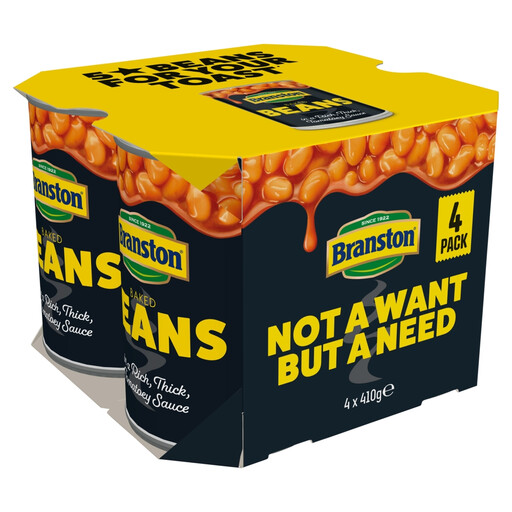 No image available
A standard Branston recipe in a four-tin pack for shoppers comparing regular-use cupboard options.
Each tin is 410g. Compare its per-100g label and your intended serving with the reduced-sugar-and-salt recipe rather than assuming the two are nutritionally alike.
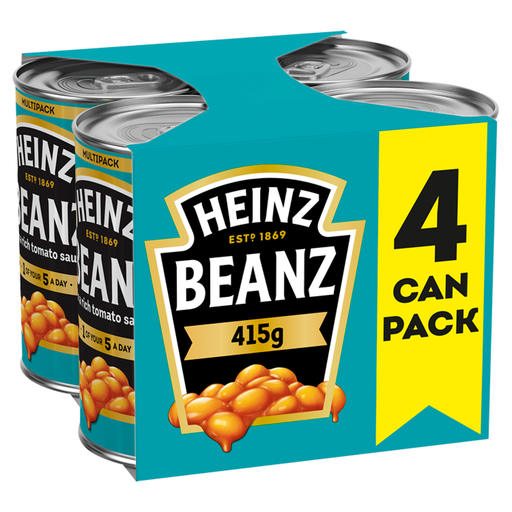 No image available
A standard Heinz tomato-sauce recipe for shoppers choosing a four-tin multipack.
Each tin is 415g. Use the pack label to compare nutrition per 100g and relate it to the portion you expect to serve.
 No image available
A six-tin standard-recipe pack for households planning more frequent use.
Each tin is 410g. Compare the per-100g nutrition with the four-tin options, and follow the pack’s directions for any beans left after opening.
Baked beans can be considered as part of the meal when you account for the amount you eat and what you serve with them. The NHS advises using energy information on food labels to compare products; a claim on the tin does not describe the calories in the complete meal.
Choose by comparing the sugars, salt and energy values of the exact recipes on the same per-100g basis. No added sugar does not mean sugar-free, so read the ingredients if sweeteners matter to you.
Compare their nutrition per 100g first, then consider the portion you will eat and the total weight of each pack. The NHS notes that labels provide nutrition information per 100g and sometimes per portion.
Follow the storage instructions on that tin, including its directions for refrigeration and when to use the leftovers. Check these instructions when deciding whether the pack size suits your household.
No. Check the allergen statement on the exact pack before making an allergy-related choice; a vegan or vegetarian description is not a substitute for that information.