Solo diners avoiding leftovers
If beans are a light meal or side, a compact tin may be easier to finish. The Heinz 200g No Added Sugar and M&S 220g Only 7 Ingredients products are both described as single-serve tins.


Choose a 200g to 220g tin when beans are a light dinner or side for one and you do not want leftovers. A 400g-plus tin makes more sense for a larger portion or two servings, provided you can store and use any remainder as its label directs. If salt or sugar matters to your choice, compare the nutrition panel, serving size and ingredients of the exact recipe.
If beans are a light meal or side, a compact tin may be easier to finish. The Heinz 200g No Added Sugar and M&S 220g Only 7 Ingredients products are both described as single-serve tins.
A 410g to 420g tin leaves more room for a larger dinner portion or a second serving. If you do not finish it, follow that product’s instructions for refrigerating and using the remainder.
Salt, sugar and ingredients vary between products. Check the figures on the tin you intend to eat, including its portion size; the Heinz No Added Sugar single-serve product, for example, lists sweeteners.
Start with the amount you expect to eat, then compare recipes and decide whether you can use any leftovers within the tin’s stated open-life.
| Priority | What to check | Your needs |
|---|---|---|
| Portion size | Check the tin weight and stated servings. The cited 200g Heinz and 220g M&S tins are single-serve formats; larger tins may show nutrition by half-can or state two servings. | For a light dinner or side on my own, I would rather finish a small tin. If beans are the main part of dinner, I might use a larger one. |
| Salt and sugar | Compare salt on the same basis, such as per 100g, then check the amount in your intended portion. Read the ingredients of reduced-sugar recipes for sweeteners. | I want to compare the recipes I might actually buy, without treating a whole 200g tin as the same serving as half a 410g tin. |
| Meal planning | Read the fibre and protein figures on the relevant nutrition panel. Check the pack’s heating directions if preparation method matters to your dinner plans. | Beans will be one part of my quick dinner, so I want to know what the portion contributes and how I will serve it. |
| Leftovers | Check the opened-tin instructions for transferring, covering and refrigerating unused beans. The stated use-by period after opening differs between the cited products. | If I open a larger tin, I need a plan to eat the remainder within that tin’s instructions. |
The cited 200g and 220g single-serve products differ from larger tins that state two servings or give nutrition by half-can.
Choose the size for the amount you intend to eat, or plan when you will use the remainder.
A whole 200g tin and a whole 415g tin contain different amounts of food, so per-can figures alone do not compare like with like.
Start with salt per 100g, then check the figure for the portion you expect to eat.
The Heinz No Added Sugar single-serve product lists sweeteners, so the claim does not describe every ingredient choice.
Read the ingredients if sweeteners affect which recipe you prefer.
The cited larger-tin instructions call for unused beans to be transferred to a covered container and refrigerated. Their stated open-life is not the same for every product.
Follow the storage and timing instructions on the tin you open.
These examples show how tin size and recipe differ; check the individual product rather than assuming a characteristic applies across a brand.
The cited range includes a standard 415g tin and a 200g No Added Sugar Single Serve tin.
Tesco’s baked-beans results identify a Reduced Sugar and Salt own-label product in a 420g tin.
The cited Sainsbury’s baked beans come as a pack of four 400g tins.
Asda’s Reduced Salt & No Added Sugar baked beans come in a 410g tin.
M&S describes its 220g Only 7 Ingredients Baked Beans as a small single-serve tin.
Waitrose Essential Baked Beans in Tomato Sauce come in a 420g tin labelled as two servings.
This 220g Branston tin is an option to consider when you want a smaller amount of beans for a quick dinner or side. Check the tin if an explicit single-serving designation matters to you.
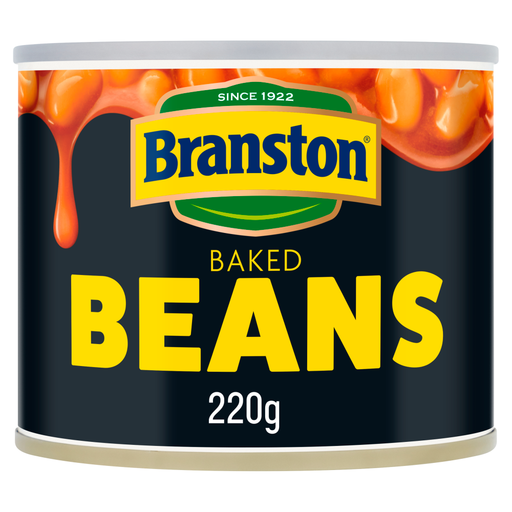 Image unavailable
The 220g tin is a smaller-format option when beans are a light meal component or side for one. Check the current pack for its serving count and heating directions.
Yes, if you want a larger portion or have a plan for the remainder. Several cited larger tins state two servings or give nutrition by half-can, so check the particular tin before treating the whole can as one portion.
Follow that product’s label: the cited larger-tin instructions call for transferring unused beans to a covered, non-metal container and refrigerating them. Waitrose Essential says to use them within two days, while the cited Asda product says within four days.
No; check the salt figure for the exact recipe and the amount you intend to eat. The cited Asda recipe lists 0.70g salt per half-can, while the Heinz No Added Sugar 200g tin lists 0.80g per whole tin, so those serving figures are not a like-for-like comparison.
For tinned foods such as baked beans, GOV.UK describes the best-before date as a quality date rather than a use-by safety deadline. Food may usually be safe after it, but its quality may have changed; follow the pack’s storage instructions and assess the product before use.