First-shop cupboard planners
If you are buying cupboard staples from scratch, decide how many tins you are likely to use before choosing a multipack. Check how many items an offer requires rather than adding tins you do not need.


For a first food shop, a multipack makes sense when you expect to use every tin; a smaller tin may suit you better if a larger opened tin would leave more than you can use. If you want a reduced-salt-and-sugar recipe, choose a product labelled as that variant and compare the nutrition information on the current tin.
If you are buying cupboard staples from scratch, decide how many tins you are likely to use before choosing a multipack. Check how many items an offer requires rather than adding tins you do not need.
If you cook for one or eat baked beans occasionally, compare tin sizes with the amount you would use at a time. The storage instruction for leftovers matters when a tin will not be finished in one meal.
Look for a tin explicitly labelled reduced salt and sugar, then read its per-100g nutrition panel. Do not assume that standard and labelled variants have the same recipe.
Start with the quantity you will use, then check the recipe and the instructions for any opened tin.
| Priority | What to check | Your needs |
|---|---|---|
| Pack quantity | Check the number of tins, the weight of each tin and any quantity required by an offer. Compare that total with how often you expect to eat beans. | I am stocking a cupboard, but I only want a multipack if I am likely to use all its tins. |
| Recipe variant | Check whether the tin is standard or labelled reduced salt and sugar. Read the current per-100g salt and sugars figures when comparing variants. | A reduced-salt-and-sugar recipe matters to me, so I want to identify the actual variant rather than rely on the brand name. |
| Tin size and leftovers | Compare sizes such as 220g and 400g or 420g. Read the product-specific refrigeration and use-after-opening instructions before planning a second meal. | Cooking for one, I would rather choose a quantity I can use than open a larger tin without a plan for the remainder. |
| Ingredients and allergens | Read the physical tin’s ingredient list, allergen statement and precautionary wording. Do not use a vegan or short-ingredient description in place of the allergen information. | If an ingredient or allergen affects what I can buy, I need to check the exact tin, not just its range name. |
A qualifying multibuy can leave you with more beans than you planned to keep or use.
Check the required number of eligible items against your shopping list before increasing the quantity.
Storage instructions differ by product. M&S says to refrigerate unused contents in a non-metallic container and use them within two days for its Only 7 Ingredients 220g beans, or within three days for its standard 400g beans.
Choose a tin size that fits your meals, and follow the storage instruction on the tin you buy.
M&S describes the baked-bean products examined here as vegan and vegetarian, while also stating that they are not suitable for people with a milk or egg allergy.
Check the exact product’s ingredients, allergen statement and precautionary wording on the physical tin.
These ranges illustrate different pack and recipe choices; the details apply to the products described, not every tin carrying the same brand.
Waitrose & Partners lists standard and Reduced Salt & Sugar baked beans in 420g tins.
Branston standard baked beans appear in single-tin and multipack formats in the Tesco Groceries listing.
Tesco Groceries lists Heinz baked beans in several pack sizes, including four- and eight-tin packs.
M&S lists a standard 400g baked-bean tin and a 220g Only 7 Ingredients variant.
Tesco’s own-label range includes an Organic Baked Beans in Tomato Sauce 420g variant.
These options cover branded multipacks, a reduced-sugar-and-salt multipack and a smaller single tin. Match the quantity and labelled recipe to what you expect to use.
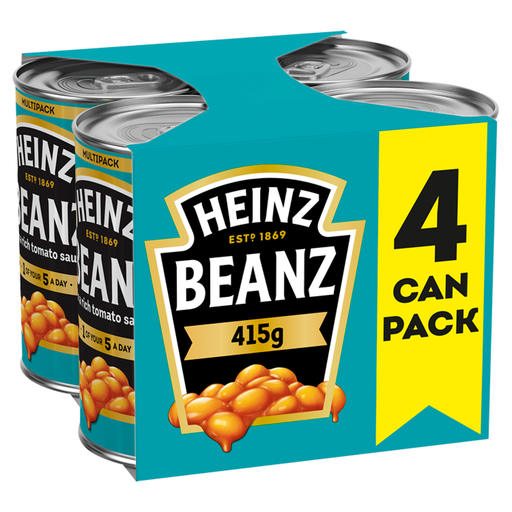 No image available
Four 415g tins suit a cupboard shop if you expect to use the whole pack. Check the current label for ingredients, nutrition and instructions for any opened tin.
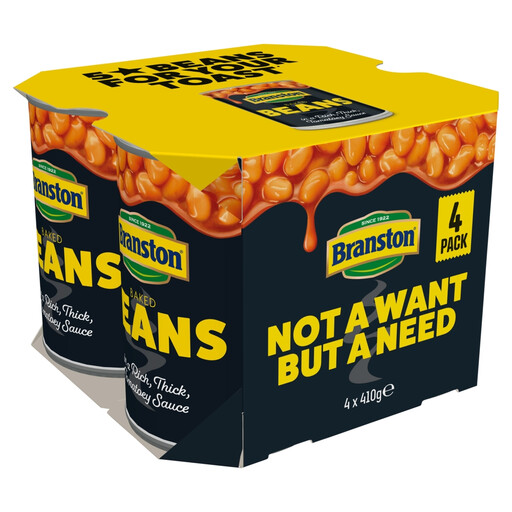 No image available
This four-tin pack provides 410g per tin for a planned cupboard shop. Consider whether four tins fit your likely use, and follow the label’s instructions for opened contents.
 No image available
Choose this labelled variant if reduced sugar and salt are part of your selection criteria and you will use four 410g tins. Compare the current per-100g nutrition panel with any other recipe you are considering.
 No image available
Six 410g tins provide a larger cupboard quantity than the four-tin packs shown here. Choose that quantity only if it fits your expected use; check the label for ingredients and opened-tin storage instructions.
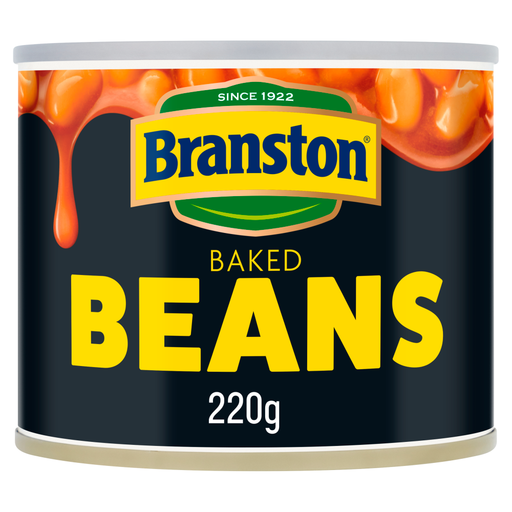 No image available
The 220g tin is a smaller portion option for occasional use or a one-person meal. If any contents remain, refrigerate them and follow the product’s instruction to use them within two days.
Buy one if you expect to use all the tins. Check the pack count against your usual meals and confirm how many eligible items any offer requires before changing your shopping list.
A smaller tin can suit one person who is unlikely to use leftovers promptly. M&S instructs shoppers to refrigerate unused contents in a non-metallic container and use them within two days for its 220g Only 7 Ingredients beans, versus three days for its standard 400g beans; follow the instruction on the tin you buy.
No. Check the exact tin’s allergen statement and precautionary wording. The M&S baked-bean products examined here are described as vegan and vegetarian, but M&S also says they are not suitable for people with a milk or egg allergy.
The NHS gives one meal example using a 420g reduced-salt-and-reduced-sugar tin with wholemeal bread and vegetables. That recipe is an option for planning a meal, not a description of every baked-bean tin’s ingredients or nutrition.