Eating alone tonight
If you want beans without a stored remainder, compare the compact 200g and 220g tins listed by Waitrose & Partners and M&S. Check the stated servings and whole-tin nutrition as well as the weight.


For supper for one, start with a 200–220g tin if you would rather not store leftovers. A 400–420g tin makes sense when two portions are useful, or when you can refrigerate the remainder and use it within the time stated on its label. Check the serving count and nutrition for the amount you expect to eat: a smaller tin is not necessarily lower in salt.
The useful distinction for a late supper is whether you expect to finish the tin tonight or have a definite plan for what remains.
If you want beans without a stored remainder, compare the compact 200g and 220g tins listed by Waitrose & Partners and M&S. Check the stated servings and whole-tin nutrition as well as the weight.
A 400–420g tin is an option when two portions will be used. Sainsbury's 400g and Waitrose Essential 420g labels state two servings and give instructions for refrigerating beans left after opening.
Look at the figures per 100g and for the portion you will eat, rather than choosing by tin size alone. Sainsbury's lists 1.16g salt per half can for its standard 400g beans and 0.59g per half can for its reduced-sugar-and-salt 400g beans.
Start with the amount you will eat, then compare labels on the same portion basis and check how you will prepare or store the beans.
| Priority | What to check | Your needs |
|---|---|---|
| Portion size | Compare net weight with stated servings. M&S describes its 220g tin as single-serve; Sainsbury's states two servings for its 400g tins. | I would rather finish a compact tin tonight, or I know how I will use a second portion. |
| Salt and sugars | Compare per 100g and per-portion figures on the same basis. Sainsbury's lists 1.16g salt per half can for its standard 400g recipe and 0.59g for its reduced-sugar-and-salt version. | If I am comparing recipes, I want the figures for the amount I will actually eat—not an assumption based on the brand or the size of the tin. |
| Preparation | Read the tin's hob or microwave directions. Sainsbury's instructions call for a microwaveable dish when microwaving its beans. | At a late hour, I want to know which dish and heating method I will need before I start. |
| Leftovers | Check whether the label calls for a non-metallic container and how long the opened beans may be refrigerated. Sainsbury's and Waitrose Essential specify two days for the products described here. | A larger tin works for me only if I can store the remainder as directed and use it in time. |
Buying a single can does not mean its contents are labelled as one portion. Sainsbury's standard and reduced-recipe 400g tins each state two servings.
Read the net weight and serving count before deciding whether the tin fits tonight's meal.
Portion size and recipe are separate considerations. Joybuy's Heinz 200g product information lists 1.2g salt for the whole can; that figure should not be compared with a half-can figure without noting the different portions.
Check salt and sugars per 100g, then check the figures for the amount you expect to eat.
The Sainsbury's and Waitrose Essential products described here instruct shoppers to transfer unused beans to a non-metallic container before refrigeration.
Cover and refrigerate the remainder, then follow the use-within period on the particular tin.
These ranges illustrate the tin sizes and recipes worth checking; a brand name alone does not establish serving size or nutrition.
A branded compact-tin option: Waitrose & Partners lists Heinz Baked Beans Single Serve 200g.
Tesco's baked-bean listing includes an own-label organic 420g tin alongside branded products.
Its standard and reduced-sugar-and-salt baked beans offer a same-size comparison: both are 400g tins labelled as two servings.
M&S describes its Only 7 Ingredients Baked Beans 220g as a small single-serve tin; it also lists a 400g baked-bean tin.
Waitrose & Partners lists Essential Baked Beans in Tomato Sauce in 220g and 420g formats.
These Joybuy options are a compact 220g tin and a larger 500g tin. For a solo late-night supper, compare each size with the amount you expect to eat; the 500g option calls for a more deliberate plan for the remainder.
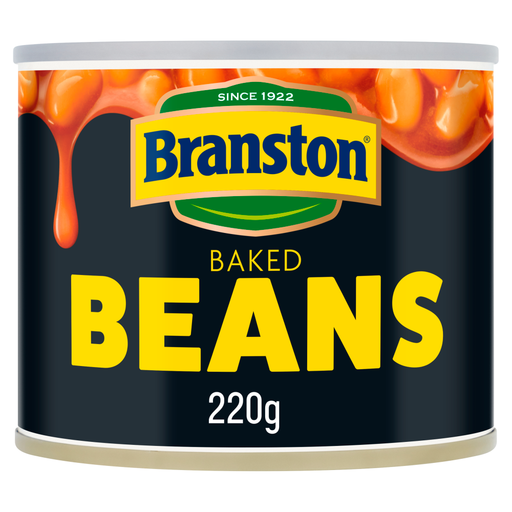 No image available
The 220g tin fits the compact-size choice for a late supper. Check its label for the stated serving count, heating directions and nutrition for the amount you plan to eat.
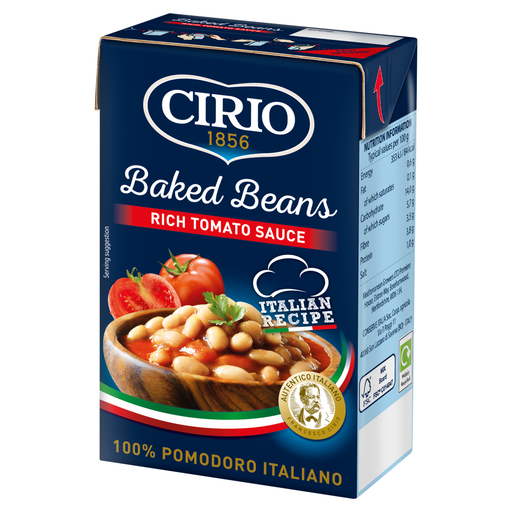 No image available
This 500g tin is larger than the compact and 400–420g formats discussed above. If you expect a remainder, check the label for servings, heating directions and how to store the beans after opening.
Not necessarily. Sainsbury's labels both its standard and reduced-sugar-and-salt 400g baked beans as two servings. If you want to avoid a remainder, compare compact tins and check their stated serving counts too.
Transfer the beans to a microwaveable dish rather than putting the metal tin in the microwave. Sainsbury's microwave instructions specify a covered microwaveable dish; follow the heating directions on the tin you buy.
Follow the particular product's label. Sainsbury's and Waitrose Essential instruct shoppers to transfer leftovers to a non-metallic container, refrigerate and use within two days. The M&S 400g product specifies a non-metallic container, refrigeration and use within three days.
Compare figures for the same amount of beans, then consider the portion you intend to eat. Sainsbury's lists 1.16g salt per half can for its standard 400g beans and 0.59g per half can for its reduced-sugar-and-salt 400g beans; those are figures for those specific recipes, not every standard or reduced tin.