Students eating between lectures
A smaller tin or pot can suit one hot lunch when you expect to finish it. Check that you can prepare it using the facilities available to you, and follow the pack directions.


For a lunch between lectures, a 200–220g tin or pot is a practical choice if you expect to finish it and cannot refrigerate leftovers. A larger tin or multipack makes more sense when you can share it or plan another meal; compare the nutrition labels per 100g and follow the exact pack’s storage instructions.
A smaller tin or pot can suit one hot lunch when you expect to finish it. Check that you can prepare it using the facilities available to you, and follow the pack directions.
A larger tin or multipack can fit planned meals or sharing. Before opening a tin you will not finish, make sure you can follow its instructions for storing the remainder.
Use the per-100g panel to compare salt and sugars, then consider how much you will actually eat. Check the precise recipe rather than assuming every tin from a brand has the same values.
Start with the portion you can use, then compare the exact recipe and its instructions for preparation and storage.
| Priority | What to check | Your needs |
|---|---|---|
| Portion size | Check whether a 200–220g pack or a 400–420g tin fits the meal you have planned. Check the opened-pack storage instructions if you may leave some. | I would rather finish one small pack than manage leftovers without reliable fridge access. |
| Salt and sugars | Compare the same nutrients per 100g on each pack, then consider your portion. For a reduced recipe, check which regular product its claim uses as a comparison. | If I eat beans regularly, I want to compare the actual labels, not choose by the words on the front of the tin. |
| Storage and preparation | Read the heating directions for the exact pack. Check how unused beans must be transferred, refrigerated and used after opening. | I need a lunch I can prepare with the facilities available, and a plan for anything left in the tin. |
| Ingredients and allergens | Read the current ingredients and allergen statement on the exact variant. Do not use a vegan declaration as a substitute for an allergy check. | When an ingredient or allergen matters to me, I need the declaration for the pack I will eat. |
| Pack quantity | Check the number and size of tins in a multipack, and whether you can use them as planned. An unopened multipack does not remove the need to store leftovers from each opened tin correctly. | For several planned lunches or a shared kitchen, I can use more tins; for an occasional lunch, a smaller pack may be simpler. |
An opened tin may leave more beans than you will eat at lunch, and the remainder needs appropriate storage.
Choose a smaller pack if you expect to finish it, or plan a second meal and check the tin’s refrigeration instructions before opening it.
Standard and reduced recipes can have different nutrition panels. Waitrose & Partners describes its Essential Reduced Salt & Sugar beans as containing 30% less of each than its regular Essential beans; that comparison does not cover other brands.
Compare the exact packs per 100g and account for the portion you intend to eat.
Tesco Groceries instructs buyers of its baked beans to transfer unused contents to a non-metallic container, cover and refrigerate them, and use them within two days.
Follow the directions on your own pack and choose a portion you can finish if refrigerated storage is not available.
Marks & Spencer describes its Only 7 Ingredients Baked Beans as unsuitable for people with a milk or egg allergy, despite the product’s vegan and vegetarian labelling.
Read the current allergen statement on the exact pack before eating it.
These examples illustrate portion formats and label checks; a brand name alone does not identify the recipe or its storage directions.
Heinz appears in smaller 200g formats as well as larger tins, giving students different portion formats to compare.
Tesco’s own-label 4 x 420g baked beans offer a larger-tin format for planned or shared meals.
Sainsbury's lists its standard baked beans in a 4 x 400g format.
M&S describes its Only 7 Ingredients Baked Beans as coming in a small single-serve tin.
Waitrose Essential includes regular and Reduced Salt & Sugar baked-bean recipes.
These small-tin and multipack options relate to one-person lunches, planned meals and sharing. Compare each pack’s directions and nutrition label against how you will use it.
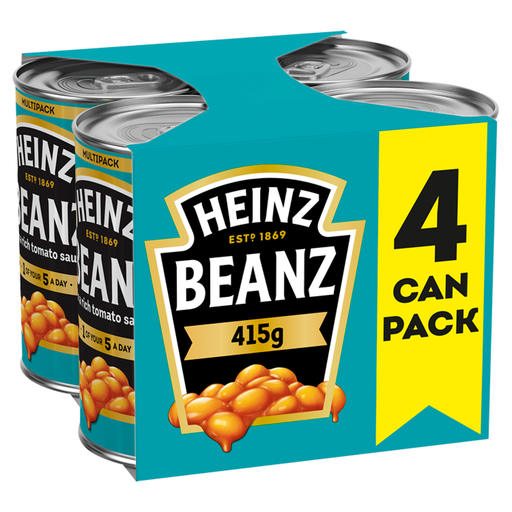 Image unavailable
Four 415g tins suit planned lunches or sharing when you can store any unused portion. The product information gives hob and microwave directions; after opening, transfer leftovers to a non-metallic container, refrigerate and use within two days.
 Image unavailable
Four 410g tins fit planned or shared meals; the product information includes hob and microwave directions. Refrigerate unused contents in a separate container and use within two days. Check the pack’s per-can nutrition figures against its stated can size when working out a portion.
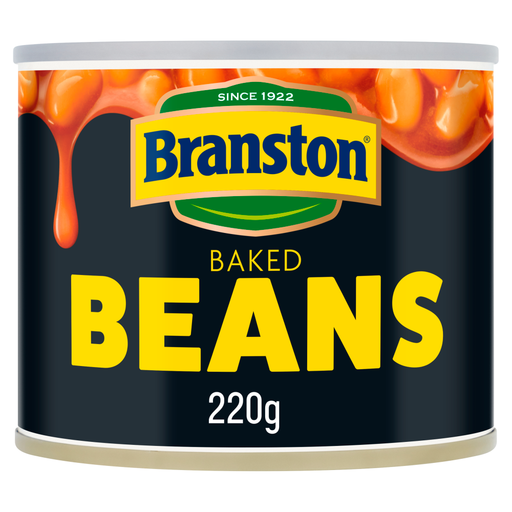 Image unavailable
The 220g tin is a smaller format to consider for one lunch. Check the can’s preparation directions before heating it; if you leave any beans, transfer them to a separate container, refrigerate and use within two days.
 Image unavailable
Four 410g tins can serve several planned lunches. The reduced-sugar-and-salt description compares this recipe with standard Branston beans, not every baked-bean product; use the per-100g panel for other comparisons. Check the can’s preparation directions and refrigerate unused contents in a suitable container for use within two days.
 Image unavailable
Six 410g tins suit a plan for repeated meals or sharing. Check the can’s preparation directions before lunch; transfer unused beans to a covered container, refrigerate and use within two days.
Choose a smaller 200–220g pack if you expect to finish it and have a way to prepare it according to its directions. A 400–420g tin is more practical when you can share it or store the remainder as the pack instructs.
Compare both values per 100g on the exact products, then consider the amount you will eat. NHS food-label guidance defines low salt as 0.3g or less per 100g; a reduced claim should also be read against the regular product named as its comparator.
Do not treat an opened tin as an unopened storecupboard item. Tesco Groceries instructs buyers of its baked beans to move unused contents to a non-metallic container, cover and refrigerate them, and consume them within two days; follow the instructions on your exact pack.
No. Marks & Spencer says its Only 7 Ingredients Baked Beans are unsuitable for people with a milk or egg allergy, despite vegan and vegetarian labelling. Read the current allergen statement for the precise product you intend to eat.