Households stocking up for quick winter meals
For beans on toast, jacket potatoes or a simple side, consider how many portions you need at once, where the tins will go and whether you will use a multipack.


A standard tin suits households that want a familiar recipe for toast, jacket potatoes or a side dish; a reduced-sugar-and-salt recipe is worth considering when those label values matter to you. For a winter cupboard, match the can size to the meal, compare nutrition on the same basis, and check ingredients, allergens, best-before dates and instructions for leftovers. A multipack makes sense only if you have room for it and expect to use the tins.
For beans on toast, jacket potatoes or a simple side, consider how many portions you need at once, where the tins will go and whether you will use a multipack.
Check the values on the exact tin and compare the same quantity or stated serving. A reduced recipe should be assessed against its named comparator, not assumed to differ from every standard tin.
Read the current ingredients and allergen statement for the particular recipe. A vegan label does not, by itself, establish suitability for someone with a food allergy.
Start with the meal and the amount you will open, then compare recipes and storage instructions on the exact tins you are considering.
| Priority | What to check | Your needs |
|---|---|---|
| Salt and sugars | Compare per-100g values and the amount you expect to serve. Check what a reduced-recipe claim is compared with; Waitrose describes its Essential Reduced Salt & Sugar beans as containing 30% less of each than its regular Essential recipe. | I want to compare what my usual portion contributes, rather than assume every tin labelled reduced is lower than every other option. |
| Can size and quantity | Check net weight, stated servings and the number of cans. A smaller tin and a multipack address different needs. | For a shared meal, I need enough beans in the cans I open. If I am stocking up, I need space and a realistic plan to use the pack. |
| Ingredients and allergens | Read the current ingredient list and allergen statement for the exact variant. Do not use a vegan label or a short ingredient list as an allergy check. | Someone eating these beans may need me to check a particular ingredient or allergen before I serve them. |
| Dates and leftovers | Check each can’s best-before date and unopened storage directions. Follow that product’s instructions for transferring, refrigerating and using leftovers. | I want tins that fit my cupboard plans, without opening more than the meal needs or overlooking the instructions for what remains. |
Recipes and can sizes differ, so figures for a whole can, a stated serving and 100g cannot be compared as though they describe the same amount.
Use the current labels to compare salt and sugars per 100g, then check the quantity you are likely to eat.
Several cans take up cupboard space and may be more than a household expects to use while the tins are at their intended quality.
Check the can size, pack quantity and best-before dates against the meals you plan to make.
Allergen suitability depends on the exact product. Marks & Spencer’s baked-bean listing, for example, warns that the product is not suitable for people with a milk allergy.
Read the current ingredients and allergen information each time you buy, even if you recognise the range.
Unopened-cupboard directions do not describe how to keep leftover beans. Sainsbury’s 400g listing says to use leftovers within two days.
Follow the exact tin’s directions for transferring, covering and refrigerating any beans you do not use.
These ranges offer different recipes and can formats; suitability depends on the particular product label, not the brand name alone.
A branded baked-bean range for shoppers who prefer its familiar recipe.
An own-label range that includes a no-added-sugar baked-bean listing.
An own-label standard recipe available as a 400g tin.
An own-label option to assess alongside other supermarket tins.
An own-label range that includes an Only 7 Ingredients baked-bean product.
An own-label range with regular Essential beans and a Reduced Salt & Sugar recipe.
These tins cover a reduced-sugar-and-salt Branston multipack and standard Heinz and Branston recipes in single-can or multipack formats. Choose by recipe and the amount you expect to open or store.
 Image unavailable
Consider this four-can pack if you expect to use a reduced recipe repeatedly. The product description claims 30% less sugar and salt than standard Branston beans, not than every alternative; compare current labels for the amount you will serve. Store unopened cans in a cool, dry place and follow the can’s directions for leftovers.
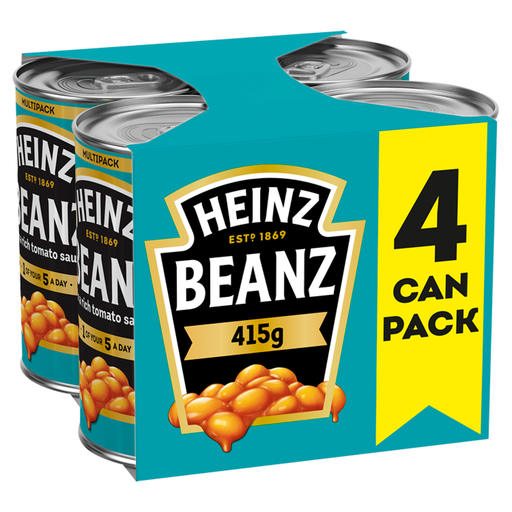 Image unavailable
This standard-recipe four-pack suits households planning several beans-on-toast or side-dish meals. The listing provides hob and microwave heating directions; check the individual cans’ best-before dates and follow their storage instructions.
 Image unavailable
Six standard-recipe cans suit planned, repeated cupboard meals if you have space for them. The product information says to keep unopened cans in a cool, dry place and refrigerate leftovers, using them within two days.
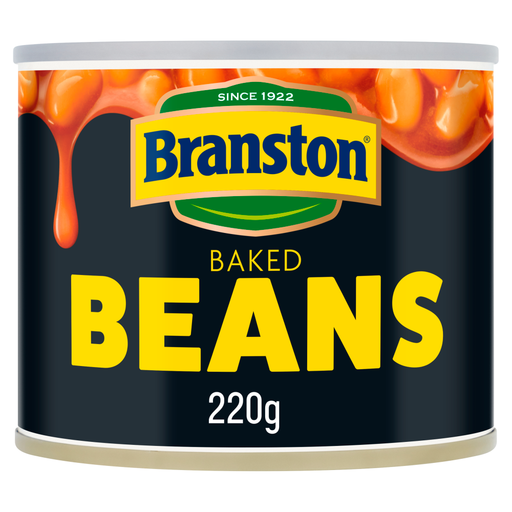 Image unavailable
The smaller can is an option when you want to open 220g rather than a larger tin. Check whether that amount fits your meal; the stated can size does not establish a serving count. Refrigerate unused beans and follow the product’s two-day leftover instruction.
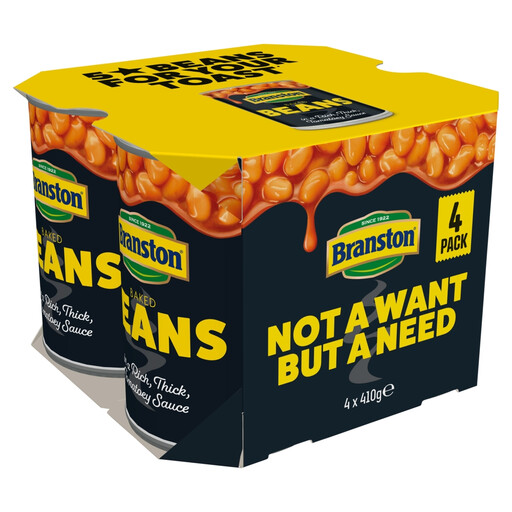 Image unavailable
This four-pack offers standard Branston beans for households planning several cupboard meals. Check the current can label before comparing salt per serving: the serving figure in the product information does not clearly reconcile with its 410g can size and per-100g figure. Follow the stated directions for storing unopened cans and using refrigerated leftovers within two days.
Yes, unopened tins can be kept according to their storage instructions. GOV.UK includes baked beans among tinned foods with best-before dates, which concern quality rather than being use-by deadlines. Check each can’s date and condition before use.
Follow the instructions on the exact can: transfer leftovers as directed, cover and refrigerate them, then use them within its stated period. Sainsbury’s 400g listing, for example, specifies two days after opening.
Compare salt per 100g and for the amount you intend to serve, using the current labels. A reduction claim has a particular comparator: Waitrose says its Essential Reduced Salt & Sugar recipe contains 30% less salt than its regular Essential beans, not than every standard recipe.
No. Check the exact product’s current ingredients and allergen statement. GOV.UK explains the labelling requirements for specified allergens, and a Marks & Spencer baked-bean listing carries a milk-allergy warning.