
24/7 Customer Support

Free returns

Same-day & Next-day Delivery

Quality Guaranteed

Unlock Your Welcome Offers: FREE Delivery | Up to 80% OFF | Free 30-day JoyPlus trial
Download the APP
Buying bakeware can look straightforward until a cake sticks, a tray warps or a loose base leaks batter across the oven shelf. For UK kitchens, where oven sizes, storage space and frequent batch cooking all matter, choosing by appearance alone can lead to unnecessary replacements.
The right bakeware depends on material, dimensions, coating care and the type of recipes you make most often. This guide explains the practical details to check before buying, then matches a selection of products to different household needs.
A non-stick coating can support easier food release, but it is not scratch-proof unless the product specifically states this. Metal utensils, abrasive scourers and excessive heat may damage the surface. Some non-stick cake tins also require hand washing, even when a similar-looking product is dishwasher-safe.
Always check:
A tin with a removable base may make serving easier, but it still needs careful handling around the seam and base.
A 20cm springform cake tin, a 23cm cake tin and a deep 26cm round tin will produce noticeably different cake heights and baking times. Filling a tin too close to the rim can cause overflow, while using a much larger tin may result in a thin or dry bake.
For reliable results, compare the product’s internal dimensions and depth with the recipe instructions. Remember that external dimensions may include handles, rims or clips.
Carbon steel bakeware conducts heat efficiently and is commonly used for cake tins and baking trays, but it can become hot quickly and may need careful temperature control. Silicone cake moulds are flexible and convenient for release, although they generally need to sit on a rigid baking sheet for stability.
Aluminised steel products can offer a firm structure and even contact with the oven shelf. However, not every metal pan has a non-stick coating, so check the specification rather than relying on its appearance.
Look for a clearly stated material, such as carbon steel, aluminised steel or food-grade silicone. Each has practical advantages:
For example, the Maison by Premier rectangular mould is listed as food-grade platinum silicone with a maximum temperature of 230°C. It is intended for oven use, not a hob or open flame.
A removable base cake tin is useful for delicate cakes, flans and tarts because the baked item can be lifted away rather than turned out. A springform cake tin adds a side clip, allowing the ring to open after cooling.
Flan tins with fluted edges can add shape to pastry, while a muffin tray provides individual portions for cupcakes, muffins or savoury snacks. A mini cake tin is practical for afternoon tea, lunchboxes and entertaining, but small cups can bake more quickly than a standard cake tin.
Wide or integrated handles can improve control when moving hot bakeware. A roasting tin with rack is particularly useful for lifting meat or vegetables above the base, although it may take more cupboard space than a standard roasting tray.
Before purchasing, measure your oven shelf, cupboard and dishwasher. A tray measuring 40cm long may not suit a compact oven, while a set of three cake tins may need more storage than a single versatile tin.
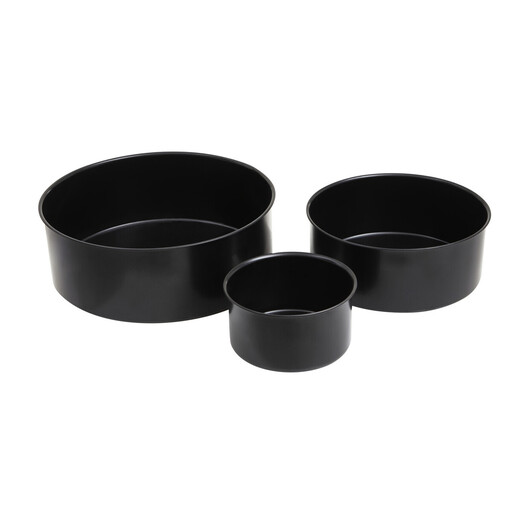
Why This Fits Their Persona: A set of three round cake tins gives beginners several sizes for everyday sponges, layered cakes and family baking without buying each tin separately.
The loose-base design helps with cake removal, while the stated non-stick coating reduces dependence on aggressive scraping.
Three round tins; durable metal construction; loose bases for easier handling and cleaning.
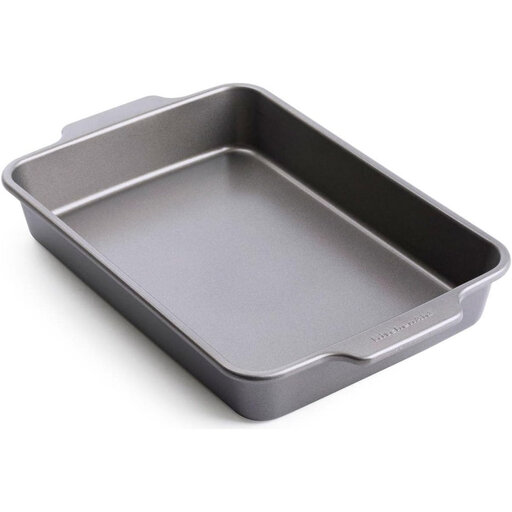
Why This Fits Their Persona: Suitable for frequent home bakers who want a firm rectangular tin for traybakes, sheet cakes and savoury oven dishes.
The specification states that it has no non-stick coating, so buyers can plan to grease or line the tin rather than assuming release treatment is included.
0.8mm aluminised steel; wide handles; dishwasher-safe specification; scratch-resistant surface listed.
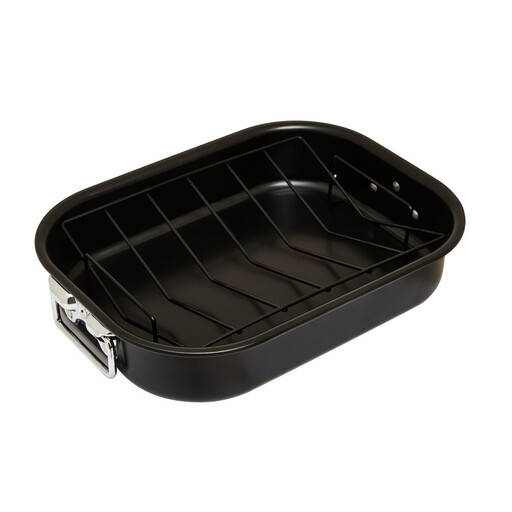
Why This Fits Their Persona: Designed for households that roast meat and vegetables regularly or entertain guests and need a larger oven-format tin.
Its included wire rack is clearly specified, helping avoid the extra cost of buying a compatible rack separately. The dimensions are stated as 29 × 40cm.
Non-stick-coated metal; included wire rack; 8cm depth; suitable for roasting meats and vegetables.
We have compiled a complete, real-time list of products that fully satisfy these strict selection criteria and UK safety regulations.
A six-cup muffin tray suits smaller households and occasional batches, while a 12-cup mini round cake tin is useful for individual cheesecakes, quiches and cupcakes. Silicone moulds can add different shapes, such as heart-shaped portions, but place them on a solid baking sheet before filling.
For tarts and flans, a set of flan tins with fluted sides and detachable bases can simplify serving. If you mainly prepare small portions in an air fryer, check the basket diameter and height before choosing air fryer baking accessories. Compatibility descriptions can vary, so compare the listed capacity with your appliance rather than assuming universal fit.
These steps help preserve release performance and reduce the likelihood of scratches, rust or distortion.
A practical starter collection usually includes one round cake tin, one baking tray, a muffin tray and a roasting tin. If you bake delicate cheesecakes or tarts, choose a springform or removable base cake tin. A set of round tins can be useful when you make layered cakes regularly.
Carbon steel bakeware is suitable for many everyday recipes, including cakes, breads, roasting and traybakes. It heats efficiently and is generally sturdy, but coated versions need gentle cleaning and non-metal utensils. Always follow the individual product’s temperature and care instructions.
No. Lifespan depends on frequency of use, temperature, storage and cleaning. Coatings can deteriorate if scratched or overheated. Replacing a damaged item is sensible, particularly if food begins sticking heavily or the surface shows visible flaking.
Only when its dimensions and materials are suitable for the air fryer. Measure the basket and allow space for air circulation. Air fryer baking accessories may include cake tins, pizza tins, racks and silicone moulds, but check the product compatibility and temperature guidance before use.