
24/7 Customer Support

Free returns

Same-day & Next-day Delivery

Quality Guaranteed

Unlock Your Welcome Offers: FREE Delivery | Up to 80% OFF | Free 30-day JoyPlus trial
Download the APP
There's little more satisfying than pulling a perfectly golden cake or a batch of evenly roasted vegetables from the oven. But there's also little more frustrating than when your equipment lets you down. A cake that sticks, a baking tray that buckles at high heat, or a non-stick coating that flakes into your food after just a few uses.
Choosing the right bakeware can feel like navigating a minefield of marketing claims. Before you invest in your next kitchen staple, it's worth knowing about the common pitfalls that lead to disappointment and wasted money.
bakeware set can seem like a fantastic deal. But often, these sets are padded with oddly sized or poorly made pieces you'll rarely use. You may end up with a leaky springform cake tin or a loaf tin too small for a standard recipe, with the whole collection just taking up valuable cupboard space.To avoid these issues, focus on a few core parameters that define quality and longevity. Understanding these will help you select pieces that perform reliably for years.
The material of your bakeware is the foundation of its performance. Two of the most common and practical options are carbon steel and silicone.
oven trays, cake tins and any roasting tin with rack.silicone baking moulds make it incredibly easy to release baked goods, especially those with intricate shapes. They are typically heat-resistant to high temperatures and are also safe for use in the freezer and microwave. A key point to remember is that silicone is not rigid, so it always requires placing on a solid metal baking tray before going into the oven for stability.A quality non-stick coating can be a game-changer, but not all are created equal. When assessing non-stick bakeware, look for clear information about its composition. Many modern coatings are now made without substances like PFAS, PTFE and BPA, offering greater peace of mind. Regardless of the type, the lifespan of any non-stick surface depends heavily on care. To preserve it, always avoid using metal utensils, sharp objects and abrasive scouring pads. Hand washing is often recommended over the dishwasher.
Great bakeware is designed with its end-use in mind. Look for features that solve common baking problems:
cake tins, this feature allows you to push the cake out from the bottom, preventing damage to delicate sponges.springform cake tin features a clip on the side that allows the rim to expand and be removed. This is non-negotiable for delicate bakes like cheesecakes or tortes that cannot be inverted.roasting tin with rack is even better, as it elevates the meat or vegetables, allowing hot air to circulate for more even cooking and letting fat drip away.Instead of a one-size-fits-all approach, the right bakeware depends on your specific needs. Here are a few options matched to different types of home cooks.
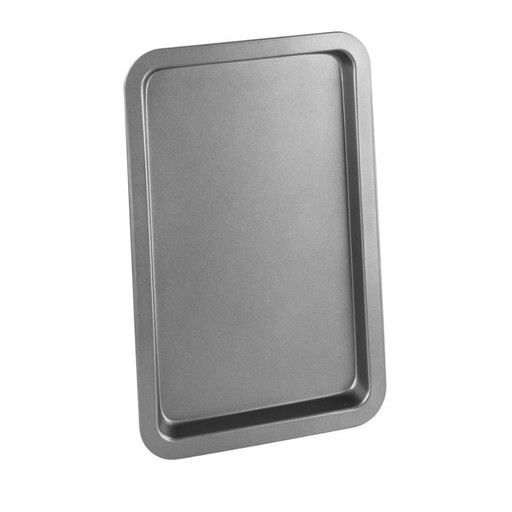
Why This Fits Their Persona: This tray is built for practicality. Its freezer-to-oven capability is perfect for the Sunday meal-prepper who wants to prepare meals in advance and cook them directly from frozen during a busy week, saving time and washing up.
It directly counters the peeling non-stick pitfall by featuring a coating explicitly stated to be free from PFAS, PTFE and BPA, offering a more durable and health-conscious surface.
Durable carbon steel construction resists warping and its versatile 30cm x 18cm size fits most standard UK ovens without issue. It is also dishwasher safe for easy cleaning.
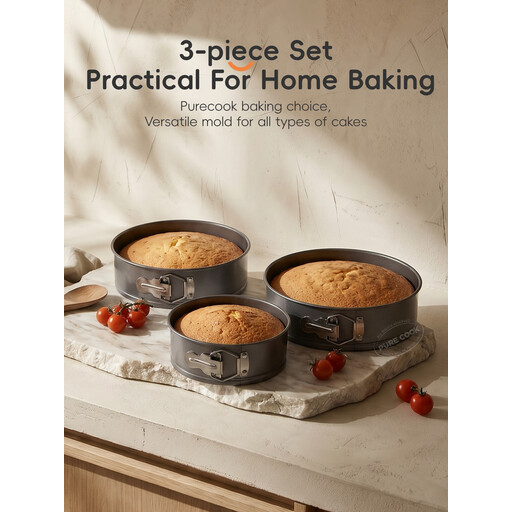
Why This Fits Their Persona: For someone moving beyond simple loaf cakes, this set provides three different-sized springform tins (18cm, 20cm, 24cm), perfect for creating layered celebration cakes or delicate cheesecakes that require careful handling.
This avoids the "value set" trap by offering a focused, highly functional collection. The adjustable metal buckles lock tightly, addressing the common pitfall of leaky springform tins and ensuring a clean release.
Made from carbon steel for even heat conductivity, ensuring cakes bake uniformly. The quick-release buckle design preserves the cake's shape, which is ideal for beginners and experts alike.
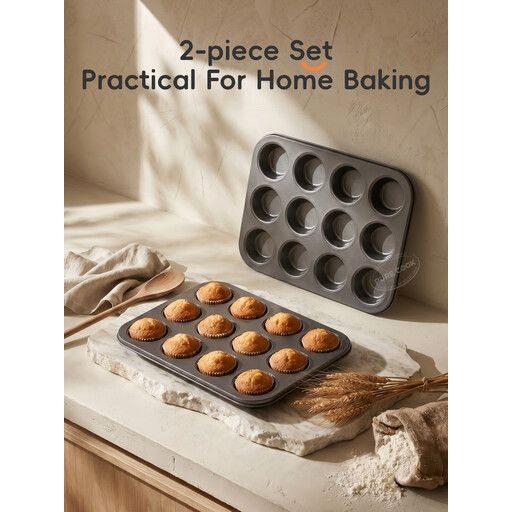
Why This Fits Their Persona: Ideal for baking class instructors, small dessert shop owners or parents preparing for a bake sale. This 2-piece set allows you to bake 12 small cakes or muffins at once, dramatically improving efficiency for small-batch production.
It solves the inefficiency of single-use tins. The uniform 12-cavity design ensures even heat exposure to every cake, preventing the inconsistent results that can happen when crowding an oven with individual moulds.
The multi-layer non-stick coating allows for complete demoulding by simply inverting the pan, which is crucial for speed and presentation in a commercial or high-volume setting. The pans are also stackable for compact storage.
We have compiled a complete, real-time list of products that fully satisfy these strict selection criteria and UK safety regulations.
The lifespan of non-stick bakeware varies greatly based on usage and care. With proper maintenance—avoiding metal utensils, high-heat cooking sprays and abrasive cleaning—a good quality pan can last for several years. If you notice deep scratches or the coating has started to peel, it is time to replace it.
Yes, carbon steel bakeware is an excellent choice for oven trays. It heats up quickly and distributes that heat evenly, which helps in achieving consistent browning and crisping. It is also more durable and less prone to warping at high temperatures compared to thinner aluminium trays.
Always place silicone baking moulds on a solid metal baking sheet before filling and putting them in the oven. Their flexible nature means they lack the stability to be moved on their own when full of batter. While many are dishwasher safe, check the manufacturer's instructions. Hand washing with a soft sponge can help prolong their life and prevent any residue build-up.