
24/7 Customer Support

Free returns

Same-day & Next-day Delivery

Quality Guaranteed

Unlock Your Welcome Offers: FREE Delivery | Up to 80% OFF | Free 30-day JoyPlus trial
Download the APP
By Joybuy Product Recommendation Officer
Buying bakeware and roasting trays can look straightforward until a tin warps, a coating starts to peel or a tray turns out too shallow for a family meal. UK kitchens also face practical constraints: compact ovens, limited cupboard space, batch cooking and the need to reduce washing up.
Before adding cake tins, baking trays or oven trays to your basket, watch for three common buying traps:
The right choice depends on what you cook, how often you use it and how much cleaning you are prepared to do.
Measure your oven shelf before choosing larger roasting tins or catering trays. A 400 × 340mm roasting tray may suit a family roast, but it could be too large for a compact oven or leave insufficient room for air circulation.
Depth matters as well. Shallow baking trays work for biscuits, pastries and sheet bakes, while deeper oven-safe trays are more suitable for gravy, casseroles, pasta bakes and roasting meat with juices. For entertaining, a 45mm-deep tray offers more containment than a flat baking sheet.
For cakes, compare diameter and height. A 24cm springform cake pan is useful for larger cheesecakes and celebration cakes, whereas a 26cm round cake tin provides a different baking profile. Do not rely on the external dimensions alone: check the internal size and stated capacity where available.
Carbon steel and aluminised steel are common choices for reusable bakeware. They are rigid, conduct heat efficiently and are suitable for repeated oven use when handled according to the manufacturer’s instructions. A stated thickness, such as 0.8mm metal, can indicate a more substantial construction, although it does not remove the need to avoid sudden temperature changes.
Foil trays are lightweight and convenient for batch cooking, food transport and events. They can reduce washing up, but they need support when carrying hot or liquid food. Place disposable baking trays on a solid baking sheet before moving them in and out of the oven.
Check the stated temperature limit. For example, some pans are rated to 230°C or 280°C, but that does not mean every part of the product, including handles or coatings, has the same suitability for every cooking method.
A non-stick surface may make cake release and washing easier, but it needs careful use. Silicone, nylon or wooden utensils are generally more suitable than metal tools for coated surfaces. Use a soft sponge rather than abrasive pads, and follow hand-washing guidance where supplied.
Some products use mineral-based coatings and specify that they are free from PTFE and PFOA. This is an objective material feature, not a guarantee of particular health outcomes. Even with a robust coating, avoid overheating an empty pan and inspect it regularly for visible damage.
For delicate bakes, a removable base or spring mechanism can be more useful than a coating alone. A quiche pan with a shaped edge can support neat pastry presentation, while a mini cake pan helps create consistent individual portions.
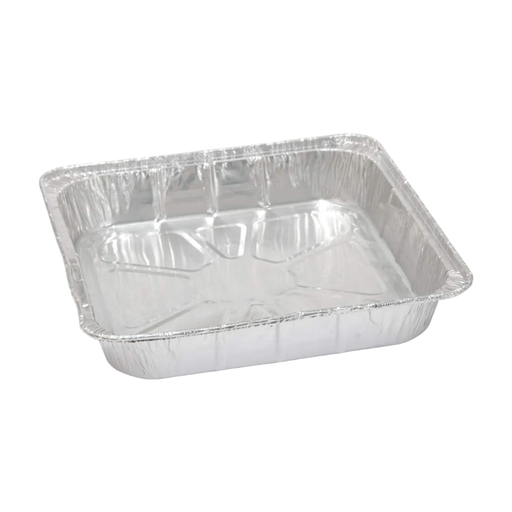
Why This Fits Their Persona: A practical two-pack for flatmates, first kitchens, family gatherings and occasional catering where reducing washing up is useful. The 60oz capacity and 38mm depth suit pasta bakes, roasted vegetables, curries and desserts.
Its stated dimensions, capacity and pack quantity make portion planning clearer than relying on vague “large” descriptions. Use a solid baking sheet underneath for stability.
Ovenable and recyclable foil construction; supplied as a two-pack for cooking, reheating and serving.
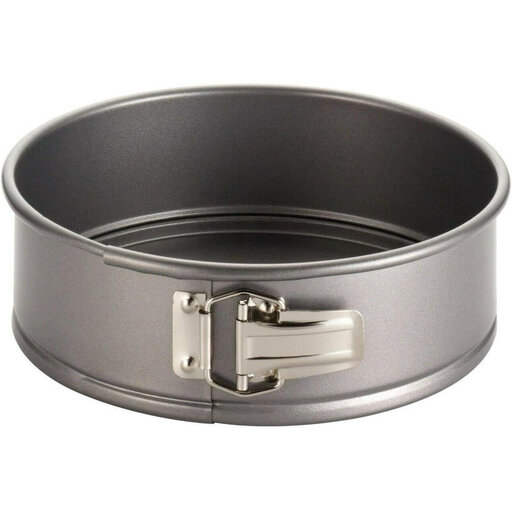
Why This Fits Their Persona: Suitable for keen bakers who regularly make cheesecakes, mousse desserts or layered cakes where removing the bake without turning it upside down is important.
The 24cm diameter, 0.8mm metal thickness and stated 230°C oven rating provide useful specifications to compare before purchase.
Removable sides and a non-stick interior assist with release; the stated dimensions are L25.5 × W25.5 × H7cm.
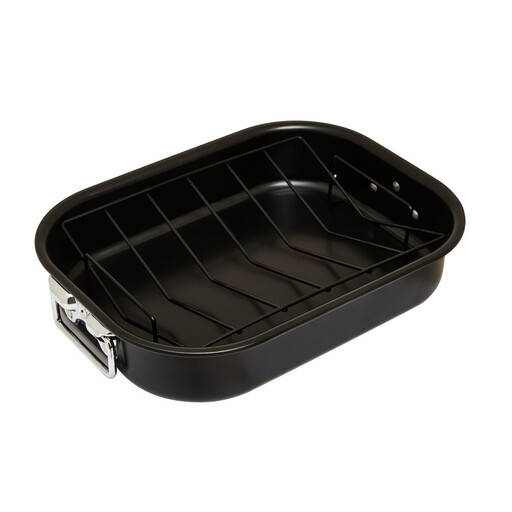
Why This Fits Their Persona: A sensible format for households that prepare roast meat and vegetables regularly, as well as cooks who need a rack for larger Sunday meals.
The listing provides clear measurements of 29 × 40cm, an 8cm height and a 1.06kg weight, helping buyers assess oven and storage fit.
Durable metal body, non-stick coating and included wire rack; hand washing and non-metal utensils are recommended.
We have compiled a complete, real-time list of products that fully satisfy these strict selection criteria and UK safety regulations.
Many are designed for oven use, but check the individual product label for temperature and handling instructions. Do not place foil trays directly on a naked flame or heating element. A solid oven tray underneath improves stability, particularly with sauces or heavy roasts.
Lifespan depends on frequency of use, temperature, utensils and cleaning. Avoid metal tools, abrasive pads and overheating. Replace a pan if the surface is visibly flaking, badly scratched or no longer releases food as intended.
Usually, yes. Cake tins are shaped for controlled baking and easy release, while roasting tins are generally deeper and designed to contain meat juices, vegetables and sauces. A versatile rectangular tray can cover some recipes, but it may not provide the depth or release mechanism needed for specialist dishes.