
24/7 Customer Support

Free returns

Same-day & Next-day Delivery

Quality Guaranteed

Unlock Your Welcome Offers: FREE Delivery | Up to 80% OFF | Free 30-day JoyPlus trial
Download the APP
A bakeware set can look like a convenient way to stock a kitchen, but the wrong choice may leave you with warped tins, unevenly baked edges or a coating that becomes difficult to clean. UK home bakers should look beyond the number of pieces in the box and check how each tin suits their oven, recipes and cleaning routine.
The most common buying traps are:
Carbon steel baking tins are relatively light and generally conduct heat efficiently, making them practical for cakes, brownies and savoury tray bakes. They can be easier to handle than cast iron, particularly when a tray is full.
Aluminised steel is another useful option for small-format baking. It combines a steel structure with an aluminium-based surface intended to support consistent heating. The specific thickness and construction matter: for example, the 24cm KitchenAid springform cake tin is listed with a 0.8mm metal body, while product descriptions for the mini tins specify aluminised steel.
A darker finish may absorb heat differently from a light-coloured tin, so recipes may need small adjustments. If the manufacturer provides a temperature limit, treat it as the working maximum rather than a suggestion to exceed.
A non-stick bakeware surface can make releasing sponge cakes, brownies and mini portions easier. However, it is not scratch-proof. Use silicone, wooden or plastic utensils and wash with warm water and a soft sponge.
Check whether the tin is dishwasher-safe before purchasing. Several options in this guide are explicitly hand-wash-only bakeware. This adds a little cleaning time but may help preserve the coating when the care instructions are followed. Avoid metal scouring pads, abrasive cleaners and cutting directly inside the tin.
Where a listing mentions a chemical or food-contact feature, read the wording carefully. For instance, one product is described as FDA-compliant, while another states that its mineral-based coating is free from PTFE and PFOA. These statements describe the supplied product information; UK shoppers should check the seller’s documentation if specific food-contact compliance is important to them.
Measure your oven shelf, air fryer basket and storage cupboard before ordering. A rectangular baking tray set may be useful for batch cooking, but a deep square tin or springform tin can be more suitable for specific recipes.
Consider the following formats:
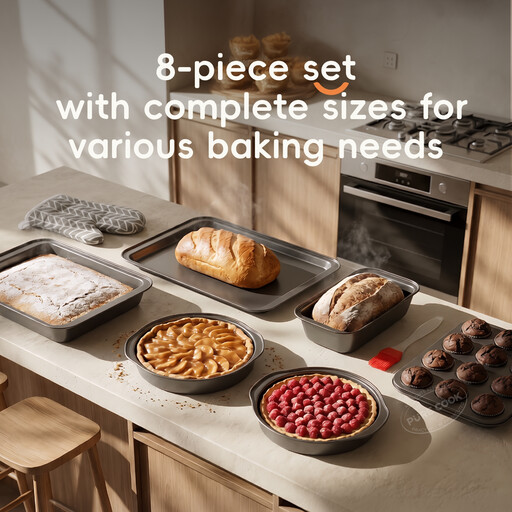
Why This Fits Their Persona: An eight-piece selection gives beginners several square and tray-style formats for home baking, family activities and mixed sweet or savoury recipes.
The listing clearly states that it is oven-only and hand wash only, helping buyers avoid unsuitable hob or dishwasher use.
Carbon steel construction; stackable formats; listed as oven-safe up to 450°F, approximately 232°C.
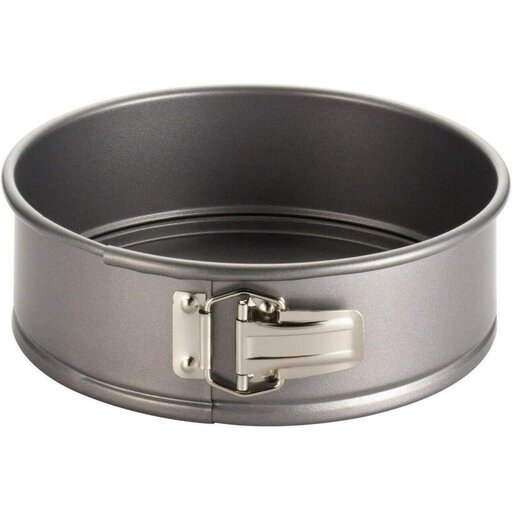
Why This Fits Their Persona: A 24cm springform cake tin suits celebration cakes, cheesecakes and layered desserts where clean presentation is important.
The removable sides address the common problem of damaging delicate cakes during release, while the stated 230°C oven limit provides a clear usage boundary.
0.8mm metal body; non-stick interior; removable-side springform mechanism.
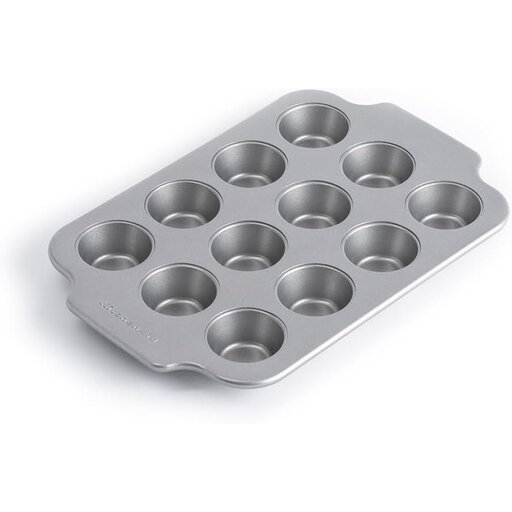
Why This Fits Their Persona: The 12-cup mini cake tin is suited to portioned muffins, mini cupcakes, mini cheesecakes and quiches for parties, classes or small-batch sales.
Its defined 12-cup capacity makes the output predictable, unlike a general set where the number of usable portions may be unclear.
Aluminised steel construction; non-stick interior; compact 12-cup layout.
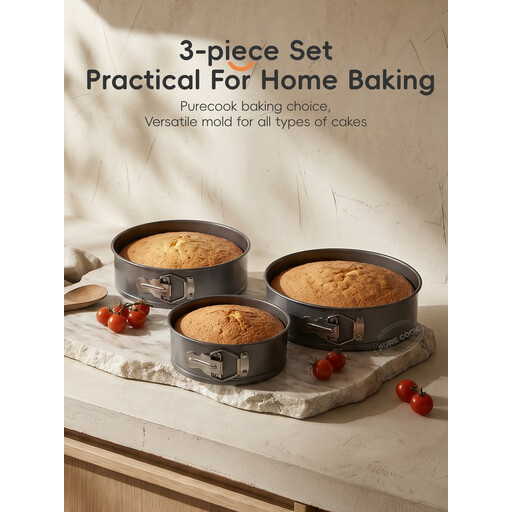
Why This Fits Their Persona: Three round sizes are practical for households, baking classes and anyone making cheesecakes, sponge cakes or water-bath desserts.
The clip-release design is intended to separate the sides without turning out the cake. The listing also states that the tins are oven-only and hand wash only.
18cm, 20cm and 24cm tins; carbon steel; quick-release clips and non-stick interiors.
We have compiled a complete, real-time list of products that fully satisfy these strict selection criteria and UK safety regulations.
To protect a bakeware set:
A coating can reduce sticking, but greasing or lining may still be sensible for high-sugar mixtures, caramelised bakes and recipes with a long cooking time.
Only if the product description specifically permits it and the dimensions fit the basket. Some tins in the PURECOOK range are described as suitable for ovens and air fryers, but they are not suitable for microwaves, gas hobs, induction hobs or direct flame. Measure the internal basket before ordering.
Not necessarily. Many non-stick tins are hand-wash-only bakeware, and dishwasher detergents or high-pressure spray can affect the coating over time. Always follow the individual care instructions. A soft sponge and warm water are the safer default when dishwasher compatibility is not stated.
Lifespan depends on thickness, storage, frequency of use and care. Carbon steel can provide repeated service, but dents, rust, overheating and scratched coatings can reduce usability. Avoid direct hob heat, dry tins carefully and replace any pan whose coating is visibly damaged or whose structure has warped.